At some point, someone on your sales team has said it out loud.
“These leads aren’t serious.”
It usually happens in a pipeline review. The room tightens. Marketing defends volume. Sales defends time. The discussion circles around intent, budget, and fit. Then everyone moves on to the next agenda item.
But the tension doesn’t go away. It continues to linger between the teams. Sometimes it even follows them to the break room.
Most companies never resolve this properly. They live with it. And it slowly shapes behavior across both teams.
Sales becomes selective about which leads they pursue aggressively.
Marketing doubles down on generating more volume to prove performance.
Leadership looks at dashboards that feel full but less reliable.
This is rarely about the effort of any single individual or team. It is about definition of “bad” or “good” lead.
What “Bad Lead” Actually Means
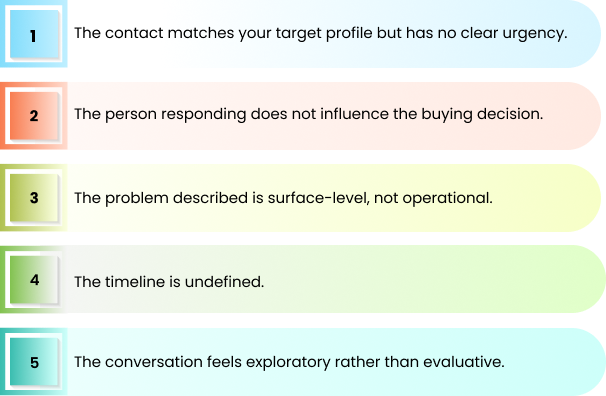
When sales uses that phrase, they are usually reacting to one of these situations:
From marketing’s perspective, these leads check boxes. From sales’ perspective, these conversations go nowhere. Both teams are operating from different interpretations of “qualified.”
The Hidden Damage
When qualification criteria are unclear or loosely applied, several things start to happen: Sales conversations feel repetitive and low quality. Close rates fluctuate unpredictably. Forecasting becomes less dependable. Marketing celebrates activity while revenue lags behind it. Founders begin questioning whether the pipeline represents real opportunity. This misalignment spreads into morale and decision-making.
A Practical Reset You Can Run in One Afternoon
Skip the alignment workshop. Use real evidence. Pull 20 deals that closed in the last six months.
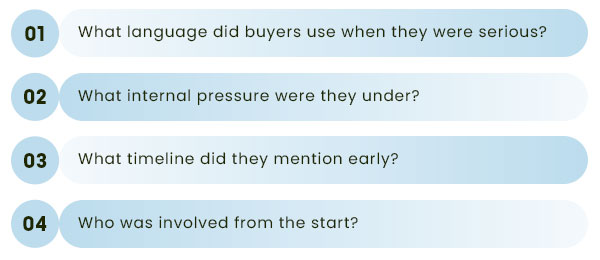
Review the first call notes for each one.
Look for patterns:
Now pull 20 deals that stalled. Compare the early signals. Write down the differences in plain language. Those differences are your real qualification criteria.
Not job title. Not company size. Not industry alone.
Real buying signals.
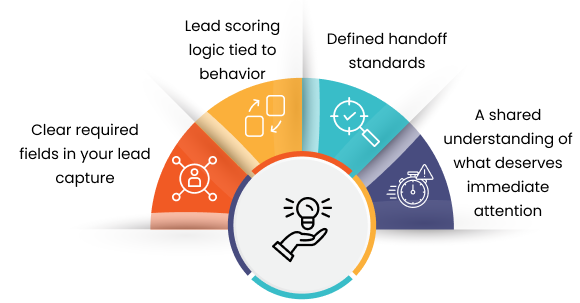
Once documented, translate them into:
This turns debate into structure.
What Changes After That
Sales spends time with prospects who show intent. Marketing optimizes campaigns toward real signals instead of surface metrics. Leadership sees a pipeline that reflects likelihood, not activity. Conversations inside the company shift from friction to focus. Alignment becomes visible in conversion rates, not slide decks.
Where ConvergeHub Comes In
ConvergeHub allows qualification standards to live inside the system instead of inside meetings.
This removes ambiguity from the pipeline and replaces it with shared clarity. If the phrase “bad leads” shows up in your reviews more than once a quarter, it signals a structural issue worth fixing.
Revenue becomes more predictable when definitions are precise.
This site uses cookies to store information on your computer. Some are essential to make our site work; others help us improve the user experience. By using the site, you consent to the placement of these cookies.Privacy Policyx












 Start a