Most of the Dashboards you watch regularly show a long list of numbers.
All of those numbers matter. They describe activity and results.
But very few teams pay attention to the space between them.
One gap is especially revealing: the time between a new lead arriving and the first real conversation with that prospect. This small window shapes a surprising amount of revenue.
Lead-to-Conversation Time
When a lead enters your system, a countdown begins.
The prospect has already invested a moment of attention. They searched, clicked, filled a form, or replied to a message. Their curiosity is active.
The next interaction determines whether that curiosity grows into engagement.
If the conversation begins quickly and with relevance, the relationship starts to develop.
If the process drifts – delayed responses, unclear ownership, scattered follow-ups – the interest fades before the relationship forms. What remains is a name in the database rather than a prospect in dialogue.
Why This Metric Matters
Lead-to-conversation time reflects several operational realities at once:
A long delay usually signals friction somewhere in the process. When that friction disappears, conversations start sooner and deal flow improves naturally.
A Simple Exercise
Take your last 25 inbound leads.
Look at two timestamps:
when the lead entered your system
when the first meaningful conversation happened
Calculate the time difference.
You will see patterns quickly.
Some leads moved forward within hours. Some waited days. Some never reached a conversation at all.
The variation tells a story about your process.
What Strong Teams Do
Teams that maintain short lead-to-conversation times tend to share a few operational habits:
These habits keep momentum intact. Prospects experience the company as attentive and organized. Conversations start sooner and progress more smoothly.
Where ConvergeHub Helps
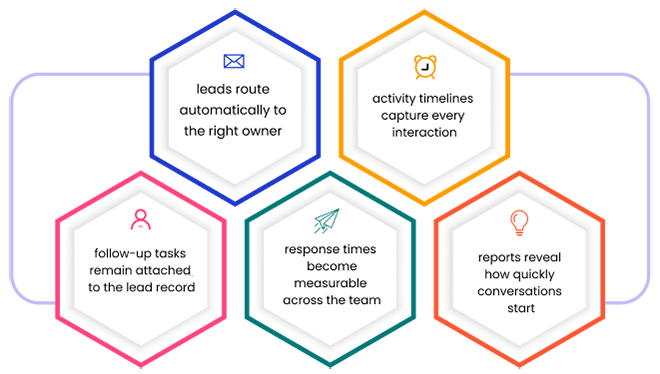
ConvergeHub makes this metric visible and manageable.
This allows leadership to see where attention converts into dialogue – and where it does not.
Small timing differences compound into meaningful revenue differences.
This site uses cookies to store information on your computer. Some are essential to make our site work; others help us improve the user experience. By using the site, you consent to the placement of these cookies.Privacy Policyx














 Start a