Why you need a Sales Process

In my last blog, I talked about what a sales process is and what an ideal sales process should be.

Continuing this discussion, let’s talk about the why – Why should you bother creating a Sales Process for your organization… what’s the fuss about?

Having a defined Sales Process has many benefits, here are a few of them:

  • Stay on track – When you have a defined process, it’s easier to make sure that every team member follows the correct steps to guide the prospect along the journey and close the sale quickly.
  • Measure performance – Sales process helps you create the right metrics to track Sales agent performance.
  • Accurate sales forecasts – Since you can track the sales stage of each lead, you are able to forecast your sales numbers more accurately.
  • Understand prospects – Having a well-defined process invariably leads to setting up better buyer personas and better research of your prospects.
  • Right focus – Since leads are now better qualified, reps can focus on leads that have higher chance of converting.
  • No lost leads – Helps sales reps follow up frequently and engage with prospects at the right time reducing the chances of leads falling through the cracks.
  • Better customer experience – By mandating the sales process steps you can ensure that reps don’t rush the prospects in order to try and close the sale quickly, which could easily result in a lost sale.

There are many more benefits, but these should be enough to convince you to go ahead and define a new sales process in your organization or take another look at your sales process if you already have one defined.

If you would like to know more about creating sales processes and how ConvergeHub can help you close more sales by helping you implement clear effective sales processes, talk to us.

Or, if you would like to check it out yourself, go ahead and create a free ConvergeHub account here.

What is Inside Sales?

For SaaS, B2B, tech, and various B2C industries- inside sales is a dominant business model for sales team representatives. Unlike outside sales via field representatives, inside sales rely on managing the entire sales process from inside the organization. In short, it runs remotely. The inside sales rep takes care of selling the organization’s products and services via text message, email, phone, and various online channels. Let’s explore what is inside sales and how it impacts a business.

How Inside Sales Works

As inside sales representatives work internally from the office, they share the office space with other inside sales team members. It draws a difference from the outside sales representatives who have to face their client’s business locations.

The inside sales department has two divisions- Business Development Representatives (BDRs) and Sales Development Representatives (SDRs). Inbound sales (like the warm leads from prospects) are the main focus of SDRs. These potential customers or clients take action on a website- request a demo, download content, attend a webinar, or utilize live chat.

All these warm leads come mainly from enterprises as well as SMEs. SDRs contact these leads and use a CRM platform to log all information. As soon as the information comes to a senior salesperson or Account Executive- he/she will nurture the opportunities into the sales pipeline.

The Business Development Representatives are usually cold callers. These inbound sales reps put their focus on enterprise opportunities and higher-end commercials. After qualifying the lead, they sent it to an Account Executive.

In the inside sales process, SDRs and BDRs focus on the constant influx of leads from two types of markets: small businesses and large enterprises. As these reps qualify the leads- Account Executives follow the opportunities through the sales pipeline.

Inside Vs. Outside Sales

Modern salespeople understand the growing need for a well-connected customer experience- as it can transition into the first personal contact. That’s why many organizations are re-evaluating the advantages and disadvantages of their traditional sales. These organizations are also exploring how well it serves the needs of a customer today.

Previously, the inside sales reps were playing as a backup to outside sales reps who were paid higher. But with the arrival of the internet, there has been a major shift in the way buyers interact with sellers. Now over a decade, most organizations have shifted their focus to keep up with inside sales.

Of course, outside sales are still advantageous. Some organizations have stated that if there’s an imbalance in inside sales- it becomes difficult to leverage the value of the face-to-face conversation. However, an in-person conversation adds more value to any transaction. When an outside sales rep visits a client at their premises, it becomes easier to build trust and articulate the product or service with clarity.

For most organizations- outside sales form the core segment of the strategy. As businesses want to grow conversations in their sales funnel, a skilled inside sales team plays a key role to nurture the attention of buyers.

Benefits of Inside Sales

Companies are leaning towards inside sales because of all the benefits it brings to the business. Therefore, like the outside sales reps, the demand for quality inside sales reps has also increased.

  • Cost Efficiency Leveraging Technical Opportunities
    With the presence of marketing automation, CRM systems, social selling tools along with social analytics software- inside sales reps can contact potential prospects quickly. As a result, it shortens the sales cycle and reduces the cost per acquisition.
  • More Time For Ancillary Tasks
    Selling consists of an innumerable number of administrative and prospecting tasks. As inside sales reps stay more time at the office (unlike the field reps)- they can take care of the other crucial tasks more efficiently.
  • Revenue Predictability
    Thanks to CRM systems like ConvergeHub which helps companies to predetermine the amount of revenue each of the salespersons can produce- along with the ROI details. With predictable revenue, sales reps have to take the lead-focused approach. As there’s a close integration between marketing and inside sales- they should work together and fill the sales pipeline.
  • Improved Scalability
    Companies can scale up their inbound sales teams with ease- they won’t have to face the inconvenience of relocating and expenses. It will allow them to take measured steps when it comes to scaling the business.
  • Opportunity For Specialized Roles
    Without a quality segmented sales force- it is not possible to engage with all levels of prospects in the sales funnel. As the usual field reps work on quotas- they mostly have to deal with less profitable opportunities which take a long time to close or are impossible to close. Now, these prospects may become valuable for the organization in the long run. Therefore, it is essential to map roles and responsibilities for every member of the inside sales team. You will be able to cater to all customers at all stages of their buyer’s journey.
  • Better Coaching And Collaboration Opportunities
    Inside sales reps need to stay close to their managers. That’s why the team presents better team unity with better opportunities for professional training, collaboration, and coaching. With the training and coaching, new employees can be onboard in no time at all.
  • Adaptability To Changing Buyer Demographic
    A target buyer can be influenced by interesting digital funnel campaigns. When your business has a powerful inside sales team- you can invest in popular trends to lower the cost while taking advantage of upselling and cross-selling opportunities.

5 Moves To Successful Inside Sales

When you are dealing with a variety of customers- the inside sales team should be properly nurtured and have well-honed skills. Here are some successful moves you can take while drafting your plan together:

  • Right Software
    Excellent inside sales capitalize on the potential of effective lead management. Targeting the right prospects requires a research-driven or data-driven approach. That’s why SaaS tools like web conferencing platforms, CRM databases, and social analytics are vital for inside sales success.
  • Alignment Between Sales And Marketing Teams
    The conflict between the sales and marketing teams is age-old. The sales team complains that the marketing team doesn’t bring in enough authentic leads- the marketing team complains about the sales team’s inability to use the leads. When you have an inside sales team- it is time to optimize the structure of the inside sales and marketing departments. The sales department must inform their needs while the marketing team runs transparent campaigns. If the marketing team is flexible about the assets they provide and the sales team works on those assets- the alignment will help with the business growth.
  • Well Thought-out Inside Sales
    The inside sales team members must be assigned clearly defined roles and responsibilities. You may wish to segment the team based on stages of the customer journey, product and services, geography, and other reasons. You can take a look at the available data and then decide what is working for your brand and what’s not.
  • A Motivated Team
    When sales reps deal with difficult clients and face obstacles in sales- it takes a toll on their motivation. It is life. It is your job to motivate the team by encouraging them to make the best out of these rejections. Encourage them to celebrate small wins, and ask them to visualize their sales performance. It will give motivation to the team in real-time to improve their approach as they get continuous feedback.
  • A Skilled Team With Ongoing Training
    With sales enablement technologies, inside sales teams can sell various complex products/ services without seeing or interacting with the buyers. However, for the long-term success of the sales team- the team members must nurture their sales skills to skillfully handle complex transactions.

Essential Inside Sales Skills

Irrespective of where the sales reps are closing their sales- all salespeople need a great range of skills and knowledge to succeed. Salespeople must become good administrators, prospectors, and closers. But some more skills differentiate a successful brand from the crowd.

  • Listening
    Inside sales reps deal with their customers from remote locations without having the aid of understanding the body language of the customers. It prevents them from knowing what these customers are not. Therefore, these sales reps must master strong listening skills and focus on how a customer articulates answers to their questions.
  • Building A Rapport
    As it is trickier to make friends over email or phone, it is tricker to connect with a customer. Customers can sense the lack of authenticity. Sales reps must present their authentic selves and reveal that they have done their research well. If the reps pitch in general terms and make unrealistic promises- it will turn off a prospect immediately.
  • Sticking To a well-planned strategy
    Inside sales reps deal with various accounts and must know vital information about each account at hand. It is fine to optimize a well-planned strategy- but it is detrimental to switch over strategies. Other than becoming a test run- the switching wastes an extreme amount of time.
  • Reliability
    Building trust is the hardest part of your job. That’s why, the inside sales reps must manage their time so well that they can deliver on all the promises on time- be it a small or big matter. If a customer informs them to call at 1 pm, for example, the reps team needs to maintain it. It creates reliability.

The outcome of Inside Sales

Sales representatives need to take care of their ever-increasing workload in a short time. So, leveraging efficiency-enhancing innovations like CRM databases adds a clear advantage. Some research shows that effective use of inside sales can save over 40-90% cost of sales- increasing or maintaining the revenue.

However, without investing in inside sales skills along with the right training and use of the right software- a good outcome is far ahead. It means, companies must know how to exploit various roles of the inside sales team. When you are capable of using the team members at the intersections of sales and marketing- you can align two departments with effectiveness.

As you take the right measures, you will reap its rewards- fast response to customers, more contacts at the same rate, better scalability, etc. The benefits of inside sales are vast- it will only increase your online B2B customer count. Therefore, it is essential to put focus on inside sales besides outside sales.

Your Sales Process

Being a business leader you know that a business does not run on individual excellence or knowledge…. a business runs on its processes. For an organization of any size to succeed in the long term, the management needs to set up strong fundamental processes.

And this is even more true for the Sales department.

So, let’s talk about Sales Processes today.

We’ll cover the basics in this blog and dig deeper over the next few posts.

Let’s start by defining what is a Sales Process.

A Sales Process is a series of repeatable steps that an organization follows to take a prospect from being unaware lead to a paid happy customer and beyond. A well-defined sales process provides a common roadmap or framework that moves prospects through various stages of the sales cycle along the customer journey until they become paid customers.

Sales processes may change depending on the company’s product or service, prospect’s industry or need, but most effective sales processes have a few characteristics in common.

An ideal sales process is:

  1. Actionable – Should clearly state what a sales agent or another team member should do
  2. Repeatable – Each team member should be able to follow it every time
  3. Predictable – The steps should be pre-defined and known by the team member expected to act on it
  4. Flexible – It can change depending on situation

Given the advantages, use of sales processes by every sales team should seem like an obvious decision, but you’d be surprised how many organizations don’t have defined sales processes.

If you would like to know more about creating sales processes and how ConvergeHub can help you close more sales by helping you implement clear effective sales processes, talk to us.

Or, if you would like to check it out yourself, go ahead and create a free ConvergeHub account here.

What Is An Effective CRM Experience In 2023?

CRM or Customer Relationship Management is a key aspect of any company’s marketing strategy. It helps companies connect with their customers and improve the experience by helping them find answers to their questions faster than before. However, many businesses are still using outdated CRM solutions that don’t meet their needs in recent times – and that might be costing them, customers!

This piece is an in-depth look at how the future of Enterprise CRM will change over the next few years and how it will impact sales.

The Shift in Shopping Behavior and Customer Experience

Shopping behavior has thoroughly changed in the post-pandemic years. People are making informed choices and most of the purchase decisions are driven by experience, instead of price and brand names. Providing customers with the best possible experience at every touchpoint becomes a survival imperative for the brands. Having a smart and growth-focused CRM solution like ConvergeHub helps businesses to track, manage and nurture a relationship with their customers. It also helps segregate your contacts in the sales funnel, whether they are your prospects, new customers, or loyal advocates. This way, it is easier to keep a track of the customers and accordingly create experiences for them.

ConvergeHub also acts as a smart database for storing customer details and information. That information can be accessed anytime to enhance the customer relationship at any level. When you have a detailed track of your customers’ activities and their preferences, you can tailor your services to align with their requirements.

Here’s how a smart enterprise CRM solution facilitates customer experience.

The Unification of Data: Integrating unstructured data and structured data to deliver a better customer experience

A CRM helps in tracking unstructured but crucial customer data that can be effectively used to deliver a relevant and more personalized experience. When you integrate these unstructured data in the system, you will be able to create an interactive experience that provides them with relevant information at every level of engagement – from finding new products or services in store when they visit your website all the way up through engaging them once again via email after purchasing something from you online!

Universal Accessibility: CRM offers cross-device availability anytime anywhere

Modern enterprise CRM solutions have cross-device availability, which means they work wonderfully even in mobile devices. As a result, it offers universal accessibility, even with virtual assistants such as Alexa or Siri, smartwatches as well as other wearable devices such as glucose monitors that share data with doctors remotely via an app.

Chatbots and workflow automation will detect and eliminate errors before they happen

A significant part of the customer conversation nowadays is run by Chatbots and workflow automation software. As a result, you can stay connected with the customers 24/7. Also, the workflow automation software eliminates errors before they happen.

Chatbot technology is advancing rapidly these days. Many companies are already using these to handle customer support inquiries. These bots can identify and fix errors in the workflow, such as missing emails or data that doesn’t match up with expectations. They also provide insights into how users interact with each other so that you can make changes accordingly (for example: if one user sends an email but another hasn’t received it yet, a bot can offer a necessary solution).

In addition to these functions, Chatbots can predict potential problems in your CRM system by analyzing historical data about past interactions between employees or customers. Finally, chatbots can suggest improvements for improving overall efficiency within your organization by suggesting new processes based on what they see —and even predicting what might happen down the line! With a chatbot, everything is automated and you can keep in touch with your customers at every touchpoint.

Artificial Intelligence That Enhances Human Emotion

No matter how much you leverage Artificial Intelligence to stay connected with your customers, nothing can replace human emotion. Customer experience in 2023 will be a mix of technology and human touch. AI will simply enhance the experience and decode the customers’ needs by analyzing their emails or phone calls. It can also determine whether someone is calling about a specific product or service. This information is later on used by the support agents while answering calls to provide more personalized customer service.

Digital Storage For Every Customer Interaction

Digital twinning is one of the best practices brands are opting for these days. With an enterprise CRM system like ConvergeHub digital twinning is easier. You can capture data points from multiple sources. It automates your customer interactions and helps it run more efficiently and effectively.

Here’s how digital twinning can help you. You might have an email marketing campaign running but you don’t know how many people open the emails or even if they’ve opened them at all. If you could create a digital twin for each customer interaction—like when someone clicks on an ad or opens an email—you would be able to see all the information about each person’s actions, including their IP address and browser types, as well as their device type (desktop computer/laptop/mobile phone). This would allow marketers to understand what content works best for different types of customers across channels like search engines, social media platforms, and other online mediums where consumers access information about brands through ads and posts on websites such as Facebook or Twitter.”

The Human Touch Is Critical In Every Customer Experience Interaction

CRM solutions cannot replace human compassion, empathy, and engagement. To run meaningful customer conversations human touch is needed at some level. You may have heard the saying “customer experience is what you expect, but what you get is your customer’s reaction.” In other words, it’s not so much what you do (your CRM solution) as much how well you communicate with your customers and how they can react in real-time. A CRM solution can keep you stay updated about the actions and interactions taking place, but they are not the medium of conversation.

The human touch is critical in every customer interaction. It’s crucial to identify the difference between expectation and reaction when developing our strategies around customer experience management (CEM).

CRM solutions will be more automated, more accessible, and more integrated into business processes by 2023, believes marketing experts. Automation will be a key component of any successful CRM experience in the coming years because it can help organizations better manage the interactions with their customers, prospects, and employees. Automation also allows companies to have better control over the information they receive from their customers and prospects so that they can make smart and quick decisions about what to do at the next level of interaction.

Accessibility is crucial for all types of CRM solutions; however, it’s especially important for human-to-human interactions where someone needs access to someone else’s data or knowledge base regularly (e.g., salespeople using email). It’s also important when multiple users are working together within an organization across different teams or departments (e.g., marketing managers collaborating with product managers). Accessibility helps ensure everyone has equal access when they need it most—and this also includes the teams who are not the core members of the sales team but still need access to certain features within your system.

Segmenting for more relevant service

A modern-day customer experience also considers how to approach a buyer at any level. With CRM software, you can keep a track of the buyer personas. According to the patterns and trends, dividing your customers into different categories helps you deliver more relevant service and a better experience.

Depending on your goals and the buying journey of a customer, you could segregate customers in your CRM according to the:

Demographics- Job profile and location
Industrial Sector: Industry as well as a company
Competition: Competitor solutions
Activity: Downloads and purchase history
Pipeline: Prospecting or post-purchase

ConvergeHub helps in behavioral segmentation to make a comprehensive analysis of different customer journeys, thus giving you more insights into what your customer might need.

How ConvergeHub will fit in the current scenario

Today, when customer experience demands a more streamlined and integrated approach, ConvergeHub certainly offers the right solution. The system will provide you with easily-understood sales reports and customer activity summaries which can be treated as your key metrics or KPIs to evaluate your customer service efforts. A detailed report will reveal what your customers are up to, which products are most popular, and which of your support agents bring the best revenue. The graphical representation of sales pipeline reports makes it easier to see where a prospect/customer is in the pipeline so that you can take the next best action to deliver him a better experience.

Wrapping Up

In the coming years, brands will be expecting more automated, more accessible, and more integrated CRM solutions. Smart and feature-rich CRM systems like ConvergeHub will not only streamline customer communication but will also simplify business processes.

ConvergeHub Named a Winner by the SoftwareReviews in Customer Relationship Management – Mid Market Data Quadrant Report

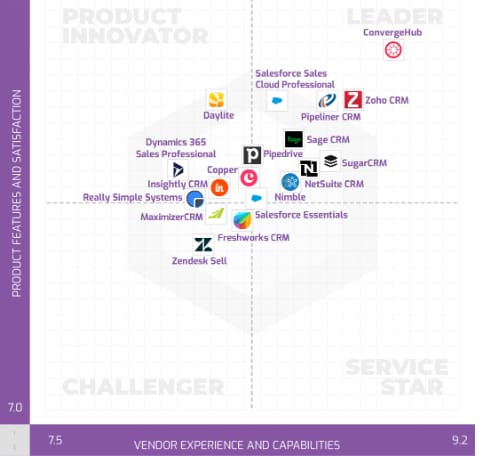
We’re proud of creating a product that our customers love! World’s most trusted and largest software marketplace Software Reviews has announced ConvergeHub the #1 CRM product in the Midmarket Segment in their recent Data Quadrant report. Based on the responses of real users for each segment, we are announced leaders in terms of Customer Relationship Management.

We’re proud of creating a product that our customers love!

World’s most trusted and largest software marketplace Software Reviews has announced ConvergeHub the #1 CRM product in the Midmarket Segment in their recent Data Quadrant report. Based on the responses of real users for each segment, we are announced leaders in terms of Customer Relationship Management.

The report is based on ratings by the business professionals who are the leading players in the midmarket premises.. As you know, rankings on Software Reviews reports are based on data provided to them by real software buyers. Potential buyers know they can trust these insights when researching and selecting software because they’re rooted in vetted, verified, and authentic reviews.

Client satisfaction highlights

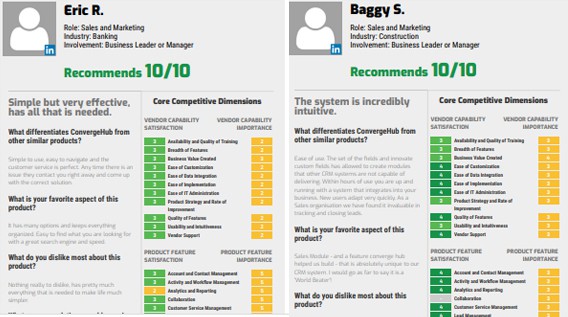
Learn more about what real users are saying about ConvergeHub. Thank you for placing your trust on us

Client satisfaction highlights

Below is a glimpse of the “words” our users chooses about ConvergeHub

Picture

What earned us a Gold Medal by Software Reviews?

Shampa Bagchi, the CEO of ConvergeHub states that they have created a cutting-edge CRM tool through innovative techniques and real-time analysis. It provides a fine blend of sales, marketing and support to help businesses achieve a synchronization across departments. She has also added that the brand will keep improving observability technologies for easy-to-use, automated monitoring and problem-solving solutions.

Among 11 categories, ConvergeHub has earned a leadership status in 6 reports by Software Reviews.

Software Reviews Grid Report

The SoftwareReviews Data Quadrant evaluates and ranks products based on feedback from IT and business professionals. ConvergeHub’s position in the Data Quadrant indicates its relative ranking as well as its categorization.

Ranked #1 in 6 reports by Software Reviews

Availability and Quality of Training

Quality of training is a crucial factor that differentiates ConvergeHub from the competitors. Our availability and quality of training makes our users choose us over competitors.

Availability and Quality of Training
  • Determines ease of use: Quality training helps users understand the features, functions and use cases of the CRM, leading to increased adoption and effective utilization.
  • Improves user satisfaction: With proper training, users can quickly achieve desired outcomes and results, leading to high satisfaction and positive perception of the product.
  • Reduces support costs: Efficient training minimizes the need for support, reducing costs and improving customer experience.
  • Increases adoption rate: Quality training leads to faster adoption of the ConvergeHub , enabling organizations to realize its full benefits.
  • Supports long-term success: A well-trained user base ensures sustained use of ConvergeHub and its continued success within an organization.

Ease of Customization

As per this parameter of Software Reviews Ease of customization differentiates a CRM product from competitors in several ways. In terms of Ease of Customization ConvergeHub is ranked #1 among the market leaders like Salesforce, Zoho CRM, HubSpot, and more.

Ease of Customization
  • Meets specific needs: A CRM with easy customization options allows organizations to tailor the product to meet their unique needs and requirements.
  • Increases efficiency: Customization can automate repetitive tasks and streamline processes, leading to increased efficiency and productivity.
  • Improves user experience: ConvergeHub provides a more user-friendly and intuitive experience, leading to higher adoption and satisfaction rates.
  • Enhances scalability: The ability to customize ConvergeHub ensures that the product remains relevant and useful over time.
  • Differentiates from competitors: The robust customization options of ConvergeHub allows users to stand out from competitors, providing a competitive advantage.
  • Better fit: Customization allows users to adjust the CRM to fit their specific processes, workflows and requirements, leading to improved efficiency and effectiveness.
  • Increased adoption: By meeting the unique needs of users, ConvergeHub leads to higher adoption rates and improved user satisfaction. No wonder 100% of our customers plan to renew their subscription with us
  • Competitive edge: ConvergeHub provides users with the ability to differentiate themselves from their competitors and stand out in their industry.
  • Cost savings: Customization eliminates the need for costly and time-consuming custom development, leading to cost savings.
  • Future-proof investment: The ability to customize a CRM ensures it will continue to meet changing needs as the organization evolves, making it a future-proof investment.

Ease of Implementation

As per the rankings of Software Reviews, ConvergeHub differentiates itself from its competitors ( who are basically market leaders like Salesforce, HubSpot, Zoho) in terms of ease of implementation in the following ways. ConvergeHub users have been using the product for several years and are most likely to recommend it because of its effortless implementation.

Ease of Implementation
  • User-friendly interface: ConvergeHub offers an intuitive, simple-to-use interface that makes it easy for users to get started and implement the system without extensive training.
  • Quick setup: The CRM system can be set up quickly without requiring extensive technical support, reducing the implementation time and costs.
  • Customizable: The platform offers a high degree of customization to meet specific business requirements, allowing for an easier implementation process.It helps users to meet their unique business requirements.
  • Smart Integration options: ConvergeHub integrates with popular tools such as Google Apps, Microsoft Outlook, QuickBooks, and more, making it easier to integrate with existing systems.The integration options offered by ConvergeHub allow users to easily integrate the system with their existing tools, streamlining their workflow.
  • Support: The company provides robust customer support, including training and troubleshooting, to ensure a smooth implementation process.
  • Increased productivity: The user-friendly interface and quick setup allow users to start using the system efficiently, increasing their overall productivity.
  • Reduced training time: The intuitive interface and robust customer support reduce the need for extensive training, saving users time and resources.
  • Increased user adoption: The ease of implementation and use of the system increases the likelihood of user adoption, leading to improved data accuracy and more effective sales processes.

Usability and Intuitiveness

As per the Software Reviews report, the usability and intuitiveness of ConvergeHub makes it a winning choice for businesses looking for a CRM software. Its user-friendly interface, customization options, and integration options make it an ideal solution for businesses of all sizes. Whether you’re looking to manage your customer interactions, sales, or marketing efforts, ConvergeHub has everything you need to succeed.

Usability and Intuitiveness
  • User-friendly interface: The software is designed to be easy to navigate and use, even for those who are not technically savvy. This makes it ideal for small businesses or teams who don’t have a dedicated IT department. The intuitive layout of the platform makes it easy to access the information and tools you need, so you can get your work done quickly and efficiently.
  • Personalized support to fit with your diverse workflow needs: You can create custom fields, workflows, and dashboards to ensure that you have all the information you need in one place. Additionally, you can tailor the platform to fit your preferred way of working, which can help streamline your processes and increase efficiency.
  • Intuitiveness: ConvergeHub is designed to help you manage your business operations with ease. For example, the platform has a robust lead management system that allows you to track leads, manage your pipeline, and close deals more efficiently. Additionally, it has a marketing automation tool that helps you manage your campaigns, create and send emails, and track the results of your marketing efforts.
  • State-of-the art integration: ConvergeHub integrates with a wide range of popular business tools, such as Gmail, Slack, and Zoho, which can help streamline your workflows and improve efficiency. You can also use APIs to integrate with other software that you use regularly, which makes it easy to bring all your data together in one place.

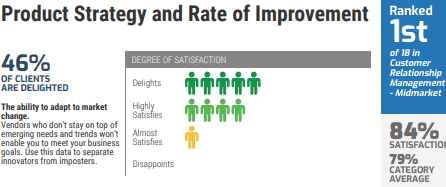
Product Strategy and Rate of Improvement

As per Software Reviews, ConvergeHub’s product strategy has helped it to become a winner in the CRM market by focusing on user needs, integrating with other tools, offering scalable and affordable pricing, and providing strong support to customers. The company’s approach to product development has allowed it to deliver a platform that meets the specific needs of businesses and has helped it to achieve sustained growth and success.

Product Strategy and Rate of Improvement
  • Focus on User Needs: ConvergeHub’s product strategy starts with a deep understanding of its target audience. The company conducts thorough research to understand the needs of its users and ensures that its features are tailored to meet those needs. This approach has helped ConvergeHub to deliver a user-friendly platform that meets the specific requirements of businesses across different industries.
  • Integration with Other Tools: ConvergeHub integrates seamlessly with other popular tools, such as email, calendar, and marketing automation platforms. This integration helps businesses to work more efficiently and effectively by eliminating manual data entry and reducing the need for multiple systems.
  • Scalability: As businesses grow, their needs change, and their CRM system must evolve to meet those needs. ConvergeHub’s platform is highly scalable and can accommodate the changing needs of businesses of all sizes. The platform’s ability to scale up or down as needed is a key advantage that sets it apart from its competitors.
  • Affordable Pricing: ConvergeHub offers an affordable pricing model that makes it accessible to businesses of all sizes. The platform’s pricing is designed to be flexible and can be tailored to meet the specific needs of each business. This approach has helped the company to attract and retain a large number of customers, which has contributed to its success in the market.
  • Strong Support: ConvergeHub provides strong support to its customers, including 24/7 customer service, training, and resources. The company’s commitment to providing excellent customer service has helped it to build a loyal customer base and maintain high levels of customer satisfaction.

Quality of Features

100% of ConvergeHub users plan to renew their subscription with ConvergeHub, says Software Reviews. No wonder, ConvergeHub’s features sets it apart from its competitors and has helped the platform to become a leader in the CRM market. The platform’s user-friendly interface, comprehensive sales management, advanced marketing automation, effective customer service, and customizable dashboards have all helped to make it a popular choice among businesses of all sizes. These features have helped ConvergeHub to deliver a complete and effective CRM solution that helps businesses to improve their overall performance and achieve their goals, says Software Reviews data Quadrant report.

Quality of Features
  • Comprehensive Sales Management: ConvergeHub offers a comprehensive sales management solution that includes lead and opportunity management, pipeline management, and forecasting. These features help businesses to close more deals, increase their productivity, and improve their overall sales performance.
  • Advanced Marketing Automation: ConvergeHub’s marketing automation features help businesses to create and execute targeted campaigns, track the success of those campaigns, and automate follow-up tasks. These features help businesses to improve their marketing efficiency, generate more leads, and increase their conversion rates.
  • Effective Customer Service: The platform’s customer service features help businesses to respond to customer inquiries quickly and effectively, track customer interactions, and manage customer service tickets. These features help businesses to provide better customer service, build customer loyalty, and improve customer satisfaction.
  • Customizable Dashboards: ConvergeHub’s customizable dashboards allow businesses to access the information they need quickly and easily. These dashboards can be customized to display the most important metrics and KPIs, which helps businesses to make informed decisions and monitor their performance in real-time.

Last, but not the least, we’re obsessed with giving you a seamless and success-fueled experience at ConvergeHub and are always listening to what you need and aiming to get you that — fast and hassle-free. Thanks to your feedback, we’ve been selected as a Leader in several categories in the reports.

Sign Up for a Free Trial of ConvergeHub Today!

Looking for a leading CRM tool? Here’s ConvergeHub with a feature-rich and intuitive dashboard, context-rich alerts, and advanced sales and marketing automation.

About Software Reviews Gold Medal Awards

The SoftwareReviews Gold Medal Awards honor exceptional technology vendors based on user evaluations. The awards are the culmination of extensive software reports and are determined through a transparent, proprietary method that calculates an average satisfaction score covering Net Emotional Footprint, Vendor Capabilities, Product Features, and likelihood to recommend. This score evaluates users’ emotional response to the vendor, such as trustworthiness, respect, and fairness. These reports assist software buyers in making knowledgeable software purchasing and renewal decisions.

What is a Salesforce Admin?

Salesforce is the biggest customer relationship management platform available nowadays. More than 150,000 companies globally use this CRM platform for growing their businesses. As the demand for Salesforce has increased over the decade – there’s a high demand for Salesforce administrators. The Salesforce Administrators play a vital role in these organizations’ success.

Who Is a Salesforce Administrator?

Salesforce administrators have in-depth knowledge of the management and administration of the Salesforce platform. In the organizations that facilitate Salesforce service, Salesforce Administrators play a crucial role. These administrators enable users to get the most out of the Salesforce platform.

However, Salesforce Administrators don’t use any line of code – but utilize the arsenal of powerful functionalities for a business’s advantage. Salesforce administrators work with the organization’s-stakeholders directly to define system requirements and customize the platform. It enables the users to take complete advantage of the system.

A Salesforce admin can understand how to make a platform work for their company’s goals. Some organizations prefer one admin, while others opt for more than one person for this role. Salesforce Administrators help to:

  • Seamlessly utilize Salesforce on any technical level.
  • Maintain the platform for all the teams
  • Stay updated with the platform’s new tools, updates, and capabilities.

The Salesforce administrators are your trusted advisors on everything about this platform. They build a vital bridge between an organization and technology.

What Does A Salesforce Admin Do?

For various organizations, the job of administrator can combine many roles. Some companies hire admins to comply with the specific position. As Salesforce is a powerful platform with all its functionalities, having a certified Salesforce admin is beneficial. The admin can ensure that the company can use the platform to its highest potential.

Salesforce admins are responsible for various Salesforce-related tasks – helping users develop reports, reset passwords, run backups, add fields, and maintain data quality. Their work doesn’t stop here – these admins have a wide range of responsibilities, including platform maintenance, process automation, bug fixes, user training, etc. From creating easy-to-use dashboards to smart workflows, these admins can create useful tools on any device.

Here are some activities that a Salesforce administrator can do:

  • User maintenance: User maintenance is a big part of the admin task with Salesforce. The Salesforce admins are at the forefront of adding new users, checking system permissions on individual users, modifying existing accounts, etc.
  • Customization and Development: These admins spend considerable time customizing the organization’s setting menu, modifying page layouts, adding picklist values, mapping rules, and more.
  • Data Cleaning: Salesforce Administrators eliminate all duplicate accounts and contacts by updating and importing mass data. They use data loaders, import wizards, and more to do the task.
  • Reports and dashboards: Salesforce admins create regular reports to collect vital information from available data stored in Salesforce- as the reports help with decision-making.

Salesforce offers numerous functions that require a software developer. But now, the Salesforce admin can take charge of it without writing a single code- saving a company’s money and time.

Salesforce administrators work hard for work efficiency and to promote productivity. The admins offer creative solutions to the Salesforce users so that they can make the most out of the platform. As a result, the users become happier with the systemic approach, and businesses become more efficient. An impeccable Salesforce administrator will do more than requested- like giving suggestions on things the employees can do better. Salesforce admins can conduct both management and consultation of a business.

Levels Of Salesforce Administrators

As mentioned previously, the role of a Salesforce admin can differ based on various factors- but their fundamental responsibilities are the same. However, one must know there are three levels of Salesforce admins: “Entry-level”, “Mid-level”, and “Senior” admins:

Entry-level Salesforce Admin (0-2 years of experience):

A junior Salesforce Admin helps to improve and enhance an organization’s Salesforce platform. They are usually guided by experienced admins or gain experience by doing the tasks. Tasks of an entry-level admin include:

  • User and license management that includes new user setup, profiles, roles, permissions, deactivation and monitor user adoption, etc.
  • Being the first line of support for the Salesforce platform users and managing incoming support tickets
  • Salesforce’s configuration changes include simple flows, page layouts, fields, custom settings, record types, dashboards, and reports.
  • Carry out requirements requested from platform users and company stakeholders.
  • Create system training materials, and carry out user training

Mid-level Salesforce Admin (2-5 years of experience):

When a Salesforce Administrator has experience of 2-5 years – the person will be considered a mid-level admin. Some junior admins may have witnessed that they have to carry the responsibilities of Mid-level admins only after a year. They have more experience than the junior admins.
Mid-level admins have technical experience. But they also bring the additional skills of designing, analyzing, and optimizing processes. These mid-level admins usually perform a bit more complex tasks than junior admins:

  • They utilize more advanced automation- Salesforce Flow.
  • Work with Sales Cloud- which means that the Salesforce admin has specialization in CPQ.
  • User adoption monitor and its improvement
  • They are maintaining and customizing the Salesforce org using the best techniques. The admins understand options like automation, page layouts, and record types from the core.
  • Exposure to understanding business processes and requirements gathering.
  • They work with applications like Mailchimp, Conga, DocuSign, and more. Mid-level admin must know how to work with various integrated applications.
  • Having a decent understanding of project management
  • Even though they do not know program coding, they can write specifications for developers.
  • Mid-level admins are self-sufficient- know where they can find help to get answers to their queries.

Senior Salesforce Admin ( 5+ years experience)

Only after working for more than five years as a Salesforce admin, one can be promoted to the Senior Salesforce Admin role. Senior admins take charge of various requests for their organization. It means they are adaptable to change management, communication, prioritization, and managing everything about the Salesforce project. They are quite experienced in performing Salesforce integrations with the help of AI. With a Senior Salesforce Administrator role, one can lead the teams of admins or even build one.

As a Senior Salesforce Admin, one has to work closely with the stakeholders of the business. Here are the tasks and responsibilities of Senior Salesforce Admin:

  • The admins have an in-depth understanding of the business process and mastered requirements gathering.
  • Create the platform roadmap and define various priorities
  • Work at big Enterprise companies as a product owner.
  • Full knowledge of all the best practices of Salesforce – understanding Salesforce architecture and how to integrate with other systems.
  • Have stakeholders’ management skills, taking responsibility for governance, and a steering committee.
  • The Senior Salesforce Admin is in charge of maintaining an extremely complex Salesforce organization. Why complex? Typically, this organization uses multiple Salesforce products on the platform and has 300+ typical users or, else, 100+ heavy users, various integrations.
  • DevOps management experience along with releasing the developed elements.
  • Senior Salesforce Admin has to manage a team or work with external parties to oversee the development of the Salesforce org. They carry out several releases per year

How To Be A Salesforce Administrator?

To become a Salesforce admin, you do not need any technical background or knowledge of Salesforce technology. If you have internet and computer access, you can learn and get trained on Trailhead. Trailhead is the online learning platform of Salesforce- a space for new students to learn and become seasoned professionals with various business skills. Among all the skills, you can learn skills and earn a certificate to become Salesforce Admin – online and at your pace and schedule.
In order to get work as an admin, you must prepare and study- it is necessary to pass the Salesforce Certified Administrator exam. The engaging modules on Salesforce are perfect for initiating one to become a proficient Salesforce Administrator.

Career Prospects and Opportunities For Salesforce Administrator

The demand for Salesforce admin has increased ever since Salesforce came into the world of businesses. Salesforce’s research shows that the demand for annual growth rate has increased by 400%. However, it is not a career path for people who don’t want to learn. It is for those who love learning and enjoy using the latest technology.

Some people opt for the certification to enrich their resume and upgrade to a new position. Others use it to supplement the current role in another company with a higher salary.

Salesforce Admin Credentials and Certifications

Becoming a Salesforce Admin can be an invaluable long-term career path and add to your current career path. A Salesforce administrator can use their experience to use the platform without any in-depth technical knowledge.

To be certified, one must go through an intense journey to earn the much-desired certification, demonstrating the result of their knowledge and preparation in the Salesforce implementation.

For the admins to keep their skills and knowledge up to date- perseverance and dedication are two essential factors. There are five vital certifications related to the Salesforce admin role:

  • Administrator: Candidates with experience in Salesforce administration can help their companies in various ways to make the most out of this CRM platform.
  • Advanced Administrator: Admins with experience in designing advanced platform setup and configuring solutions and can devise solutions to solve a vast range of business problems.
  • CPQ Specialist: These Salesforce admins are proficient in implementing Salesforce CPQ. It helps the admins showcase their knowledge and skills in designing, building, and implementing flows with Salesforce CPQ.
  • Marketing Cloud Administrator: This credential is for the admins who know how to configure Marketing Cloud products- utilizing industry and product best practices. Candidates are familiar with account setup, data management, and user requests.
  • Platform App Builder: Salesforce admins who are skilled in designing, building, and implementing custom apps with Salesforce’s customization capabilities

How Important it is to Have a Salesforce Administrator

Every business that uses Salesforce can swear by the excellence it brings to business growth. However, it can be intimidating to dive into the world of Salesforce with its world of features. This is where the Salesforce Administrator comes in to help your company with the Salesforce platform. They can guide the users through errors, problems, training, and adding improvements to the tool.

With the help of the admin, sales staff can create custom dashboards, alerts, fields, and reports- shortening the sales cycle while tracking each lead minutely. With the presence of a Salesforce administrator, the company gains the opportunity to exploit the tool thoroughly. Also, some adoption issues can exist on the user level if there’s zero guidance. It can lead to frustration with the usage of the tool. To utilize the Salesforce platform effectively, the role of an administrator is unignorable. An Admin can be at a company’s service to successfully guide the users through the system.

Millennials and GenZ: How Different Are They

How Gen Z and Millennials are Shaping the Post-Pandemic Shopping Landscape

Did you know that 93% of Gen Zers say their purchasing decisions are influenced by social media, while 50% of Millennials remain loyal to their favorite brands? These insights highlight the evolving dynamics between these two influential generations.

Before the Pandemic: Distinct Generational Traits

Before COVID-19 reshaped the world, clear distinctions existed:

Gen Z: Pragmatic, constantly seeking innovation, and deeply influenced by social media trends. Their buying decisions often hinged on what they saw and experienced online.

Millennials: Idealistic and experience-driven, they displayed unwavering loyalty to their favorite brands, often valuing consistency and familiarity.

Post-Pandemic: A Shift in Perspectives

Fast forward through two years of global lockdowns, and the lines between these generational traits are blurring. Shopping habits have undergone noticeable changes as consumers adapt to a world of rapid transformation.

Today, brands face the exciting challenge of deciphering these evolving preferences. Understanding the psychological quirks of both Gen Z and Millennials has become essential, as the modern consumer is no longer defined by a single mindset but by a blend of influences, needs, and values.

In this new reality, businesses must stay agile and innovative to capture the hearts of a more fluid, yet equally discerning, customer base.

Millennial Age Range

Who are these Millennials? People born between 1981-1997 are part of the Millennial group. Which means, today, the Millennials are 24 to 41 years old. These people have seen the best (the worst as well) of both ages. As a result, their shopping behaviour reflects a mixed influence.

Generation Z Age Range

Gen Z was born between 1997 and 2015, making them the youngest generation of shoppers till now. As we are in 2022, Gen Z is 7 to 25 years old. We must remember, not all of these generations are into shopping – as many of them are in grade school or high school, college, or not working as of now. As the years’ pass, it will be interesting to witness how their shopping habits take shape when they are also earning.

Generational Differences Between Millennials and Gen Z: In Response To Shopping Habits

When it comes to shopping, interacting with various brands, and viewing money, there are quite a few differences between Millennials and Gen Z. Also, there are some exceptions too.

Gen Z Spends Less Than Millennials, Save In Different Manners

Since inflation, the shopping behaviors of Millennials and Gen Z have shifted. At least 27% of Millennials and 30% of Gen Z are buying much less because of inflation. However, only 13% of Gen Z is buying more private-label products to save money – whereas 27% of Millennials prefer it.

Most Millennials have families to raise than Gen Z. They are choosing private-label products to cut down on grocery bills that are on a steady rise – thanks to inflation.

Most of Gen Z are yet to form households – so they save money on non-discretionary items. Due to inflation, at least 22% are okay with buying secondhand products rather than something new. Of course, 19% of Millennials also choose to buy secondhand items. Few Gen Z ( just 18%) use the buy-now-pay-later system, while fewer Millennials (only 15%) use this payment option.
Online Shopping Is Great – But Millennials Prefer In-Store Purchases (Instant Gratification)
As of today, Millennials are devoted online shoppers. They witnessed AOL dial-up to continuous connectivity – so they are never backing down from utilizing this convenience always. However, they still love shopping from stores more than Gen Z.

But why? What can give such instant gratification as in-store shopping? Also, one gets to purchase merchandise immediately rather than wait for delivery – so it’s a plus. A retailer with easy in-store fulfillment options, thoughtful store layout, and seamless checkout attracts Millennials more. Millennials prefer to pick up an item at a nearby store on the way to their home from the office than a place with just a single-item order online.

Gen Z Loves Fast Delivery As It Is Convenient

Gen Z wants their grocery to be at their doorstep at rocket speed. As they grew up with the on-demand economy – Uber, Instacart, Lyft, DoorDash, and UberEats are part of their growing up. And their favorite GoPuff has been delivering everything in under 30 minutes – since 2013.

That’s why 76% of Gen Z don’t care about brand over convenience, but 70% of Millennials do. For Gen Z, getting their grocery within an hour is of the highest preference, along with their alcohol demand. Very few Millennials look forward to fast and convenient delivery over brands.

Social Shopping For Gen Z, More Traditional For Millennials

Whether we acknowledge it or not, Gen Z has grown up with tablets in their hands – it makes them comfortable to shop through digital channels. Interestingly, they love social shopping through Facebook, Instagram, and other platforms to make purchases. Also, 41% of Gen Z feel at ease shopping through social influencers. Millennials are a little bit less enthusiastic about the channels – 58% prefer social shopping, but 32% go shopping via influencers.

Millennials Earn Points, While Gen Z likes fee-based loyalty programs

For Gen Z, usual loyalty programs are not head turners- only 45% enroll. Therefore, brands and retailers must develop eBay to understand programs and use them to draw Gen Z. Simple terms and conditions are a way to persuade 57% of Gen Z (as they disclosed themselves) to join any loyalty programs. Of course, rewards should be applied automatically. Also, more than half a percentage of Gen Z prefers a single loyalty program for multiple brands over separate ones for each brand. That’s not all; they would join a loyalty program more if they got personalized rewards.

Unlike Gen Z, Millennials are more delighted with loyalty programs- 61% claim membership in at least one loyalty program. However, like Gen Z, they also like to join a program with a personalized rewards system (60%) and, if applied automatically (61%).

Both generations have distinct preferences for loyalty programs. While 65% of Gen Z choose programs where purchasing products or services earns them points- 46% prefer earning cash back. Millennials (78%) love earning points and money back- also, 53% confirm that rewards intrigue them to join. Astonishingly, the budget-conscious Gen Z (at least 27%) are willing to be part of a fee-based loyalty program- they can pay for better perks. But, among Millennials, only 21% are ready for this program.

Less Loyalty Among Gen Z Shoppers?

If you are a Millennial, you probably have a few favorite brands and are not afraid to flaunt them. Interestingly, almost 70% of shoppers trust their favorite brands to meet their expectations and changing needs. But why is that? Because these shoppers feel a deep emotional connection with these brands as they feel satisfied with the products and services.

Around 79% of buyers expect their most-liked brands to understand their expectations. Among them, 68% look forward to a company’s anticipation of their needs. These generations of buyers believe brand loyalty comes from reciprocity. However, a higher percentage of buyers expect brands to personalize all the offers.

When it’s Gen Z, 63% feel emotionally connected to their favorite brands. Almost 70% think that brands must meet their unique expectations and needs. But 54% expect all brand offers to be personalized.

Selling Across Both The Generations

Remember that Millennials and Gen Z have different approaches to shopping, choosing a brand, and sticking to it. But brands still have to build greater trust among these generations. How? Brands have to understand the widely available data as their trump card. It will enable them to understand what the shoppers of these generations want and make personalized offers for them.

Millennials are Gen Z like honest and transparent communication (97% and 96%, respectively) and consistency in every interaction with a brand/company (95% and 93%). Of course, both generations are concerned about customer information privacy. Therefore, they want assurance of the same (at least 92% of Gen z, 97% of Millennials)

One crucial finding is that 91% of Gen Z and 95% of Millennials want to be seen as individuals, not as a group. Henceforth, brands must offer custom and unique interactions, products, services, and rewards for both generations. The idea is to evolve the strategies according to the change in shopping habits and match their individualism.

Conclusion

It is interesting to witness how some significant events can affect the shopping habits of generations of people. As two years of shutting down affected the world economically and mentally, it reflects on how different generations approach shopping today. We found an overlap of influence in the shopping habits between Gen Z and Millennials to another level.

There are many similarities and disparities between Millennials and Gen Z. From trusting various brands to approaching shopping and loyalty programs, we have identified the multiple visions.

Even though many Millennials are 41 now, they still look young. That being said, Millennials and Gen Z see each marketing campaign differently. Therefore, campaigners need to study both generations through available data. These data can give insight into what type of campaigns marketers should approach to invite both Gen Z and Millennials. There are no more clear-cut differences in what influences Gen Z and Millennials—making it challenging and fun for the campaigners to find out what works best to attract both groups.

Empathy in the age of algorithms

A lot is being said about Artificial Intelligence nowadays and you must have heard at least some of it…

Some say it’s the greatest revolution…

Some say it is the greatest threat to humanity…

Some are excited…

Some are terrified…

But keeping the hype and fear aside, a question that is beginning to bother us, especially those of us who are in the business of working with customers and the relationships that businesses have with their customers, is how that relationship will change in the future…

We all know that building long-term relationships with our customers is essential to the growth of the business. So, when the intelligence is artificial, but the customer is real, how can a business build long-term relationships?

Customers are real people – with feelings, emotions, and personality.

They want to be heard. Especially when they are frustrated or upset with your organization, they want to feel listened to and understood.

And that is where empathy comes in.

Empathy is the ability to put yourself in another person’s shoes – to look at a situation from that person’s perspective. That’s not easy, but often that is what makes the difference between losing a customer to a competitor versus building a loyal advocate of your brand.

Customer empathy helps identify a customer’s needs, establish connection with them, and also manage conflicts better. Often it is not about solving a problem or receiving a refund. Even when a situation has no resolution, sometimes just acknowledging a customer’s feeling helps provide a better experience.

In a recent study by Salesforce, 84% of customers said that being treated like a person, not a number, is very important to winning their business.

So, the question every business needs to ask is: Can artificial intelligence make your customer feel like a person?

If you would like to know more about how ConvergeHub can help you build long-term customer relationships by providing better visibility, talk to us.

Or, if you would like to check it out yourself, go ahead and create a free ConvergeHub account here.

How Effective is the Challenger Sales Model in Leading Customer Conversations?

While most of the sales strategies prioritize “relationship building” as a key aspect of the sales process, unfortunately, it is not. A Gartner study reveals that a majority of customers make a purchase decision after thorough product research. Ideally, they do not need a sales rep to give them options regarding what they should buy. And, that’s where a Challenger Sales Model thrives.

Decoding Challenger Sales Model

Buyers these days already have preconceived notions. Thanks to the world of the web that exposes them to a plethora of choices. But, it’s practically overwhelming to decide what serves them best among so many choices. Here, comes the challenger sales process, where the rep takes control of the conversation by teaching prospects what works best for them. In short, a challenger sales rep talks about “why” instead of “what”.

A Sales Process that Thrives on “Challenging” Customers

In a world where choices are endless, B2B Sales gets ahead with a challenger model undoubtedly. It’s about challenging your prospects, where the customer interactions are entirely designed to disrupt their current thinking.

According to the Vice President of Advisory, Gartner, Mr. Brent Adamson, “it’s not about selling anymore. Rather it’s about educating your prospects what works best and the choice is all theirs”. Today, the key to B2B sales hinges on delivering insights that align with the customer’s goals. More than 150% of the buying decisions are driven by “ high-quality, low regret” deals, and the challenger sales process instills that confidence in the customers.

Types of Sales Profile and What Sets Apart the Challengers

The majority of the revenue in a B2B setting is driven by the challengers, says the Gartner report. To figure out what sets apart a star performer, Gartner ran a survey on 6000 sales professionals globally. The data received from the survey clearly defines that there are five different types of sales profiles based on the sales process and specific skillset.

Following image will clearly figure out the difference:

Hard Worker Relationship Builder Lone Wolf Problem Solver Challenger
  • Super motivated
  • Seeks feedback at every level
  • Work hard to convince a customer
  • Nurture customer
  • Focus on building customer loyalty
  • Makes a great customer advocate
  • Relies on hunches and instincts
  • Self-assured
  • Works independently
  • Detailed oriented
  • Extremely focused and reliable
  • Always up for solving problems
  • Have thorough understanding of customers’ preference
  • Debate and challenges
  • Absolute go-getter

Source: Gartner

The role of a Challenger Sales rep is to push the customers from their comfort zone and consider a new perspective. B2B sales rely more on the challengers in recent times, because they can effortlessly place a new product in the market, and build their brand identity as well as a customer base. And, everything in a shorter period. By the time, a relationship builder successfully engages with his customers, a challenger closes the deal.

Moreover, the Challenger Sales process always identifies an unknown problem in the customers’ business, which otherwise remained unidentifiable so far. A challenger works on uniquely positioning the issue so that it can be solved accordingly.

Why Challenger Sales Formula Wins

“Challenger” itself denotes “something that challenges”. In this case, it is the buyer’s preconceived notion. Today, it’s all about the customer experiences that determine their loyalty to a brand. The brand name, products, or service are no more the prime drivers behind purchase decisions. Instead, it’s the experience that you deliver. Undoubtedly, this change in shopping behavior makes things more complex.

Challengers are super successful in this complex scenario as they are adept at taking control of the purchase conversation at every level. The idea is to lead customers in such a way so that they can explore the unique strengths of their organization.

A Gartner study reveals that the Challenger sales model is responsible for 54% of the total revenue of any organization and the other four types of Sales professionals account for the remaining 46%.

Gartner - Percentage of high performers in complex sales by profile

Challenger reps leverage the customers’ understanding of their businesses to deliver new insights and push them to contemplate new ideas, thoughts, and opinions. Maybe the existing product the customer is using is not that cost-effective. A challenger finds such loopholes in the business and directly identifies the same that the customer hadn’t previously considered.

A challenger sales rep then provides a solution in a way that builds customers’ trust and eventually he makes a purchase decision. Contrary to the Relationship Builder, Challengers can effectively build constructive tension, following which a customer is convinced to make the purchase.

Adopting Challenger Sales Process- 5-Steps Guide

A Challenger immediately taps into the prospect’s worst fears and eventually positions it uniquely along with the solution. It not only creates a positive impact on the customers but also gives them high hopes for the solution. At this point, the purchase decision is partially made. Also, driven by a high adrenaline rush, a Challenger sale gives every company its maximum revenue.

Here’s how a business can adopt a challenger methodology. Follow this five-step guide.

Step #1 Warm-up prospects
Introduce your prospects to the problems they are facing. Most of the time, prospects are completely unaware of the problems. A challenger’s job role is to warm up the prospects by telling them about these hidden loopholes. To achieve this, opt for comprehensive research of the ideal target customer. Get data on their pain points, challenges, and needs as well as the products they are using recently.
At this phase, the discussion of a product never comes up. Instead, the conversation mostly revolves around the prospect’s problem. The idea is to get the prospect curious and craving for a solution.

For example, your prospect is using a CRM system that’s traditional and outdated, if considered from today’s perspective. While the traditional system replaces the manual tasks, maybe it exposes the business to a security breach. A challenger talks about this problem and gets the customer curious about a solution that matches their budget as well as their needs.

Step #2 Reframe the conversation
You are already aware of your prospect’s biggest problem in the previous phase. At this phase, a challenger will reframe the pain point to create an opportunity for growth.

What happens most of the time is a prospect brooding over the problems, but intensely lacks the plan to solve them. That’s the golden opportunity for the challenger to position the solution. For example, your prospect must have talked a lot about the risk of security breaches while using an outdated CRM solution. But, with so many options in the market, he is again perplexed about making a choice.

As a challenger, you can run solution-focused conversations and eliminate misconceptions about your products. The moment you steer the conversation right toward the appropriate solution, you are creating an impact. Remember, you are not making a sale at this point, but rather evoking curiosity about something which they cannot solve all by themselves.

Step #3 Create emotion
As already mentioned, customer not only buys features or advantages. There are so many products in the market offering the same kind of benefits and features. What your customers buy is the “emotion” or “ experience”. Even in B2B sales, emotions play a vital role to determine a purchase decision.

The role of a challenger sales rep is to create emotion by leveraging storytelling as a sales tool. You can either tell them what’s great about your solutions or tell a true story about how your product has helped some other customers of yours. A challenger opts for the latter and a relationship builder or problem solver will choose the first method.

Step #4 Highlight your value proposition
For all the sales profiles, this step is quite similar, though a challenger does it a little differently. The prime focus of a challenger is to educate the customer regarding what an ideal solution looks like without even talking about the product. It’s the perfect time to sell your idea because your prospect is already convinced. Keep on guiding your prospects about the possibilities for solving their problem by using techniques that reframe their perspective.

For example, if your customer is unsure about making a decision, your job is to open up his mind by explaining the advantages of the solutions. Real-life stories and case studies help in these scenarios. Tell them what the future will look like if they adopt this solution and help them arrive at a decision.

Step #5 Place the product
The easiest phase is introducing the product. By this time, your prospect is already convinced and you have successfully made an impact on the customers. So far, you’ve identified or discovered the prospect’s problem, reframed it, gained their trust, and already ran a solution-focused conversation. It’s time to introduce the product. Many customers won’t even care to ask about the brand name and the product itself, because he has already bought the “ experience”.

Master the Challenger Sales Techniques

  • Identify the prospect’s problem as a unique growth opportunity
  • Present a solution instead of selling the same. Talk about the ways it can solve their problems
  • Challenge the customers and make them contemplate the new solution.
  • While closing the deal, never negotiate on the price point. Because negotiations often lead to a misconception that the product is not worth the price. It affects the qualitative value of the product.

Does the Challenger Model Work

Well, the data reveals the fact. Here’s a look at the latest available data about the efficiency of the Challenger Sales Model in a B2B business landscape.

  • 40% of the revenue generators are using the Challenger style , unlike the other sales process, published in the book called “The Challenger Sale” by Matthew Dixon and Brent Adamson
  • Only 7% of sales professional relies on relationship building in the complex sales process.
  • Over 50% of expert performers mix the challenger model in their existing sales process.

Wrapping Up

These days the sales process is becoming way more complex than it was a couple of years back. Customers nowadays make an informed choice while buying a product or service. They do their own research before connecting with a sales rep. In this complex scenario, brands depend on the Challenger Sales model to close deals.

Today, it’s more important to teach your customers that the choice they have made may not be an ideal one. Maybe they need something that addresses their needs and preferences in a more streamlined manner. A challenger does it right and transforms your prospects into loyal customers.

How AI CRM Software is Transforming Your Business

Artificial intelligence or AI CRM is making quite a buzz these days. In the 21st century, where every business is seeking digital transformation to scale up, adopting AI capabilities has become a survival imperative. From business operations to sales processes and customer relationship management, AI is playing a vital role everywhere. With built-in AI capabilities, CRM has already secured the #No.1 position as a MarTech tool.

The concept of AI-driven CRM is quite new, however, they take Customer Relationship Management to the next level. An all-in-one CRM like ConvergeHub is featured with AI capabilities that help manage all the key tasks with the highest level of accuracy and zero manual errors.

This piece is an in-depth look at how businesses can leverage the power of artificial intelligence-enabled CRM. According to a recent Deloitte report “Data and AI will have a dramatic effect on customer interactions in the coming years.”

Business Benefits of Adopting Artificial Intelligence

In a business context, Artificial Intelligence performs tasks that are difficult for humans, often due to time constraints or other factors. On the contrary, it is more effective to use an AI tool instead. For example:

  • AI CRM tools can offer smart suggestions, elaborate insights, and actionable forecasts so that the sales reps can incorporate these elements into lead management, quotes, sales pitch, and AI phone calls to enhance communication efficiency.
  • It helps you make decisions about improving customer service or product development by identifying trends in customer behavior over time.
  • AI offers excellent product recommendations based on past purchases or searches, or even helps you learn about topics you are interested in..

Customer Service Support, Marketing Analytics & Lead Generation

When it comes to customer relationship management, AI tools perform a wide range of functions in business, such as customer service support, marketing analytics, and lead generation. With ConvergeHub, users can expect:

  • Exceptional Customer Support –AI powered CRM systems are equipped to process large sets of data into insightful business information. SMBs with complex databases are highly benefited with this. This is absolutely great for the companies who have made recent changes in the policies to have more clarity on organizational structure as well as for making better business decisions.
  • Marketing analytics – Real time marketing analytics helps businesses gain detailed and up-to-the-minute information on specific marketing campaigns so that the marketer can decide on the correct efforts. This also gives him necessary ideas on what needs to be updated in the current marketing plan. The whole idea of the real time market analytics is to make sure that the marketers get to know about performing and non-performing campaigns and get to know what fits in and what does not.

Speed and 100% Accuracy With Zero Manual Error

AI CRM like ConvergeHub helps your business perform tasks at the highest speed, without compromising on the accuracy level. AI-powered CRM tools automates lead scoring, lead management, and campaign management, thus allowing you to focus on what matters most—your goals for the day.

  • Lead Scoring: ConvergeHub can score leads by in-depth behavioral analysis from their real-time interactions with your website or app, so that every lead is treated equally.
  • Campaign Management: Using an advanced algorithm, ConvergeHub helps you to create highly personalized campaigns based on the behaviors of individual users, such as age range or gender preferences. Also, you can access data from other sources like Facebook ads or Google AdWords PPC ads when making decisions about creating new campaigns or adjusting existing ones based on performance results over time.

Automates Routine Tasks

Artificial Intelligence CRM like ConvergeHub automates routine tasks like adding contacts to certain lists, or updating the inventory list, so that you can focus more on crucial jobs.

For example, if you’re a salesperson and have a list of prospects in your CRM that need follow-up calls, ConvergeHub will automatically add these contacts to an automated dialer task that schedules those calls for the following week. If a lead hasn’t responded after two weeks and was marked as “prospect,” ConvergeHub will automatically send out a system-generated email reminding them about their opportunity or product offering.

  • Client nurturing: ConvergeHub also helps you nurture and manage existing relationships with customers. It sends out automated emails to your customers reminding them about upcoming orders or discounts on products they have previously purchased from you or others in your company (such as third parties)

Real time Analytics features help SMBs decide what went wrong at what touchpoint. It helps them decide what kind of updates are required to be implemented and how things are to be nurtured. Business decisions are always based on real-time data.

  • Lead Management: With ConvergeHub, each lead will be assigned a score based on their behavior, which allows you to prioritize your sales team’s time. This means that every lead can be given equal attention and treated as if they are of the same value. Artificial Intelligence also enables ConvergeHub users to send out emails to customers who have been inactive for a period of time, so you don’t lose contact with them. 

For example, if your CRM is connected to an email marketing platform like MailChimp, a CRM tool will automatically send out a welcome email upon signup that explains how the system works and encourages users to connect their social media accounts or import contacts from their existing email account.

Prioritize Lead Management

Lead scoring is a method of prioritizing the time you spend on each lead, based on their likelihood to become customers. As soon as your leads convert into paying customers, they are prioritized accordingly in your CRM system.

This is specifically helpful for businesses that have a potential customer base but are dispersed across multiple sales teams or departments within a company. It also helps companies dealing with multilevel sales processes and have different priorities based on how soon they are to close deals.

A Harvard Business Review article titled ‘How AI is Changing Sales’ states that AI algorithms can instantly impact five core areas of sales– forecasting, price optimization, upselling & cross-selling, lead scoring, and performance management. When Artificial Intelligence supports Customer Relationships, both can provide comprehensive information on all these parameters and result in a higher number of closes.

AI-powered CRM Enhances Customer Engagement & Retention

AI-enabled CRM tools can help create a tailor-made experience and interactions by determining the psychological status of your customer from their conversation pattern. Modern-day CRM tools can also perform a sentiment analysis by analyzing caller intent as well as the tone of the conversation to comprehend customer satisfaction levels in real time. With all such insights at your access, it’s easy to craft a winning customer engagement strategy and identify potential problems in the existing one. Accordingly, quick actions can be adopted to lower the escalation cases.

Boost Productivity and Efficiency

AI CRM like ConvergeHub is an all-in-one solution. Offering an enterprise-grade solution for Sales, Marketing, and Customer Support teams, it maintains the perfect coordination between all three. With all data at a single location, it helps all the departments to work in tandem while improving the productive efficiency of the organization. Also, you get crucial customer insights to develop an effective Sales funnel.

An all-in-one enterprise CRM results in a higher volume of Sales closures, customer retention, and more. Simultaneously, seamless integration between multiple teams will boost productivity and revenue generation.

ConvergeHub Understands Your Customers

ConvergeHub understands your customers as you do. It facilitates ease of communication, organizes customer data, and boosts customer service functions- all from a single location. Being AI-powered, it also streamlines operations in a way so that customer grievances are quickly addressed.

Wrapping up

At ConvergeHub, we believe that the power of artificial intelligence is only going to increase in the coming years and we’re excited to be at the forefront of these developments. Share your thoughts with us.

How to Choose the Right CRM Software for Your Business?

Fostering a healthy customer relationship is at the heart of every business. Doing it right can bring you sustainability and increase your brand recall. Companies nowadays invest in CRM software to seamlessly communicate with customers, thus building a better conversational experience.

However, choosing the right CRM software often seems overwhelming. Here, we will be talking about three different types of CRM systems and how to choose the right product that streamlines customer management for your business.

Customer Relationship Management is a Business Imperative in Recent Times

Customer interactions determine business success to a great extent. More than 80% of customers prefer conversational experiences while interacting with brands. In fact, customer journeys nowadays depend on their interactive experience across various channels.

Operational CRM Systems

Operational CRM takes care of the buyers’ journeys at every touchpoint. It comes with a variety of tools that help businesses gain better visibility of customer journeys. Starting from the first level interaction at the brand’s website to the entire lead management process, operational CRM keeps a tab on the customers’ journey through the sales pipeline and tracks their behaviors throughout.

A good operational CRM tool comes with automation features for marketing, sales, and services. These three segments are otherwise handled by the employees. Automating these three primary roles frees up a whole lot of time for the employees, and they can invest in tasks that require human intervention. It helps businesses scale up by providing superb customer service.

Features of an Operational CRM

Contact Management: Keeping a track of leads is absolutely hassle-free when it’s automated. With an operational CRM, you can manage the details of your leads from a central platform. The automation feature captures the details as soon as a prospect interacts with your brand. Thus, it’s easier for the team to carry the conversation from any level. It also ensures that no contacts slip off the funnel.

Keeping track of leads’ behavior: Operation CRM system can keep a track of the leads’ behavior across their journey. As a result, you can easily decide the scoring capability of any particular lead. You can segregate a high-priority lead, a prospective customer, and the leads spending more time on your website. This way, you will know which leads to nurture by personal touch or automation.

Sales automation: With sales automation features, the sales team of a company is assigned tasks based on customer actions and deal value.

Marketing Automation: It helps in effective marketing to your leads. When you already have the contact details of your prospective leads, you can easily add them to your email funnels and update them with new information. Also, it helps differentiate a warm lead from the cold ones and marketing accordingly.

Collaborative CRM Systems

Collaborative CRMs are named after the work it does. It’s meant for collaboration across teams. This tool helps share customer information across departments, vendors, suppliers, and internal and external stakeholders.

While operational and analytical CRM can perform the job of a collaborative system, many companies still want to invest in collaborative CRM systems separately. The reason is, collaborative CRM is exclusive to customer service that works for improving customer satisfaction, retention, and acquisition.

Features of a Collaborative CRM

Interaction tracking: keeping track of every interaction is the primary role of collaborative CRM systems like ConvergeHub. It gives access to customer interactions to every customer-facing team, right from sales to community management. It includes

  • Feedback from the support team on each and every deal
  • Community conversation regarding new products
  • Notes from the sales team to carry out the further interactions

A collaborative CRM eliminates silos and provides access to information for every team.

Managing customer relationships: Keeping track of customer interactions across every channel helps in the seamless management of customer relationships. When a new customer arrives, a collaborative CRM helps track their preferences, needs, and goals. It keeps all members of the customer-facing team on the same page, thus enabling them to deliver a more personalized experience.

Document management: Collaborative CRMs take care of your documents. They provide a central platform to store all your documents. It keeps things organized and provides access to every stakeholder so that you don’t need to hunt down the important documents in your local folders.

Analytical CRM Systems

Analytical CRMs like ConvergeHub empower you with customer data to develop various crucial business insights. It is featured with multiple digital tools that collect a huge volume of data, analyze it and translate it into business insight. With Analytical CRM, you get data from every level of the customer journey. Thus, it’s easier to see and decipher the behavioral trends of the customers, according to which brands can develop their marketing strategies. It helps them decide which leads will translate into customers or subscribers. Analytical CRM gives you every possible information about the average deal cycle, monthly recurring revenue, customer retention rates, and more.

Features of an Analytical CRM

Data mining: As the name suggests, Analytical CRM works as a data hub. It stores and organizes crucial data in one single database that is easily accessible. It applies statistical analysis to identify behavioral patterns and sales trends in your data and segregates customers accordingly. The purpose is to track the right audience at the right time.

Upsell and cross-sell opportunities: Brands get an insight into customer behavior from their previous purchase trends. It clearly shows you how to target your leads- upsell or cross-sell.

Constructing buyer persona: Analytical CRM not only captures data and extracts the pieces required for constructing buyer persona. It helps you understand your customers’ needs and preferences and accordingly craft marketing campaigns. It helps brands deliver personalized experiences, which further makes a difference to your bottomline.

According to a recent study, 93% of the brands using ConvergeHub have exceeded the lead and revenue goals by creating a buyer persona. 87% of the brands have seen an increase in customer retention rate by using the analytical features of the tool.

Sales forecasting: Most importantly, analytical CRM helps evaluate past sales trends, thus making a great prediction about the future. It can predict a rise and a dip, based on data. Thus, companies are able to decide on their inventory and staffing, and revenue on a seasonal basis.

Analytical CRM, to say the least, can help companies keep a track of every touchpoint so that it becomes easier to figure out where the best customers come from. Also, you know which of your marketing efforts are creating the best impact and which are not.

Steps to buy a CRM solution for your business

Investing in the right CRM solution will help maximize your profits, cut your operating costs, and boost IT efficiencies, but with many options available, what selection criteria should you use to make the right decision for your company? Knowing that not all CRM solutions are equal, it becomes a matter of serious thought to choose the right one.

Understand the CRM Concept

There’s no point of investing in a CRM if you and your people have a vague understanding of this software tool. Remember once you are equipped with all the necessary information, it can be easy for you to test the knowledge base of the vendors. Let’s say, you can ask your vendor for a few functionalities and see if they can explain them in simple terms. If the vendor fails to provide a convincing explanation on the functionality of their CRM application- do not buy it.

Know Your Purpose

Before you dive in, it’s important to understand why your business requires a CRM. A well planned CRM strategy coupled with the right tools can prove to be very powerful – only if you know what precise goals you want to achieve through it.

  • Do you want to produce powerful sales and business insights that will make your business more profitable?
  • Do you want to scale your operation to make it more productive?
  • Do you want to centralize your business and make it more organized?
  • Do you want an organized history of your contacts, leads, accounts and deals?

Installation Timeframe

How soon do you want or need to have your CRM up and running? Remember there’s no point of investing in a CRM that you have to wait nearly a year to use? Do ask the CRM vendor how long they expect the implementation to take.

Your job isn’t done when the CRM is working; it’s only complete when your team is actually using it. So do take into account factors such as busy seasons and other company events that may get in the way of a timely implementation and adoption.

Encourage user adoption rate

With so much money invested in CRM, it’s important to address an alarming concern that can hinder your CRM strategy– a low adoption rate. Look for a CRM solution that encourages user adoption. In the words of a CRM strategist – ‘’Find a CRM partner who minimizes friction so your team can easily use it.’’

Two factors to ensure higher user adoption:

Zero Input

Too much time should not be put into feeding the data into the CRM. Remember you do not want to turn your top salespeople into typists. Henceforth, try and choose a CRM that has easy and quick data import/export features.

Easy UX

No one wants to work with a confusing CRM with too many unnecessary fields. CRMs help produce profits, not by virtue of their existence, but because they smoothen the sales cycle. They track the tasks and data relevant to closing deals. Consequently, look for the CRM with a great UX that helps you customize the software according to your business requirement.

Mobility

A CRM that works when you’re sitting at your desk might not necessarily work in the field, or on a plane. Worried? Well, mobility is a key-driver in overall CRM value to make sure the experience is seamless from desktop to mobile. As a result, try and look for the solution that meets your team’s needs, irrespective of their geographical location.

Questions that are worth considering:

  • Is the experience in desktop and mobile smooth?
  • Does the CRM offer mobile applications for Android and Windows?
  • Does the CRM automatically sync to ensure information is up to date all the time?

Integration with other tools

What are the key tools or programs you need the CRM to work with? Select a CRM that integrates with the tools your company already uses. This will help you manage your entire business from a single interface, without having to juggle with multiple browsers.

Factors to consider:

  • What email/FAX marketing tools does the CRM integrate with?
  • Does it have an online meeting and video conferencing feature like GoToMeeting?
  • Does it offer integrations with social media platforms such as Facebook, Twitter and LinkedIn?
  • What about document storage like Box?

Is the CRM user-friendly

Most often CRM selection is made without input from the people who use them. Do not follow the same strategy. Understand while the involvement of the executives and IT leaders is important, end user adoption holds greater significance. A detailed understanding of how the people work; their personal pain points, concerns, objectives, fears and suggested improvement areas can help in choosing the CRM application with the right fit.

Note: Many companies involve a fraction of users to give their inputs in the CRM selection process. Doing this ensures that the company has a better understanding of what the users think is important, and later when the selection is made, there is a team of end users who can help accelerate adoption among their peers.

Consider information system linkages that will meet the compliance requirements

HIPAA is important for health care industries. Similarly, Graham Leach Bliley is applicable for financial services and Sarbanes Oxley (SOX) requirements for public companies. Remember each regulatory body mandates specific ways in which data can be handled.

Does it fit your budget

Traditionally-delivered on-premise software: It requires users to own and maintain the technology infrastructure viz. servers, storage, disaster recovery and networking capabilities, plus personnel. On-premise CRM solution involves an initial cost along with an annual maintenance fee.

Cloud-based SaaS software: Software as a Service (SaaS) is a software distribution model in which the applications are hosted by a vendor or service provider. The application is made available to customers over a network, (typically the Internet). While there is no infrastructure cost, the software cost is applicable on a monthly subscription basis.

Note: earlier, the smaller, cash-constrained companies used the cloud while the larger companies with IT resources used on-premise. However, gradually, this division has blurred. Increasingly, large companies are employing cloud-based applications due to the several benefits that it poses such as shift of labor costs and hardware requirements to the vendor.

Features of an Effective CRM Solution

Several considerations come into play when you are selecting a CRM Solution for your company. Here’s a look at the key features that you must consider while choosing one.

Reports/Key Insights

Think about what metrics you as the business owner/manager need to see – and make sure the CRM you choose will readily provide you with those insights.

Deal Acquisition Report
It will include the number of deals registered over a period of time.

Deals by expected close date
It will tell you the total number of deals in the pipeline and how much of that amount your business can realistically expect to bring in.

Sales Funnel Analysis
It will tell you where your team stands at all points in your sales pipeline and what your business has to lose or gain.

Easy import/export of Data

Data import and export is a common activity that takes place while using the CRM. Since data is a key business asset, it cannot be overlooked.

Here are 2 basic queries you need to consider:

  • How well does the CRM document the import/export process?
  • Can users import/export the data by themselves or will they require the IT department?

Customization

Your business is unique. Make sure the CRM you choose can adapt to your line of business. For example, the sales cycle of a real estate agent is different from the sales cycle of a service based company. Consequently, look for a CRM that allows you to customize your reports, drop downs and add custom fields, so it makes sense for your business.

Growth & Scalability

Looking for a CRM solution now, in all probability you would not like to go through the same task again in a year. Isn’t it?

Hence, considering this fact, it should be your #1 priority to select a CRM solution that can scale you’re your enterprise. In the words of a CRM strategist – ‘’Irrespective of the nature and size of your business, you have customers to manage, sales to track, marketing to execute and teams to coordinate. Thus, business entrepreneurs should always opt for a CRM solution that is simple to use, intelligent and powerful to benefit the bottom line and most importantly grows with the enterprise.’’

Example – With time, your team will grow and most likely you’ll want to assign different permission sets to different users. In such a scenario, you will benefit only if you have CRM solution that enables you manage sharing of information at different levels.Using role based permissions feature, you can easily create hierarchy and set data security rules on who can access what information, (depending on your business’s evolving need).

Automation

Make sure the CRM system you choose is able to reduce redundancy by automating certain tasks.

Key automation features to look out for:

DRIP Automation
ConvergeHub Cloud CRM solution offers DRIP marketing manager which is a powerful tool to schedule your campaign. Using Converge, you just need to set the trigger for the date and set a span for the campaign to run. The rest will be taken care of by Converge DRIP marketing automation.

Task Reminders
You’re busy and you need help staying on top of everything and so you have decided to invest in a CRM right? Find a CRM that allows you to take a quick look at your day’s activities.

Precisely, you should be able to

  • Schedule, reschedule, organize, add and edit your tasks from a single screen interface of the CRM
  • See forecasts on sales deals
  • Check tasks and projects based on their due dates.
  • Share your calendar with colleagues and acquaintances.
  • Get intimation about upcoming events/meetings.

The Final Takeaway

When you’re selecting a CRM, you’re not only selecting a product, you’re selecting a partner. With this thought in mind, you cannot afford to ignore but answer these questions before making the final plunge:

  • How would you rate your interactions with the CRM vendor?
  • What are their customer service and support options?

Most CRM vendors can try to hard sell, only to neglect you once you actually become their customer. Be sure to select the right vendor who shows you the true light to CRM success.

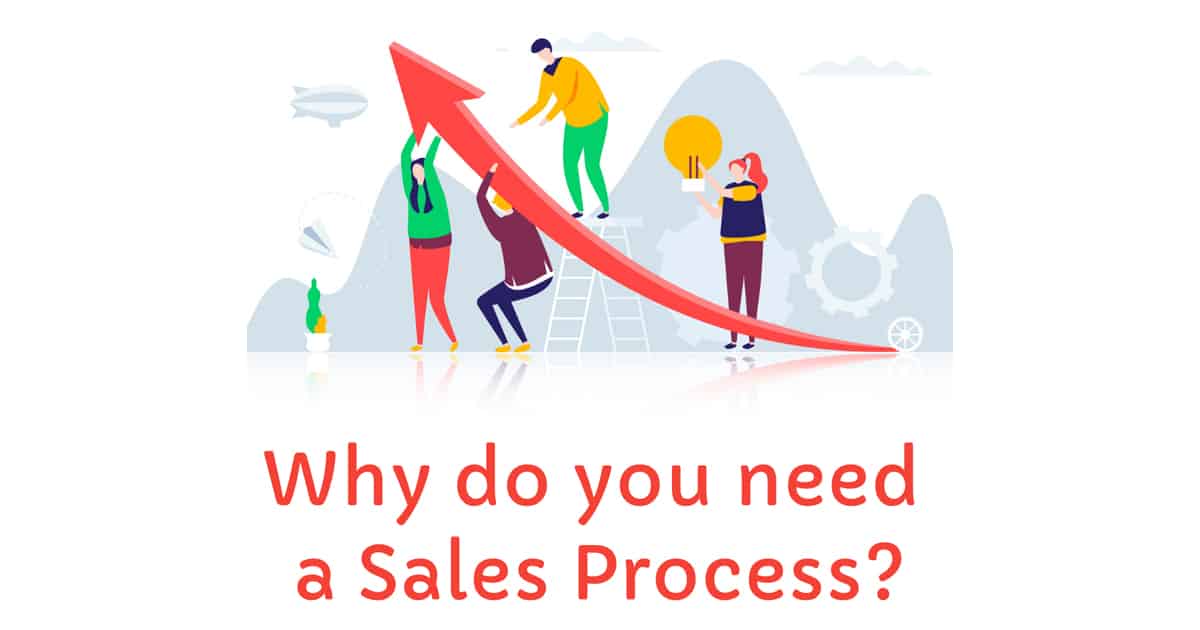
ACV vs. ARR : A Guide for SaaS Companies

The SaaS growth has already exceeded $176.62 billion- growing 16% in just one year. Expectantly, in 2023, the SaaS market value will reach $208.1 billion. Experts are also hoping for a 17.5% increase in SaaS revenue in the coming years.

Now, SaaS companies have multiple options to choose from, especially regarding the metrics for measuring growth and managing it. However, not all metrics can add value to departments like sales, management, or marketing. But if your business model provides subscriptions and contracts for each year or it is a big SaaS company- you should know about annual contract value (ACV) and annual recurring revenue (ARR).

In this piece, we are discussing ACV and ARR individually, their respective differences, and how these metrics influence your business growth.

What Is ACV?
The annual contract value or ACV is one of the key metrics to show the worth of a potential customer contract- by normalizing and averaging the value of the contract over a period of one year. With ACV, you can measure the value of dollars of the customer accounts- based on:

• Diverse priced plans
• Monthly subscriptions
• Contracts spanning multiple years

The ACV sales calculations depend on the recurring revenue which is generated by an account or a client. It is less likely to have initial setup, administrative, or training fees.

How You Can Use ACV?

ACV can normalize your contract amounts. You will be able to use it for:

Comparing customers whose contracts differ in the type of duration
Providing better service to the individual client- to those who have long-term potential
Discovering which of the accounts provides the greatest source of revenue

Here’s an example of what ACV is in sales:

You have closed numerous subscription-based deals- that involve different periods and different prices. Now, you want to calculate the annual sales quickly. With ACV you can calculate the average revenue of all contracts that you initiate.

What Is ARR?

With annual recurring revenue, you can calculate the recurring income that your subscription accounts generate.

ARR calculations:

• Let you measure the recurring revenue at a set time
• Measure the complete value of the recurring revenue annually
• Eliminate one-time charges

How To Use ARR?

As ARR predicts annual income from the subscription accounts- it is great for indicating financial health. It can be used for:

• Tracking your revenue growth over a certain period of time
• Analyzing sales, retention, and marketing strategies- also improve upon those strategies
• Predicting revenue by pinpointing revenue fluctuations starting from renewals of subscriptions, upselling, and cancellations.

In case your SaaS company offers monthly subscriptions, it is likely that you would want to calculate “monthly recurring revenue” or MRR. You will get the ARR value by multiplying the MRR x 12.

ACV vs ARR: The Differences
Now we know that both ACV and ARR’s job is to measure the values of annualized contracts- but there are fundamental differences. Businesses use ACV metrics to measure a single account over multiple years. Whereas, ARR measures multiple accounts at once:

For example, you have two customers.

• Customer X pays for a $500 annual subscription plan- therefore, their ACV is $500
• Customer Y pays for a $1,000 annual subscription plan- therefore, their ACV is $1,000

Meanwhile, the ARR is $500 + $1,000 = $1,500

The above example is a familiar one- the measurements can be used in various ways based on companies. Like, SaaS companies do not see ACV as a standard metric.

Here are the main differences between ACV and ARR to understand:

• ACV measures the income from a single, subscription-based account or contract. ARR measures the revenue of all the subscription-based accounts or contracts of a company.
• ACV formula can vary depending on the company. ARR has a standardized formula for most companies.
• ACV calculates annual contract value in average dollar amount which remains normal across a year. ARR calculates recurring total dollar amounts that are generated annually.
• ACV may include initial or one-time contract charges. ARR never includes initial or one-time contract charges.
Comparatively, ACV is limited in scope when you apply it in isolation, but best to use it with other metrics.
ARR can track revenue growth and can be used for better business, sales, and marketing decisions.

Calculating ACV and ARR

Companies can interpret ACV and ARR a little differently. It’s okay as long as the calculations run in a standardized way and everyone is on the same page.

Calculating ACV

The standard formula for calculating ACV per account:

ACV= Total contract value divided by the number of years
Suppose a customer has signed a five-year annual subscription contract where the total value of the contract is $2500. The ACV calculation will be:
ACV= $2500/ 5 = $500
But what happens if another customer opts for a three-year, monthly subscription contract at $90 per month? Here’s how to use the ACV formula to normalize a customer’s contract over a year.
Annual subscription rate = $90 x 12 months = $1080
Total contract value = $1080 x 3 years = $3240

ACV = $3240 / 3 = $1080

Calculating ACV Across Multiple Contracts
There are creative ways- one can use ACV to make certain data easier to understand.
For example, you can get the average ACV of multiple contracts with this simple formula:
Average ACV = Total ACV of contracts divided by number of contracts
You can use the formula in various ways.

Calculating ARR

Here’s a fast and easy method to calculate ARR- it’s a much more accurate and standard method. First, you need to subtract the non-recurring income source from the annual revenue of the previous year.

ARR = Complete annual revenue minus Non-recurring revenue

You will get a general view of what your ARR looks like. But this formula of ARR doesn’t consider if there’s any change in customer subscriptions.
SaaS companies may use the annual run rate for the first year- instead of using ARR. It’s better to use an annual run rate to get revenue forecasts- helps to get more data to work with.

Standard formula to calculate ARR:

ARR = Beginning of the year ARR + Gained ARR from new customers + Gained ARR from subscription upgrades – Lost ARR to subscription downgrades – Lost ARR to customer churning

Let’s assume you have 200 annual customer subscription contracts on 1st January- each of the contracts yields $1100 in recurring revenue.

In case, everything remains unchanged in the coming months and there is no non-recurring revenue- the ARR will be equal to the total annual revenue from last year or, 200 x $1100 = $220,000.

Now, let’s say over the year some changes unfold in your company:

Gains 30 new $1100 customer subscriptions- (30 x $1100 = $33,000)
5 existing customers downgrade to $900 subscriptions; loss count – (5 x $200 = 1,000)
10 existing customers canceled their subscriptions; loss count- (10 x $1100 = 11,000)
Now to determine the ARR in real time, put the amount in the above-mentioned formula:

ARR = $220,000 + $33,000 – $1000 – $ 11,000 = $241,000 (If we assume there are no upsells in a year)

If the company offers monthly subscriptions, then you can calculate the MRR following the above-described formula. Then to retrieve the ARR value, just multiply the result by 12.

Tools For Analyzing The Metrics

You may feel overwhelmed by all the revenue metrics tools including ACV, and ARR- but don’t worry, there are analytical tools that make your job easier. With some analytical tools, you can see real-time sales data inside a CRM along with the overall view of your business performance.

When you can track the recurring revenue using a CRM tool- it gives you a solid ground to use the data for upselling, subscription costs tweaking, cross-selling, or measuring ACV sales.

Who Benefits From Using ACV and ARR? What For?

So, who is going to benefit from knowing the terms like ARR and ACV? Any B2B companies, startups, SaaS sales teams, SaaS marketing teams, and management professionals with subscription models can reap the benefits.

Sales Representatives
If you are a sales representative, ACV can help you assess the data of your customer base and identify the accounts that may need your timely attention. Here’s how these metrics benefit you:

• Initiate retention strategies
• Connect with the customers with add-on products or services
• Negotiate with them for an extension of the contract

Also, you can track your annual sales revenue with ACV.

Sales/Marketing Managers
Are you a sales or marketing manager? If yes, then you can utilize ACV and ARR along with a variety of dashboard templates of sales for the purpose of:

• Tweaking the training efforts
• Monitoring the team’s performance
• Taking profitable decisions and offering better recommendations to the department

C-Suite Professionals
If you are looking over your company finances, you can keep using ARR comparisons for years to improve the projections and timing:

• Company valuation
• Hiring additional staff (if need be)
• Get forecasts of future revenues and annual budgets
• Large capital expenditures

When you are using ARR metrics, it helps you to witness new cash inflow and/or outflow.

Conclusion
Now, you have a better idea about how companies view and use ACV and ARR metrics for both team and personal performance. Let us discuss a few benefits you can receive from measuring regular revenue:

• Customer success and how sales strategies are working
• Better product development and marketing strategies
• Investment decisions based on future planning

When you understand the results better, your team will thrive- leaving a positive impact on your business.