Most insurance agencies aren’t losing business to competitors quoting lower premiums. They’re losing it to slow follow-up, missed renewal windows, and policyholders who quietly drift away because nobody reached out first. That’s the real argument for insurance CRM software — it isn’t another admin tool bolted onto the sales process. It’s the system that decides whether a lead becomes a bound policy, and whether a client renews or shops elsewhere without ever telling you. Let’s delve more in the following post.

Insurance runs on speed and consistency, and the numbers make the stakes hard to ignore:
None of this is a talent problem. It’s a systems problem — the same gap that shows up when a renewal falls through because no one flagged it 60 days out, or a hot lead cools off because a follow-up sat in an inbox overnight.

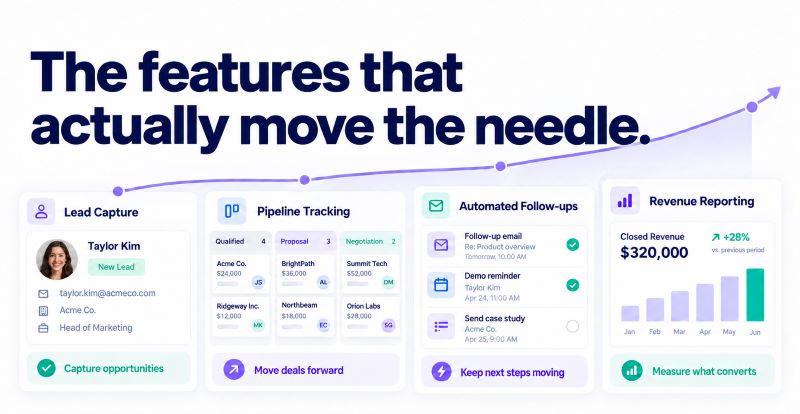
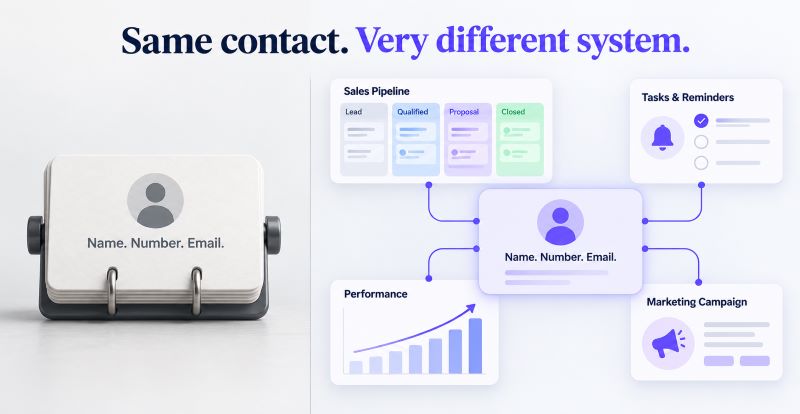
A generic contact manager tracks names and deals. A CRM for insurance agents needs to track more specific details: policy types, renewal dates, household relationships, and where each opportunity sits in a pipeline that handles new business, renewals, cross-sells, and referrals all at once. That distinction is what separates a CRM a team tolerates from one it actually runs the agency on.
In practice, that looks like:
Here is what unfolds further.
Presenting multiple lines to a household during the sales conversation increases close rates by roughly 34%, and the retention effect compounds from there — policyholders carrying three or more lines are considerably less likely to shop around at renewal.
Most agencies still treat cross-selling as opportunistic — something that occurs if a policyholder calls in for service. A CRM that surfaces coverage gaps automatically, tied to real policy data instead of an agent’s memory, turns that into a systematic part of every renewal and service touchpoint rather than a lucky break.
A crm for insurance brokers has to handle all of the above across multiple carriers and multiple relationships per household, which makes pipeline visibility even more critical. A broker juggling five markets for one commercial account can’t afford a renewal or a lead to fall through the cracks simply because it was living in three different inboxes instead of one shared record.
The returns tend to land in a fairly consistent range across agencies that make the shift to a purpose-built system:
For a mid-sized book of business, even the conservative end of those numbers adds up fast. A 10% retention lift on a $2M premium book alone can outweigh the cost of the software many times over in the first year, before cross-sell or time savings are even factored in.
None of these gains happens automatically the day a new system goes live. The agencies that see the strongest results tend to get three things right early:
Skipping any of these tends to produce a system that looks powerful in a demo but quietly gets ignored once the busy season hits.

The shift toward CRM-driven retention isn’t a passing trend. A large majority of insurance companies, roughly 82%, now consider AI adoption critical to future competitiveness — largely because faster, better-targeted client communication has become table stakes rather than a differentiator. Agencies that treat their CRM as the operational backbone of lead response and renewal outreach are the ones best positioned to keep pace as that expectation becomes standard across the industry.
Insurance agencies don’t usually lose business because clients stop needing coverage. They lose it because nobody followed up fast enough, or because a renewal date passed quietly without a conversation. The right insurance CRM software closes both gaps. This is exactly where ConvergeHub
steps in to close both gaps. By unifying sales, marketing, and customer service into one powerful platform, ConvergeHub turns lead response and renewal outreach from manual tasks an agent has to remember into automated workflows the system executes flawlessly, every single time. Stop losing clients to passive lapses and slow follow-ups—let ConvergeHub transform your agency from reactive to a retention-first powerhouse.
How fast should an insurance agency respond to a new lead?
Within five minutes if possible. Response speed is one of the strongest predictors of whether a lead converts, and most agencies lose ground simply because follow-up happens hours or days later than it should.
What makes insurance CRM software different from a general CRM?
It’s built around policy types, renewal timelines, and household relationships instead of just contacts and deals, so it can flag a renewal 60–90 days out or route a lead to the right agent by product line automatically.
Can a CRM actually improve client retention, not just lead tracking?
Yes. Automated renewal reminders and proactive outreach before a policy lapses are consistently linked to measurable retention gains, since most policyholders leave because they weren’t contacted first, not because they were unhappy.
Is a CRM for insurance brokers different from one built for agents?
The core workflow is similar, but brokers typically need stronger multi-carrier and multi-relationship visibility, since one client account can span several markets and policies that all need independent tracking.
Does adopting a CRM help with compliance, not just sales?
Yes. A centralized record of every call, email, and renewal notice creates an automatic activity trail, which matters if an agency ever needs to demonstrate it followed proper client communication and renewal procedures.