ConvergeHub Capabilities: Artificial Intelligence vs. Intelligent Automation

Ever get confused by the terms “AI” and “IA”? They are connected but there’s a fine line of difference. Identifying these differences is important because that will help you leverage these technologies to their full potential. This article cuts through the confusion by highlighting the differences between Artificial Intelligence and  Intelligent Automation and even a bonus term: intelligence augmentation. 

Let’s find out how AI and IA stack up against each other, plus explore how ConvergeHub leverages these technologies to streamline business operations.

What is Artificial Intelligence

Artificial Intelligence is a technology that makes computers technically mimic human intelligence. AI uses special algorithms to tackle tasks that usually require human smarts –  such as learning new things, solving problems, and making decisions.

Imagine a computer that gets better at a skill just by feeding it information. That’s the power of AI, achieved through a technique called “deep learning.”  For instance, AI can analyze massive amounts of customer data, uncovering patterns and trends much faster and more precisely than a human ever could.

Here’s a glimpse into the exciting world of AI:

  • Chatbots and Virtual Assistants: That’s one of the biggest functional advantages of AI. Conversational AI uses natural language, making it possible to interact with computers through chatbots and virtual assistants like Alexa or Siri.
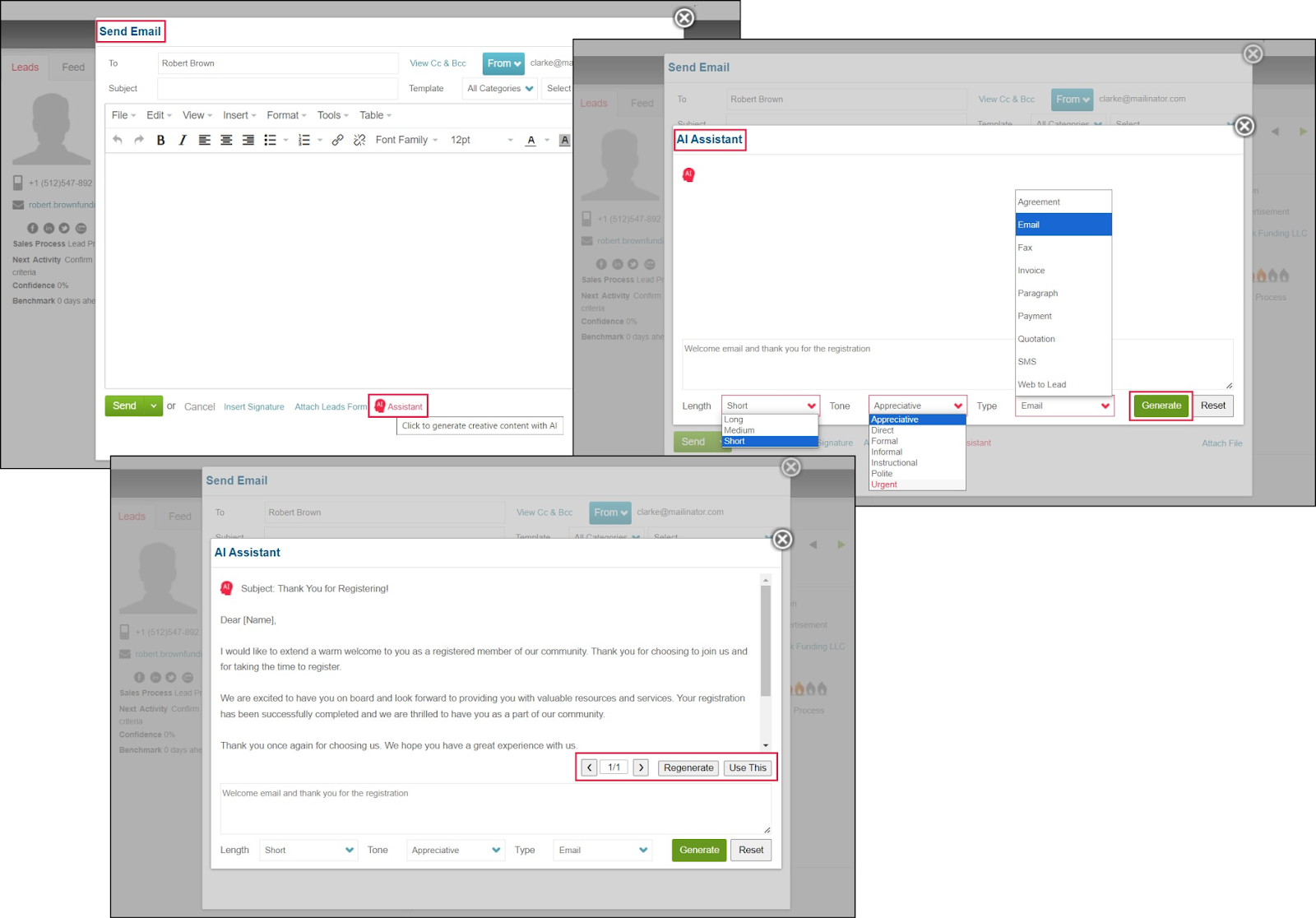
  • Generative AI: Need a creative spark? Generative AI can create content, whether it is text, music, or images, by learning from existing information. It helps you compose a personalized email message, posts, and all kinds of marketing and sales communication based on the data provided to it 
  • Machine Learning: One of the important subsets of AI is Machine Learning. Computer vision uses algorithms to analyze visual information, enabling features like facial recognition and object detection. Machine learning allows computers to learn from data, like a student studying. This lets them make decisions or predictions without any requirements of human programming. 
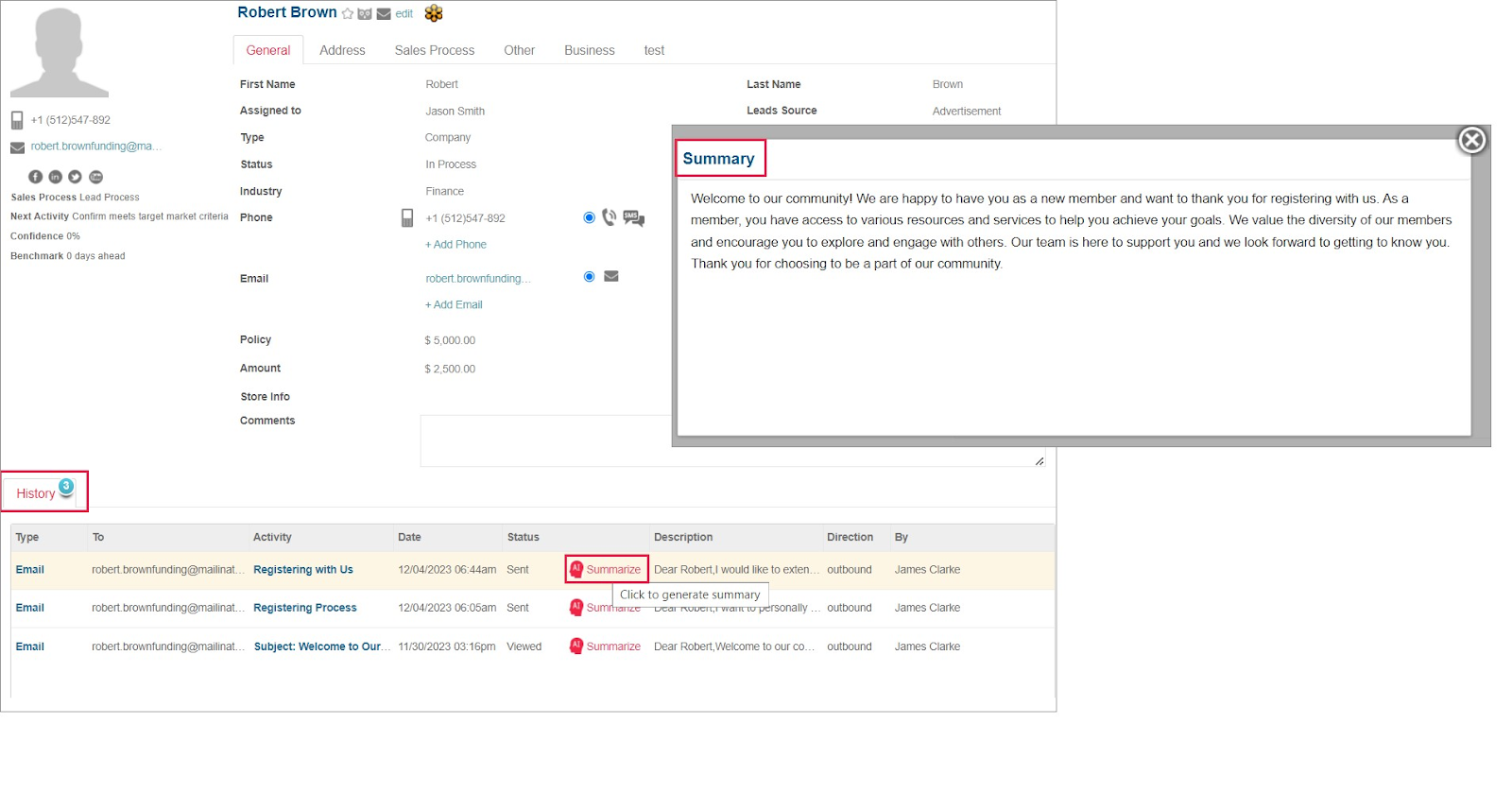
  • Natural Language Processing or NLP:  Imagine a computer that speaks your language! Natural language processing (NLP) lets computers understand, interpret, and even generate human language. This is used in speech recognition, translation tools, and text summarization.

AI is a vast field with many applications that are constantly evolving. It’s changing the way we live and work!

What is Intelligent Automation or IA?

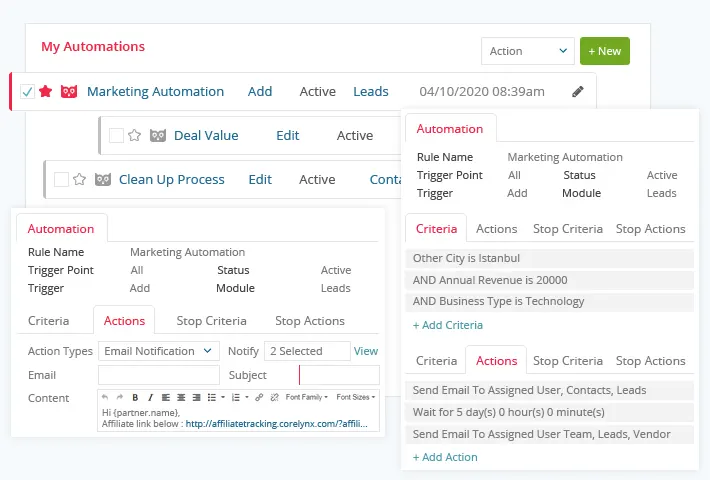
Sales is all about building relationships and closing deals. But repetitive tasks can bog you down.  This is where intelligent automation (IA) steps in as your secret weapon.  Imagine AI working alongside you, automating the mundane and freeing you to focus on what truly matters: your customers.

Intelligent automation or IA combines the power of AI with automation tools to streamline your sales process.  By taking over things like data entry and scheduling, IA lets you spend more time connecting with leads and nurturing relationships.  This translates to two major wins:

  1. Boost Your Sales Time: Imagine ditching tedious tasks and having more time to build rapport with potential customers. This can directly lead to increased sales and a happier you!
  2. Efficiency Guaranteed: Streamlined processes mean less wasted time and resources. IA helps you work smarter, not harder, ultimately leading to higher profits.

Sales on Autopilot: How AI Supercharges Your Team

AI can be your ultimate sales sidekick by automating a variety of tasks:

  • Data Entry: Say goodbye to endless data entry! IA handles it for you, freeing you up for more strategic work.
  • Uncovering Sales Gems: Find new sales opportunities with automated lead generation tools. IA can identify potential customers who are a perfect fit for your business.
  • Data Made Easy: Get clear insights without spending hours on reports. IA can analyze vast amounts of data (big data) and generate reports automatically, giving you valuable information at a glance.
  • Stay on Top of Your Game: IA automates task management, keeping your team organized and focused on closing deals.
  • Effortless Scheduling: Schedule meetings and appointments with ease, letting IA handle the back-and-forth.

With smart and intellectual automation, you can ditch the busy work and focus on what matters most: building relationships and growing your sales.  It’s time to unleash the power of automation and watch your sales team soar!

What’s the Difference?

There are two subtle differences between AI and IA.

  • Focus: AI focuses on mimicking human intelligence, while IA focuses on enhancing human capabilities.
  • Capabilities: AI can perform tasks autonomously, while IA combines AI and automation to improve efficiency and decision-making.

Here’s an example of how AI can analyze data for insights, while IA automates tasks like lead qualification, freeing up salespeople’s time for more strategic activities.

  • Level of Intelligence: AI can exhibit a higher level of intelligence, like learning and adapting, while IA may focus on rule-based automation with some AI assistance.
  • Human Interaction: AI might be designed to work independently, while IA often collaboratively works alongside humans.
FeatureAIIA
FocusMimic human intelligenceEnhance human performance
CapabilitiesPerform tasks autonomouslyImprove efficiency and decision-making
Level of IntelligenceHigh (learning, adapting)Moderate (rule-based with AI assistance)
Human InteractionIndependentCollaborative

Don’t Just Work Smarter, Work Augmented

Sometimes tech terms can sound interchangeable, but there’s a key difference between intelligence augmentation (IA) and its close cousin, intelligent automation (IA). IA takes a broader view. It’s about leveraging any technology to boost human potential, not just the power of AI. This could include everything from advanced calculators to specialized software.

The goal, however, remains similar: supercharge decision-making and streamline tasks.

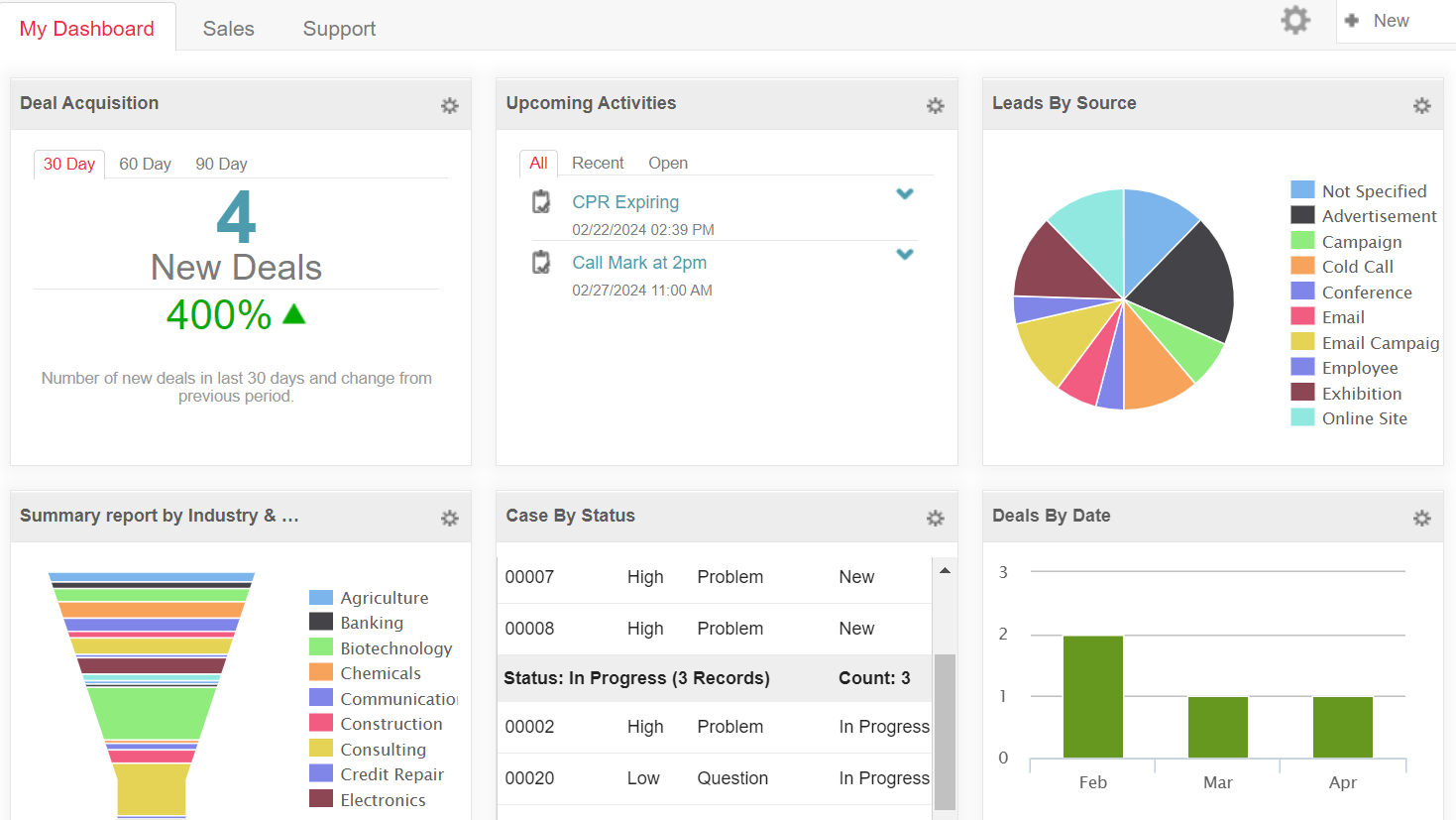
Take ConvergeHub’s reports and dashboards, for example. They don’t make sales calls for you, but they use technology’s muscle to transform raw sales data into actionable insights. This empowers salespeople to make smarter choices and close more deals. Precisely, IA might not replace your brain entirely, but it surely enhances its performance. 


Use Cases of  AI and IA in Sales and Marketing 

  1. Personalized Prospecting:  AI analyzes customer data and online behavior to identify ideal leads. IA automates outreach with personalized emails and social media messages, saving time for targeted prospecting.
  1. Smart Lead Scoring: AI analyzes lead behavior and engagement levels, assigning a score that indicates their sales-readiness. IA prioritizes leads based on their score, allowing sales reps to focus on the hottest prospects.
  1. Real-Time Sales Coaching: AI monitors sales calls, identifying areas for improvement and suggesting effective communication strategies. IA can even provide in-call prompts and feedback to help reps close deals more effectively.
  1. Dynamic Content Generation: AI tailors sales presentations and proposals to each prospect’s specific needs and interests. IA automates the creation of personalized content, boosting engagement and conversion rates. From sales emails, demos, cost calling scripts, sales pitches, product brochures, and contract paper everything can be created through generative AI.
  1. Predictive Analytics: AI analyzes historical sales data and identifies trends to predict future sales opportunities and potential roadblocks. IA uses these insights to recommend personalized pricing strategies and optimize sales pipelines.
  1. Automated Objections Handling: AI identifies common sales objections during calls and provides real-time counterarguments and scripts. IA automates responses to basic objections, freeing up reps to focus on complex customer concerns.

Final Thoughts

According to a McKinsey report, companies that invest in AI are seeing a 3–15% revenue growth and a 10–20% boost in sales ROI. As artificial intelligence (AI) and intelligent automation (IA) become more sophisticated, their benefits for business will only multiply. ConvergeHub leverages these cutting-edge technologies to streamline operations and boost sales for your business.

Sign up for a free 14-day trial to explore more.
QuickBooks Integration in AI-Powered CRM: Challenges and Possibilities

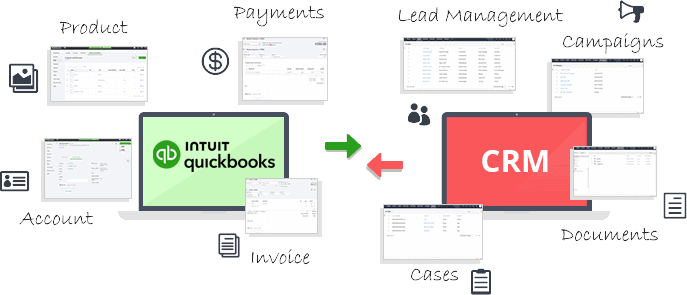
Juggling client data across spreadsheets and siloed systems is a nightmare for accountants and tax professionals. But thanks to the integration capabilities of the CRM that make QuickBooks CRM integration absolutely seamless and streamlines accounting workflow, with deeper client insights.

QuickBooks CRM Integration: A Match Made in Heaven

QuickBooks, the premium accounting software handles your financial data with finesse. However, when it is connected with a CRM, it manages your client relationships alongside handling your accounting process.

Benefits of QuickBooks CRM Integration

  • Unify Your Client Data: Say goodbye to scattered information! A seamless integration ensures all your client data — financial records, communication history, notes — resides in one central location. This eliminates the time-consuming task of switching between systems and ensures you have a complete picture of each client.
  • Boost Sales and Client Retention: CRMs excel at nurturing leads and fostering stronger client relationships. With QuickBooks integration, you can identify high-value clients based on their financial history within QuickBooks, and personalize your communication strategies accordingly.
  • Effortless Invoice Management: Imagine generating invoices directly from your CRM, with all the relevant financial data pre-populated from QuickBooks. This integration eliminates manual data entry errors and saves you precious time.
  • Streamlined Tax Season: Tax season becomes a breeze with readily available financial data from QuickBooks feeding directly into your CRM. This allows you to pre-populate tax forms, identify potential deductions, and provide a more efficient service to your clients.

Challenges of QuickBooks CRM Integration

Integrating QuickBooks with a CRM can offer real benefits, but there are some challenges that the

  • Data Mapping and Synchronization: Keeping data in sync between QuickBooks and your CRM can be tricky. It’s important to carefully map the corresponding fields in each system to ensure information gets transferred correctly. There can also be issues with one-way vs. two-way sync, meaning changes in one system might not automatically update the other.
  • Technical Compatibility: Not all versions of QuickBooks and CRM software play well together. Compatibility issues can arise if you’re using an older version of QuickBooks Desktop or if the specific features you need aren’t supported by the integration. However, the best CRM for QuickBooks integration does not have this kind of challenge.
  • Security and Data Privacy: Granting access to financial data in QuickBooks requires careful consideration. You’ll want to make sure your CRM has robust security measures in place to protect sensitive information.
  • Ongoing Maintenance and Support: Maintaining a smooth integration often requires ongoing effort. New updates or changes to either QuickBooks or your CRM can sometimes disrupt the connection.
  • Training and User Adoption: A successful integration requires user buy-in from both your sales and accounting teams. They’ll need to be trained on the use of the new system effectively to avoid data inconsistencies.
  • QuickBooks Desktop Limitations: Integrating QuickBooks Desktop with a cloud-based CRM can be particularly challenging. QuickBooks Desktop’s architecture can make it difficult for external applications to access and update data.

The Superpower of Artificial Intelligence in QuickBooks CRM Integrated Platform

AI-powered CRM leverages machine learning algorithms to learn from your data and automate tasks with increasing accuracy. Here’s how this translates to benefits for your business:

  • Automated Data Entry: Drudgery is gone! AI can automatically extract data from receipts, invoices, and other financial documents, eliminating manual entry errors and saving you precious time.
  • Smarter Client Management: AI analyzes client data and financial history from QuickBooks, helping you categorize clients and personalize communication strategies. This allows you to prioritize high-value clients and tailor your services accordingly.
  • Predictive Insights: AI can analyze historical data to predict potential cash flow issues or identify trends in client spending habits. This proactive approach allows you to offer valuable financial advice and strengthen client relationships.
  • Automated Workflows: Imagine generating invoices directly from your CRM, with data pre-populated from QuickBooks. AI can automate repetitive tasks throughout the client lifecycle, freeing you to focus on strategic initiatives.
  • Enhanced Sales and Client Retention: By nurturing leads and fostering stronger client relationships, AI empowers you to personalize your sales approach and improve client retention.

Ensuring Tax and Audit Efficiency with Automation

  • Pre-Populated Tax Forms: Seamless integration allows client data from QuickBooks (income, expenses, deductions) to automatically populate tax forms within your CRM. This eliminates manual data entry errors and saves countless hours.
  • Automated Data Gathering: The CRM can be configured to send automated requests to clients for missing tax documents. This streamlines document collection and keeps the tax preparation process moving smoothly.
  • Smart Receipt Management: Integrate a receipt management tool with your CRM. Clients can simply scan receipts with their phones, which are then automatically categorized and stored within the client’s profile. This simplifies record-keeping and ensures nothing gets lost in the shuffle.
  • Automated Audit Trail Generation: Track all client interactions and document exchanges within the CRM, creating a clear audit trail for regulatory compliance. This saves time during audits and provides peace of mind.
  • Real-Time Risk Assessment: With all client data readily available, the CRM can be configured to identify potential audit risks based on specific financial patterns. This allows you to proactively address potential issues and ensure a smooth audit process.

Case Study: How PwC Streamlines Error-detection in Audit Process

PwC is the second-largest accounting firm when it comes to revenue. PwC has already started leveraging the power of AI in fraud and error detection by developing a platform, GL.ai, in collaboration with H2O.ai, an AI-enabled system-developing company based in Silicon Valley.

The sole objective of this tool is to learn and grow with every audit process. The company has claimed that they have invested significantly in Natural Language Processing (NLP) for the same. GL.ai has undergone training using audit data from Canada, Germany, Sweden, and the UK.

How to integrate QuickBooks with Convergehub

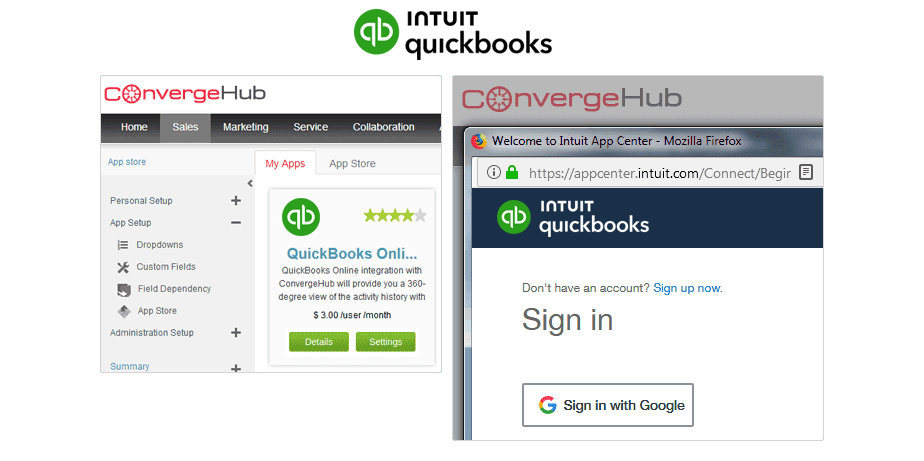
Here’s a step-by-step guide on how to integrate QuickBooks with ConvergeHub.

  • Go to the ConvergeHub Apps Store.
  • Find the QuickBooks App and click “Get App”.
  • Link your QuickBooks account by entering your User ID and Password.

This will set up a basic integration where data like Customers, Contacts, Products, and Invoices will be synced between both platforms.

There are some additional considerations as well

  • ConvergeHub offers separate integrations for QuickBooks Online and QuickBooks Desktop. Make sure you choose the appropriate one for your version.
  • You can configure the sync to determine which direction the data flows (ConvergeHub to QuickBooks or vice versa) or if it’s two-way.

Final Thoughts

Using artificial intelligence (AI) in your QuickBooks-CRM. you can work much faster, make fewer mistakes, and provide even better service to your clients. This new technology called “intelligent automation” will help your business succeed in the future.

Customer Trust is the New Currency of Marketing Success in 2024 

The marketing landscape of 2024 is a dynamic ecosystem teeming with competition. Flashy advertisements and hollow promises no longer hold sway over discerning consumers. Today’s market demands authenticity, transparency, and a genuine connection with brands. Precisely, customers crave trust.

This paradigm shift elevates customer trust to the cornerstone of any successful marketing strategy in 2024. But how do you cultivate this trust in a way that fosters long-term customer loyalty and drives sustainable sales growth?

This post will explore the paramount importance of customer trust in achieving marketing success in 2024. We will further examine how CRM software can be a powerful tool in your trust-building arsenal.

The Imperative of Customer Trust in 2024 Marketing

The digital age has empowered consumers like never before. Information is readily available at their fingertips, allowing them to effortlessly compare brands, access reviews, and hold companies accountable for their actions. This unprecedented transparency has fostered a generation of cautious consumers wary of empty marketing tactics.

Here’s a closer look at why customer trust is so crucial in 2024

Intensified Competition

 The market is saturated with countless brands vying for customer attention. Trust acts as a potent differentiator, allowing you to stand out from the crowd and cultivate brand loyalty. Consider it a loyalty shield that protects you from competitors offering seemingly similar products or services.

The Power of Online Reviews

 A single negative review can have a devastating impact on your brand reputation. Building trust fosters positive customer experiences, leading to glowing reviews that act as powerful marketing tools. Positive reviews serve as social proof, reducing the perceived risk for potential customers and nudging them toward conversion.

Data Privacy Concerns

 Consumers are increasingly apprehensive about how brands handle their data. Demonstrating responsible data practices through transparency and robust security builds trust and encourages customers to share valuable information that can inform your marketing efforts. By respecting customer privacy, you build trust and establish yourself as a brand they can rely on.

The Rise of Social Advocacy

 Loyal customers who trust your brand become vocal advocates, organically promoting your products or services on social media and through word-of-mouth. This social advocacy acts as a free and highly credible form of marketing, reaching a wider audience through the trusted voices of your existing customer base.

Building Trust: The Pillars of a Winning Strategy

Building customer trust requires a holistic approach that permeates every facet of your marketing strategy. Here are a few key areas to focus on:

  • Transparency: Be upfront about your brand values, pricing models, and product limitations. Avoid misleading marketing messages and strive for clear, concise communication. Transparency builds trust because it demonstrates honesty and respect for your customer’s intelligence.
  • Authenticity: Consumers can detect inauthenticity a mile away. Develop a genuine brand voice and personality that resonates with your target audience. Authenticity fosters trust because it allows customers to connect with your brand on a deeper level, feeling like they’re interacting with a real entity they can relate to.
  • Customer Focus: Shift your focus from selling to serving. Prioritize customer needs by actively listening to their feedback and using it to improve your products or services. This customer-centric approach demonstrates that you value their input and are committed to their satisfaction, building trust through a sense of valued partnership.
  • Deliver on Promises: Follow through on your brand promises. If you say you offer exceptional customer service, ensure your customer service team consistently delivers exceptional experiences. Delivering on promises builds trust because it shows customers you can be counted on to keep your word, establishing brand reliability.

How ConvergeHub Helps Businesses Win Customers’ Trust  

ConvergeHub goes beyond just managing sales leads. It offers a comprehensive suite of features designed to cultivate trust and forge lasting customer relationships. Here’s a deeper dive into how ConvergeHub empowers businesses to become customer trust champions:

1. Personalized Customer Journeys:

  • Data-Driven Insights: ConvergeHub helps you gather and analyze customer data, providing a 360-degree view of your audience. This allows you to segment your customers based on preferences, demographics, and purchase behavior.
  • Targeted Communication: With a clear understanding of your customer segments, you can craft personalized marketing messages and outreach campaigns. Imagine sending birthday greetings or offering special promotions relevant to a customer’s past purchases! These targeted touches demonstrate that you value their individuality, fostering trust and brand loyalty.

2. Enhanced Customer Service:

  • Streamlined Communication: ConvergeHub provides a central platform for all customer interactions, ensuring seamless communication across various channels (phone, email, social media). Customers can easily reach the right team member and receive timely responses to their inquiries.
  • Efficient Issue Resolution: ConvergeHub empowers your support team with powerful tools to track and manage customer issues efficiently. This ensures a faster resolution process, reducing customer frustration and building trust in your commitment to their satisfaction.

Beyond these core features, ConvergeHub offers additional functionalities that contribute to building trust:

  • Automated Workflows: Expedite repetitive tasks like sending follow-up emails or appointment reminders, allowing your team to focus on personalized interactions.
  • Performance Tracking: Monitor key metrics like customer satisfaction scores and response times, providing valuable insights for continuous improvement in your customer service approach.

Final Words: The Trust Dividend

This is a  hyper-connected world, customer trust has transcended the realm of “nice-to-have” and become the fundamental currency for long-term business success.  Simply offering a good product or service is no longer enough. Customers are bombarded with choices, and they actively seek brands they can rely on and genuinely connect with.

Building a Trustworthy Brand: Three Pillars of Success

So, how do you build trust and transform your customer base into loyal brand ambassadors? Here’s where ConvergeHub comes in, but first, let’s explore the three core pillars of building a trustworthy brand:

  1. Transparency:  Customers crave authenticity. Be upfront about your offerings, limitations, and values. Own up to mistakes and actively address customer feedback. Transparency fosters a sense of security and builds trust.
  2. Authenticity:  Don’t try to be everything to everyone. Embrace your brand’s unique voice and values.  Customers appreciate genuine interactions and connect with brands that stand for something bigger.
  3. Customer-Centric Approach:  Shift your focus from selling to serving. Put your customers’ needs at the heart of every decision. ConvergeHub empowers this shift by providing the tools to understand customer behavior, personalize their experience, and prioritize their satisfaction.

By prioritizing these core values and leveraging ConvergeHub’s capabilities, you’ll cultivate a loyal customer base who are more than just satisfied – they become your biggest fans. Happy customers are your organic marketing force.

In the digital age, building genuine customer trust is essential for long-term success. ConvergeHub empowers you to put these core principles into action by providing the tools to:

  • Gather Deep Customer Insights (We’ll explore this further in the next section)
  • Personalize Customer Interactions
  • Deliver Exceptional Customer Service

Let us know your thoughts in the comments. Also, let us know how you are nurturing customer trust for your brand. 

CX Gaps that are Hidden in Plain Sight

Despite the growing emphasis on CX, many companies still struggle to meet customer expectations. There are CX gaps that remain unnoticed for years, they widen over time, resulting in long-term damage

Customer experience (CX) is no longer a buzzword; it’s the business mantra of a successful venture. Today, when customer loyalty is hard-won, “not-so-good” CX can destroy your positive image at any time. Being consistent in delivering a positive experience is thus survival imperative for businesses. 

Despite the growing emphasis on CX, many companies still struggle to meet customer expectations. There are CX gaps that remain unnoticed for years, they widen over time, resulting in long-term damage. This article delves into the concept of the CX gap, explores the reasons behind it, and offers actionable strategies for businesses to bridge the widening gap while creating a truly customer-centric experience.

The CX Gap: A Disconnect Between Perception and Reality

Here’s a real-life scenario. Let’s say most of your offline footfalls result from the large-scale marketing you do online. 

They envision a helpful and knowledgeable salesperson assisting them, a smooth checkout process, and a hassle-free return policy in case the product doesn’t meet their expectations. However, upon arrival, they’re greeted by an indifferent staff member, encounter a long queue at the checkout, and discover a restrictive return policy. This is a gap between expectation and reality. The customer’s anticipated experience and the one he gets while visiting the store are different from each other, resulting in a dodgy CX and zero customer loyalty.

Suh CX gaps often remain unnoticed and can manifest in various ways.  From slow and infrequent responses to complex product information- everything falls under poor CX. It’s not always about providing excellent services, rather it’s more about delivering personalized services While a company might believe they’re providing exceptional service, customers may have a vastly different perspective. This disconnect can lead to frustration, disappointment, and ultimately, customer churn.

Causes of the CX Gap: Why Businesses Miss the Mark

CX gaps originate from the difference between expectation and reality. But, most of the time these blindspots are so elusive that they often go unnoticed. Here’s a look at the common culprits behind  CX gaps and why businesses miss the mark.   

  • Communication Silos: A business is structured with distinct departments – marketing, sales, operations, customer service and more. Unfortunately, they operate in isolation, which leads to communication silos. Being unaddressed it becomes a norm over time. It results in a fragmented customer journey which affects the credibility of the company. For instance, the marketing team might portray a product as user-friendly, while the customer service team struggles to address customer inquiries due to inadequate product knowledge. This inconsistency creates confusion and frustration for customers.
  • Customer Feedback Disconnect: Prioritizing customer feedback is crucial for every business. However, many businesses fail to maintain consistency in collecting customer feedback. They never solicit feedback through surveys, reviews, or social media interactions. This lack of customer insights makes it difficult for businesses to understand customer needs and expectations, leading to a mismatch between what they offer and what customers truly desire.
  • Employee Disengagement: Employees are the face of the brand, and their attitude and behavior significantly impact customer experience. Disengaged employees who lack proper training or motivation are less likely to go the extra mile for customers. This can result in impersonal interactions, slow response times, and a lack of empathy, ultimately creating a negative customer experience.
  • Stay Aligned with Technological Advancements: Technology is rapidly evolving, and customer expectations are keeping pace. Businesses that fail to adapt to these advancements risk falling behind. For instance, if a company doesn’t offer a user-friendly mobile app or an omnichannel customer support experience, it may create a gap between its offerings and what customers expect in today’s digital age.
  • Focusing on Sales Over Relationships: While sales are undoubtedly important, businesses that solely focus on closing deals often neglect to build long-term customer relationships. This transactional approach can leave customers feeling like a number rather than a valued patron.

Bridging the CX Gap: Strategies for Customer-Centric Success

Fortunately, the CX gap is not an insurmountable obstacle. With the right strategies it can be achieved   Businesses can implement several strategies to bridge the divide and create a customer experience that fosters loyalty and drives business growth.

Obsess Over Customer Feedback: Make customer feedback the cornerstone of your CX strategy. Actively solicit feedback through surveys, reviews, social media interactions, and even informal conversations with customer service representatives. Analyze this feedback to identify areas for improvement and tailor your offerings to better meet customer needs.

Embrace a Customer-Centric Culture: “Lack of customer focus is a point of failure”, says Gartner.  In the next five years, more than 30% of businesses are going to succumb due to this, yet, only 14% of the CMOs perceive “customer-centricity as the hallmark of their business”, reports CMO Council.

Personalization is Key: The customer relationship management (CRM) system helps build a relationship with customers by giving them personalized information about their needs, what they like and don’t like, and how to fulfill them. In addition to providing basic customer data, CRM systems can also be used as an advocacy tool. Customers will appreciate this high level of service if they know they will receive it consistently.

Omnichannel Customer Support: Customers today interact with brands across various channels – phone, email, social media, and live chat. Businesses must provide seamless and consistent support across all these touchpoints. Invest in omnichannel solutions that allow customers to easily switch between channels without having to repeat their inquiries.


Final  Thoughts

Customer experience (CX) is the battleground for business success in today’s competitive landscape. A critical yet often overlooked threat is the CX gap – the disconnect between what businesses perceive they deliver and what customers experience. This gap can manifest in various ways, from communication silos to employee disengagement, ultimately leading to customer frustration and churn.

The good news is that the CX gap is bridgeable. By prioritizing customer feedback, fostering a customer-centric culture, personalizing interactions, and offering omnichannel support, businesses can close the gap and create a seamless, positive experience that fosters customer loyalty and drives long-term growth. Remember, happy customers are your biggest advocates – bridge the CX gap and unlock the true potential of your customer base.

Breaking Down Silos: ConvergeHub’s Approach to Integrated Customer Management 

Amidst an experience-driven business landscape where customer centricity reigns supreme, ConvergeHub brings an integrated approach to customer management. Prioritizing exceptional customer experiences (CX) has become a business imperative and ConvergeHub, a frontrunner in the CRM domain is taking this way forward with our innovative approach. Unlike traditional, siloed CRM solutions that essentially focus on the sales pipelines and data storage, ConvergeHub embraces a holistic perspective. The product encompasses the entire customer journey across all touchpoints. This integrated strategy empowers organizations to not only manage customer interactions effectively but also glean valuable insights to refine their CX strategies and achieve sustainable business growth.

Read this piece to explore customer management in-depth and how ConvergeHub’s integrated approach addresses the CX issues in the most hassle-free manner.

The Power of Unity: A Centralized Hub for Seamless Collaboration

ConvergeHub brings an integrated platform for diverse customer-centric functions. It includes sales, marketing, customer service support, and billing. As a result, users no longer need to deal with scattered points of contact- thus fostering cross-department collaboration and ensuring friction-free customer service. Just imagine how easy things would become when a sales representative gets access to a customer’s purchase history, service interactions, and everything else. It helps them deliver personalized recommendations and address any potential concerns efficiently. Such an integrated approach directly breaks down departmental silos and nurtures a cohesive operational ecosystem where delivering a unified customer experience becomes a priority.

A Unified Customer View: The Foundation of Personalization

ConvergeHub goes beyond mere data storage. It actively consolidates information from various sources to create a comprehensive 360-degree view of each customer. This comprehensive data profile encompasses contact details, purchase history, communication records, service requests, website behavior, and any other relevant touchpoints. By harnessing the power of data aggregation and eliminating data fragmentation, ConvergeHub empowers businesses to truly understand their customers on a deeper level. Imagine being able to see the complete picture of a customer’s journey, from their initial website visit to their recent purchase and support interaction. This newfound understanding empowers businesses to tailor marketing campaigns, personalize product recommendations, and anticipate customer needs, ultimately leading to increased customer satisfaction, loyalty, and brand advocacy.

Omnichannel Engagement: Catering to the Evolving Customer Landscape

Customer mindset is shifting at every passing second. Keeping them engaged, thus becomes a challenge for businesses in any sector. Identifying this trend, ConvergeHub prioritizes omnichannel engagement to empower businesses to connect and interact with their customers seamlessly across various channels, including traditional avenues like email and phone, and modern preferences like social media, messaging apps, and self-service portals. This flexibility caters to the diverse preferences of Millenials as well as Gen Z, ensuring they can connect with the business on their preferred channel and receive consistent messaging and support regardless of the chosen touchpoint. Imagine a customer seamlessly switching between a live chat conversation with a customer service representative and self-service options on a mobile app to resolve their query, all within the same platform. This omnichannel approach ensures that businesses are available to their customers whenever and wherever they need them.

Automation and Streamlined Workflows: Boosting Efficiency and Productivity

Repetitive tasks and manual processes can significantly hinder efficiency and productivity. ConvergeHub addresses this challenge by offering robust automation capabilities. Businesses can leverage the platform to automate various tasks, including sending follow-up emails, triggering personalized marketing campaigns based on customer behavior, or routing support tickets to the appropriate team based on pre-defined criteria. Automation not only streamlines workflows and saves valuable time and resources but also ensures consistency and efficiency in customer interactions. Imagine a scenario where automated email sequences nurture leads, chatbots answer frequently asked questions, and automated workflows ensure the timely resolution of customer issues. This frees up human capital to focus on more strategic initiatives and value-added tasks, such as building relationships with customers and providing personalized support.

AI-Powered Insights: Unveiling Actionable Customer Intelligence

ConvergeHub doesn’t stop at data consolidation and automation. It leverages the power of artificial intelligence (AI) and machine learning (ML) to extract valuable insights from the vast amount of customer data it collects. These insights can be used to identify customer trends, predict customer behavior, and personalize the customer journey. Imagine being able to identify at-risk customers before they churn, predict customer lifetime value, and tailor product recommendations based on real-time purchase behavior. This data-driven approach empowers businesses to make informed decisions about their marketing, sales, and customer service strategies, ultimately driving business growth, revenue generation, and a competitive edge.

Measurable Business Impact: Quantifying the Value Proposition

The benefits of ConvergeHub’s integrated customer management approach extend beyond theoretical advantages. Businesses that adopt this approach can expect to see tangible improvements in key performance indicators (KPIs). By providing a superior customer experience, businesses can foster increased customer satisfaction and loyalty, leading to higher customer lifetime value and a sustainable competitive advantage. Additionally, automation and streamlined workflows can significantly improve operational efficiency, reducing costs and saving valuable resources. Furthermore, the data-driven insights gleaned

Wrapping Up

ConvergeHub’s integrated customer management approach empowers businesses to break down departmental silos, create a unified customer view, and deliver exceptional customer experiences (CX) across all touchpoints. This holistic approach fosters collaboration, personalizes marketing campaigns, and streamlines workflows, resulting in improved customer satisfaction, loyalty, and measurable business growth.

Top 6 Customer Experience Megatrends to Prioritize in 2024

Delivering exceptional CX becomes more of a business imperative. It hinges on seamless digital and self-service options. While empowered employees remain vital for tackling intricate customer scenarios, AI is emerging as the ultimate game-changer, capable of optimizing every stage of the customer journey.

2024 is going to be absolutely amazing for the companies preparing to embrace the power of Cloud computing, AI, and advanced customer experience (CX) applications. It’s not unknown that the customer demands are shifting significantly. The need for instant, hassle-free solutions are rapidly increasing among the customers. At this point, delivering exceptional CX becomes more of a business imperative. It hinges on seamless digital and self-service options. While empowered employees remain vital for tackling intricate customer scenarios, AI is emerging as the ultimate game-changer, capable of optimizing every stage of the customer journey. By harnessing these technologies, companies can unlock dramatic improvements in customer loyalty and streamline CX operations across the board.

1. Sustainability Drives Customer Satisfaction

A 2023 study by IBM revealed that 83% of global consumers are willing to pay a premium for sustainable brands. Additionally, a Cone Communications report found that 90% of U.S. consumers consider a company’s commitment to environmental and social responsibility when making purchasing decisions. 

From the above-mentioned status, it’s quite evident that consumers today are increasingly aligning their purchasing habits with their values. Businesses that go beyond simply offering products and services and demonstrate a genuine commitment to sustainability will win over environmentally and socially conscious customers. This can encompass eco-friendly packaging, ethical sourcing practices, and community engagement initiatives.

2. Omnichannel CX: Meeting Customers on Their Terms

73% of customers expect consistent service across all channels (phone, email, social media). Additionally,customer experience becomes 1.5 times more important in omnichannel customer journeys. Customers today expect a seamless experience regardless of the touchpoint they choose. This necessitates breaking down siloed operations and integrating all customer interaction channels to ensure consistent messaging, information access, and service quality.

3. Smart Subscriptions and Personalized Experiences

The subscription economy is booming, with a McKinsey report indicating that global subscription services revenue reached $335 billion in 2022 and is projected to reach $1.5 trillion by 2025. A majority of the customers expect companies to use their data to personalize their experiences. Businesses are moving beyond one-size-fits-all subscription models. By leveraging AI and advanced analytics, companies can offer dynamic pricing, tailor content and recommendations, and personalize service levels based on individual customer preferences and behavior. This not only enhances customer satisfaction but also increases customer lifetime value.

4. Prioritizing Customer Accessibility   

A study by the National Center for Disability and Journalism found that 26% of adults in the United States have some form of disability. Additionally, a WebAIM report highlights that over 98% of home pages on the top 1 million websites have at least one accessibility issue.

Creating an inclusive and accessible customer experience goes beyond just complying with regulations. By making websites, mobile apps, and customer service channels accessible to users with disabilities, businesses tap into a wider market segment and build stronger customer relationships.

5. Personalization Powered by Generative AI and Data

Gartner predicts that by 2025, 40% of customer service interactions will involve generative AI (like chatbots). Additionally, a report by Accenture reveals that companies with strong personalization capabilities achieve loyalty program revenue that is 18% higher than their competitors..

Generative AI offers exciting possibilities for personalization. Businesses can leverage this technology to create dynamic marketing campaigns, tailor user experiences, and offer personalized support through chatbots. However, it’s crucial to ensure responsible and transparent use of AI to maintain customer trust.

6. Embracing New Technologies, with an Eye on Data Privacy

According to a study by Statista, the global market for augmented reality (AR) and virtual reality (VR) is expected to reach $800 billion by 2025. Additionally, a report by PwC highlights that 72% of consumers are concerned about how companies use their data.  Emerging technologies like AR and VR have the potential to revolutionize customer experiences by offering immersive interactions and product demonstrations. However, businesses must navigate the ethical and legal landscape surrounding data privacy. Building trust by adhering to data regulations and prioritizing transparency is key to successful adoption of these technologies.

Final Thoughts

Strategically implementing these top customer experience megatrends in 2024 empowers businesses to build resilience and cultivate enduring customer relationships. By prioritizing sustainability, omnichannel accessibility, data-driven personalization, and ethical AI integration, organizations demonstrate a commitment to environmental responsibility, customer convenience, and building trust. Furthermore, empowering employees through automation and fostering a customer-centric culture not only elevates customer satisfaction but also cultivates loyal brand advocates, propelling businesses forward in a competitive marketplace. Embracing these trends transcends mere adaptation; it signifies a proactive approach to shaping a future-proof customer experience that thrives in the ever-evolving business landscape.  

ConvergeHub-PayPal  Integration is Here to Deliver a Wholesome Customer Experience

ConvergeHub is a robust CRM platform that helps businesses streamline customer interactions at every touchpoint. On the other hand, PayPal is a digital payment platform that makes online transactions a breeze. The recent integration of ConvergeHub with PayPal helps businesses improve their customer experiences by streamlining the payment process. Their seamless integration empowers businesses to deliver a wholesome customer experience, from initial contact to purchase and beyond.

Business Benefits of ConvergeHub-PayPal Integration

Streamlined Payment Processing

  • Effortless transactions with zero errors: Customers can complete purchases directly within ConvergeHub, eliminating the need to switch platforms or fill out lengthy forms for making payments. This facilitates faster and friction-free checkout experience.  
  • Multiple payment options: PayPal supports a wide variety of payment methods. Integration of ConvergeHub with PayPal now facilitates ConvergeHub users to cater to diverse customer preferences and increase payment success rates from the CRM platform itself.
  • Automatic data synchronization: The integration supports bidirectional data flow. Thus, payment information seamlessly flows between ConvergeHub and PayPal. It improves productivity by eliminating manual data entry and facilitating zero error processes. No wonder it helps maintain accuracy in customer records.
https://convergehub-tutorial.fleeq.io/l/u0quf8xmed-xp5xpw9e46

Superb Customer Experience

  • Faster resolution times: Support team no longer need to switch over to any other platform to access customer payment history. Instead, they can easily  access the same from the ConvergeHub platform and can address customer queries right away. It’s easier to resolve inquiries and disputes quickly, thus leading to a high customer satisfaction rate.
  • Improved brand image: ConvergeHub-PayPal integration offers a secured and convenient payment option from the CRM platform itself. This increased layer of convenience demonstrates a commitment to customer satisfaction and builds trust, which further contributes to building brand image. 

Increased Operational Efficiency 

  • Reduced administrative burden: Automated data synchronization and streamlined payment processing means less resources are involved in manual tasks. Simultaneously, it improves productivity by freeing up valuable resource time which further increases strategic initiatives.                                                                                 
  • Improved reporting and analytics: Integrated data from ConvergeHub and PayPal provides a comprehensive view of customer interactions and financial information. This allows businesses to gain valuable insights into customer behavior, identify trends, and make data-driven decisions to optimize their operations.
  • Enhanced security: Both ConvergeHub and PayPal employ robust security measures to protect financial data and ensure transactions are safe and secure. This gives businesses and customers peace of mind.

Beyond Simple Payment Processing


The ConvergeHub-PayPal integration goes beyond simply streamlining payments. It empowers businesses to:

  • Create custom workflows: Automate specific tasks based on payment triggers, such as automatically sending invoices upon successful transactions or generating notifications for overdue payments.
  • Offer subscription services: Easily manage recurring subscriptions through PayPal and gain valuable insights into customer retention and revenue predictability.
  • Strengthen international reach: PayPal facilitates transactions in various currencies and across different countries, allowing businesses to expand their reach and cater to a global customer base.

Final Thoughts

The ConvergeHub-PayPal integration is a game-changer for businesses seeking to elevate their customer experience and enhance operational efficiency. By offering a seamless, secure, and personalized payment experience, businesses can build stronger customer relationships, drive sales growth, and ultimately, achieve sustainable success. If you’re looking to streamline your operations and delight your customers, consider exploring the power of this powerful integration in your business strategy.

Beyond Data and Figures: The Emotional Drivers of Making Sales

When it comes to sales, the emotional quotient of a salesperson helps him recognize, understand and manage emotions of the buyers. The ability to cope with the buyers’ emotions helps him modify his strategy to close the deals. 

Converting your most potential leads becomes difficult at times. Even the top sales professionals struggle with this, despite having a superb product or premium quality service. In fact, a conversion-worthy deal can stop at any stage, leaving you wondering about what went wrong. While there’s no apparent reason for zero conversions, industry experts blame the lack of emotional intelligence for this. 

Having a grasp of the customers’ mindsets and what piques their interest is the secret weapon of the sales professionals. Emotional intelligence ( EQ) is the clear winner in this context. It transforms your sales strategy from being purely transactional to relational, thus creating opportunities for long term profits.

Read on to dive more into Sales EQ on a deeper level and find out how it helps gain an edge over your competitors.

What is Sales EQ

EQ or emotional quotient refers to the emotional intelligence of a person. When it comes to sales, the emotional quotient of a salesperson helps him recognize, understand and manage emotions of the buyers. The ability to cope with the buyers’ emotions helps him modify his strategy to close the deals. 

According to the popular author Blount, “the new psychology of selling” helps engage prospects, improve product differentiation and influence buying decisions.

Unlike basic sales methodologies like highlighting only the product’s features and benefits, sales professionals with a high EQ concentrate on the buyers’ emotional response towards a product. Accordingly, they can tailor the approach to accommodate the buyer’s emotional needs and decision-making process.

Levels of Sales Intelligence

As already mentioned, the emotional capability of decoding buyers’ mindset using the customer data is called emotional intelligence of a salesperson. There are four levels of sales EQ.

According to Blount, ultra-high sales performance reflects four different levels of intelligence.

  • Innate or natural intelligence
  • Acquired or learned intelligence
  • Technological intelligence
  • Emotional Intelligence

According to a recent study, a salesperson having any of these “intelligence levels” will outperform their rivals in terms of customer conversions. They can explore data from the depth and turn those into valuable business insights. Here’s a look at four different intelligence levels. 

Natural Intelligence

While many salespeople are blessed with the innate capability of recognizing emotional patterns of the buyers, there are certain factors that still influence a person’s baseline intelligence. From genetics to nurturing, a person’s baseline intelligence is affected by these. People with high vaseline intelligence can effortlessly overcome the challenges that come in their way. They have a unique approach to analyze sales data, which they further use to decode the emotional pattern of a prospect. 

Acquired intelligence

There’s something called acquired skill and a salesperson can master this over time by learning new sales frameworks, navigating different markets and cultivating unique selling environments. Such people come with an exceptional growth mindset, reflecting a strong desire to learn new things and challenge the status quo.

To master this they get advanced sales training and coaching that enhances their skills to a large extent. They constantly evolve and look for ways to improve their sales process based on experience and feedback. Over the time, they became quite capable of crafting persuasive sales pitches, tailor approaches according to customer segmentation and effortlessly close complex deals. 

Technological intelligence

While the Sales EQ mostly aligns with the human element of sales, the role of technology cannot be undermined in this context. In fact, it is undoubtedly a key element of the modern sales process. 

Relying on instincts no more work in sales. Instead it is more about data. Today’s savvy teams leverage a variety of tools to track progress and close deals – and technological intelligence is the key to wielding these tools effectively.

One such tool is CRM software. It helps you leverage capabilities like AI, automation and more so that you can make the most of your sales campaigns at the right time. With this, you can automate repetitive tasks, and glean insights from data analysis. That’s how technological intelligence comes into play. 

Sales professionals with a skill of handling such tools can seamlessly manage customer interactions seamlessly and craft data-driven strategies that propel their success.

But it’s not just about ticking off a technical skills checklist. True technological intelligence shows itself in a willingness to embrace new sales technologies, tailor them to individual needs, and constantly optimize the sales process. It’s the ability to learn, adapt, and leverage the power of technology to become a smarter, more effective salesperson.

Emotional intelligence

Emotional intelligence brings the human element to sales. It is also the backbone of strong customer relationships. People with emotional intelligence are competent in decoding buyers’ interest on a psychological plane. They understand the buyers’ interest and what runs in their mind about a particular product. 

Precisely, sales EQ is highly instrumental in transforming conflicts into opportunities and ensuring long-term customer satisfaction..

Decoding Your Buyers’ Emotion 

Emotional intelligence of a salesperson helps him understand the customer journey and their decision making patterns. While logic often plays a final role in justifying a purchase, initial motivators are frequently driven by emotion. Harvard Professor Gerald Zaltman observes that every purchasing decision is governed by the subconscious (emotion primarily). Even in the rational space of the B2B segment, a staggering 95% of purchasing decisions are emotionally driven. In fact, the IPA data also paints a picture that clearly displays emotions have a larger role to play than logic in the B2B transactions compared to B2C..

Emotional manifestation of your B2B buyers come in many forms- anxiety of falling behind the competitors, the strong desire for improvement, aspirations for success, and alignment with personal values. As a seller, it’s important to decode which of these emotions are playing the power drive to shape the purchasing decision. Identifying this helps craft more compelling messaging and engage with potential customers on a psychological level that often leads to long-term association.

Keep in mind a person;s emotional attachment with a product is driven by the way it resonates with their sense of identity or fulfills their deep-seated desire. This runs true in both B2B and B2C segments. Logic comes into play much later, when it’s time to rationalize their emotional decision to the stakeholders. At this point, pricing consideration, features, functionalities of a particular product come to the scene. Apparently, a “high-end” product attracts customers on the basis of logical reasons, while it’s always an emotional power play. 

For sales professionals, it’s crucial to differentiate when to focus on the emotional appeal and when to bring in logical reasoning. A good balance between the two makes a sale. 

There’s a saying that a good salesperson is the one who connects with the buyers on an emotional plane. In fact, most of the upsell and cross-sells happen on the basis of your relationship with your customers and not essentially based on rationale or logic. However, the role of factual data or cost-benefit analyses cannot be understated even though sometimes they take a backseat. .

Final Thoughts

Your sales collateral must address emotional and logical aspects at an equal level. While storytelling and audio-visual elements evoke emotions, it won’t last long long if you don’t back those with data, testimonials and case studies for logical support.

Sales EQ plays a key role in customer relationships management as well as customer retention. A good sale does not end with conversion, rather it starts from the post-sale support. In order to establish a long-term connection, you must be responsive to after-sales questions or concerns. 

Employing these strategies helps sales professionals effectively use their sales EQ to guide customers through the sales pipeline, from initial contact to closing the deal and beyond.

The roles of logic and emotion in buying decisions is equity tricky and the best sales professionals will attract the customers by providing a balance of both. That’s where the emotional intelligence in sales comes into play. It goes an extra mile to shape a comprehensive buying experience for the customers by satisfying their emotional desires and logical needs.

ConvergeHub-Stripe Integration Powers Up Your Sales Cycle

For the ConvergeHub customers,  the CRM’s latest  integration with Stripe ( a leading payment gateway) is a game-changer in the true sense of the term.

Agile and efficient sales cycles are instrumental for business growth. That’s why  businesses are constantly looking for innovative ways to streamline sales operations, optimize the customer experience, and maximize revenue potential. For the ConvergeHub customers,  the CRM’s latest  integration with Stripe ( a leading payment gateway) is a game-changer in the true sense of the term. While as an individual solution both ConvergeHub and Stripe are winners, the synergy between this tool powers up the business game even more. 

Frictionless Sales Cycle: From Quote to Close in a Click

Invoicing  is one of the main segments of a successful sales cycle.  But, manually entering data  especially when you need to address a large  volume of sales orders becomes a  hassle.  Moreover,  manually entering data and chasing invoices are difficult. Stripe’s secure payment processing seamlessly embeds within ConvergeHub’s sales pipeline, allowing for effortless quote generation, invoice creation, and the magic ingredient – one-click payments.

This not only expedites the sales cycle but also reduces human error and boosts transaction success rates. The result? More deals closed, happier customers, and a sales team freed from administrative shackles.

Data  Protection at its Best  

Both ConvergeHub and Stripe prioritize data protection, adhering to industry-leading security standards. Their integration further strengthens this shield, ensuring sensitive customer and financial information remains protected. It’s the peace of mind that empowers you to focus on what truly matters: growing your business.

What are the Benefits
 

Here are the business benefits of ConvergeHub-Stripe Integration. 

Efficient Payment Processing: The integration of ConvergeHub and Stripe helps businesses accept payments directly within the CRM platform. This eliminates the need for manual entry of payment details into separate systems, saving time and reducing the risk of errors. Whether it’s processing one-time payments or setting up recurring billing for subscriptions, the integration streamlines the payment process for both businesses and customers.

Seamless Customer Management: With payment data integrated into the CRM system, businesses gain a holistic view of customer interactions. Sales and support teams can access payment history, billing information, and transaction details alongside other customer data, enabling personalized interactions and informed decision-making. This comprehensive view of customer relationships fosters stronger connections and enhances customer satisfaction.

Automated Workflows: The integration allows businesses to automate various workflows related to payments and customer interactions. For example, businesses can set up automated notifications for successful payments, payment reminders for overdue invoices, or triggers for follow-up actions based on payment activities. These automated workflows improve operational efficiency and ensure timely responses to customer needs.

Enhanced Reporting and Analytics: By consolidating payment data within the CRM system, businesses gain access to powerful reporting and analytics capabilities. They can generate insights into revenue trends, customer spending behavior, and the effectiveness of marketing campaigns. These insights enable businesses to make data-driven decisions to optimize their sales and marketing strategies, ultimately driving growth and profitability.

Security and Compliance: Stripe is renowned for its advanced security features and compliance standards, including PCI DSS certification. By leveraging Stripe’s secure payment processing infrastructure, businesses can ensure the protection of sensitive customer data and adhere to regulatory requirements. This instills trust and confidence among customers, further strengthening the business-customer relationship.

Scalability and Flexibility: Whether a business is a small startup or a large enterprise, the integration of ConvergeHub CRM and Stripe Payment Gateway offers scalability and flexibility to adapt to evolving business needs. As business volumes grow, the integrated solution can seamlessly handle increased transaction volumes and accommodate customization requirements to support unique business processes.

Final Thoughts

The integration of ConvergeHub and Stripe is more than just the sum of its parts; it’s a strategic symphony that drives business success. It creates a unified customer view and automates  workflows to expanding payment options and driving data-driven decisions, this powerful duo empowers businesses to streamline operations, enhance customer experience, and unlock significant growth potential. It’s not just about having the right tools; it’s about harnessing their synergistic power to create a winning performance.

ConvergeHub and Kixie Power Dialer: A Match Made for Powerful Sales Communication 

While ConvergeHub conducts the grand sales opera, Kixie Power Dialer takes center stage as the star soloist. This cloud-based platform of outbound calls transforms cold calls into warm conversations.

In the cutthroat world of sales, every edge counts. The recent partnership between ConvergeHub and Kixie, the renowned cloud-based dialer intends to take the sales communication to the next level. This partnership is going to redefine the game of sales communication for both ConvergeHub and Kixie customers. It is going to empower businesses to dial up their success like never before.

ConvergeHub: The Powerhouse of Customer Relationships

The top-notch CRM platform streamlines workflow across  sales, marketing, billing and customer service. ConvergeHub is an all-in-one CRM platform more than just a digital rolodex; it’s a symphony of features designed to harmonize your customer interactions. From nurturing leads with laser-sharp scoring to crafting winning proposals, ConvergeHub orchestrates every stage of the customer journey with meticulous precision.

Kixie Power Dialer: The Master of Outbound Calls

While ConvergeHub conducts the grand sales opera, Kixie Power Dialer takes center stage as the star soloist. This cloud-based platform of outbound calls transforms cold calls into warm conversations. It comes with  predictive dialing features  that keeps your sales reps on a roll, automatic call recording for invaluable coaching opportunities, and even call transcription that turns spoken words into actionable insights.

A Symphony of Benefits: Why This Partnership Matters

The mere mention of “integration” often evokes images of clunky Frankensteinian monsters. But not this time. ConvergeHub and Kixie Power Dialer match in perfect harmony, creating a seamless experience that amplifies the strengths of both platforms. Here’s how your business can bask in the melodious benefits:

  • Sales on Steroids: Kixie’s predictive dialing keeps your reps at peak efficiency, squeezing more dials and conversations into every workday. This translates to a dramatic surge in sales conversions, turning prospects into loyal customers with the flick of a virtual baton.
  • Quality Control, Amplified: Every note played in your sales calls deserves to be heard. Kixie’s automatic call recording ensures you never miss a beat, allowing you to coach reps, identify areas for improvement, and celebrate victories. Call transcription adds another layer of finesse, transforming fleeting conversations into actionable data that fuels future success.
  • Data-Driven Decisions, Not Just Gut Feelings: Sales isn’t just about charm and hustle; it’s about understanding your customers and tailoring your approach accordingly. The combined data prowess of ConvergeHub and Kixie paints a vivid picture of your sales performance, revealing hidden trends and patterns that would elude even the most seasoned sales sleuth. Use these insights to refine your strategies, target the right audience, and watch your sales numbers soar.
  • Seamless Information Flow: Gone are the days of juggling multiple platforms and wrestling with data silos. ConvergeHub and Kixie join forces to create a unified sales ecosystem, where information flows effortlessly between platforms, streamlining workflows and boosting overall efficiency. Your sales team can focus on what they do best – building relationships and closing deals – without getting bogged down in tech headaches.

Who Should Tune In?

This isn’t just for tech-savvy sales giants; the ConvergeHub and Kixie Power Dialer duet caters to businesses of all sizes and industries. Whether you are a scrappy startup or a seasoned enterprise, this partnership injects a powerful dose of sales communication magic into your operations. It’s particularly beneficial for businesses that:

  • Make a high volume of outbound calls
  • Struggle with sales productivity and efficiency
  • Crave deeper customer insights to fuel strategic decisions
  • Seek a unified and streamlined sales workflow

For the MCA business  in  particular, this is going to be a game changer. 

Ready to Conduct Your Sales Masterpiece?

It’s time for a new era of sales communication. ConvergeHub and Kixie Power Dialer are more than just supporting instruments; they’re the conductors, the entire orchestra, ready to help your business compose a sales masterpiece. So, grab your baton, step onto the virtual stage, and let the symphony of success begin!

Don’t just take our word for it:

  • Sign up for a free trial of both ConvergeHub and enjoy its powerful integration with Kixie.
  • Explore the comprehensive resources offered by both platforms, including documentation, training videos, and live chat support.
  • Dive deeper into the individual features of ConvergeHub and Kixie Power and make the most of the integration.

Remember, in the competitive world of sales, every note counts. With ConvergeHub and Kixie Power Dialer, your business can orchestrate a sales performance that will leave your customers breathless. 

AI Features in ConvergeHub Lets You Think Beyond CRM

Generative AI is one of those megatrends that are shaping up CRM in 2023. AI superpowers are propelling businesses for next-level outcomes by extending the capabilities of the marketers, sellers and the support agents alike. 

Generative AI is one of those megatrends that are shaping up CRM in 2024. AI superpowers are propelling businesses for next-level outcomes by extending the capabilities of the marketers, sellers and the support agents alike. 

In the CRM space, Generative AI has brought in countless possibilities within the easiest reach. It seamlessly assimilates and comprehends customer interactions, be it phone conversations, emails, or meeting transcripts. As a result, it’s way easier for the businesses now to derive  insights about customers’ mindset and leverage the same for enhanced engagement.

What’s Generative AI in CRM?

Generative AI is the gen-next artificial intelligence technique. Basically, generative models are leveraged to use in the CRM software, in order to streamline workflow, enhance and automate customer interactions with the sole objective of  increasing process efficiency. It helps create emails, responses and even product recommendations  by identifying customer data patterns from previous conversations. The process fosters personalized customer relationships at every touchpoint (be it sales, marketing, billing or support), which further translates into improved customer satisfaction rate.

AI in ConvergeHub Takes Customer Communication to the Next Level

The latest AI features in ConvergeHub are all set to reshape Customer Relationship Management. It not only transforms the way you do business but also enhances your CSAT rate to a great extent. The inclusion of Generative AI puts in place a whole new range of functionalities which operates across sales, customer service, marketing, billing and  more -streamlining workflows across multiple levels. 

AI-first Customer Interactions

The rising cost of human-led support is a frustrating reality in customer service. And, Generative AI is the answer.  

Let’s talk about a real-life scenario.

What happens in most cases, the customer service team at the initial level often establishes a service level agreement (SLA) that looks manageable. But then there are times when support volumes skyrocket. It further translates into an endless stack of support tickets. For obvious reasons, agents become overwhelmed and the CSAT rates start falling. 

On the other end, customers suffer long wait times and poor experiences. Conversations and feedback are lost in the mix. CSAT and net promoter score (NPS) take a serious dive. SLAs are missed, and senior leadership is wondering why. 

Enter Generative AI.
GenAI is poised to alleviate administrative burdens by assisting in email composition, RFP responses, note and content creation, and more. This facilitates productivity surge and allows teams to dive more into creative and strategic endeavors.

AI functionalities in ConvergeHub helps analyze vast datasets to generate concise summaries, distilling key information for quick reference. With it , AI-driven CRM platforms take contextual notes during interactions, capturing relevant details to inform future communication. This not only ensures a comprehensive understanding of the customer’s history but also facilitates seamless collaboration among team members.

Personalization Done Right

AI algorithms have exceptional capabilities to personalize email content by dynamically adapting language, tone, and messaging based on individual customer profiles and preferences. This level of personalization extends to anticipating customer needs, suggesting relevant content, and optimizing communication strategies. As a result, businesses leveraging ConvergeHub experience a significant leap in productivity, creating tailored and engaging emails that foster stronger, more meaningful connections with clients.

How AI Assistant in ConvergeHub Streamline Workflows

Reduce Repetitive Tasks to Ensure Growth in Productivity level

Generative AI automates routine and time-consuming tasks, freeing up human resources to focus on more complex and strategic activities. This translates to increased efficiency in managing customer data, handling routine inquiries, and ensuring timely follow-ups. And,  all  these  hardly  require  manual  intervention at  any  level.

Generative AI In ConvergeHub  helps in process automation within its CRM platform. This includes automating data entry, sending personalized follow-up emails, and updating customer records based on predefined rules. This not only reduces manual workload but also minimizes the risk of errors associated with repetitive tasks.

Being Virtual Assistants to Ensure 24/7 Customer Support

ConvergeHub’s  AI-driven virtual assistants provide users with intelligent, voice-activated interfaces that can perform tasks, retrieve information, and even offer insights through natural language interactions. On many  occasions, the  AI  assistant assists users to navigate the CRM platform efficiently. From scheduling appointments to providing analytics insights, ConvergeHub streamlines user interactions, taking it to the next  level.

Leverage  AI Functionalities to Take your Business to the Next level

Get Precise Customer Insights

Generative AI algorithms can sift through vast amounts of historical customer data to identify patterns and trends. By applying predictive analytics, businesses can gain valuable insights into customer behavior, enabling them to anticipate needs, identify potential issues, and make data-driven decisions that contribute to long-term customer satisfaction. Such  kinds of data-driven approach helps in informed decision-making at every level of  business- ve it sales, marketing or support- contributing to the company’s continued success.

Improved Lead Scoring and Customer Segmentation

As already mentioned, AI functionalities in ConvergeHub can seamlessly analyze diverse data points to determine the likelihood of lead conversion. Basically, it performs sentiment analysis from customers’ behavioral  patterns. As a result, more granular customer segmentation  is possible based on nuanced factors. It helps ConvergeHub users create a more tailored approach and target  specific audience segments.

Powerful Business Intelligence

Through real-time alerts, AI functionalities in ConvergeHub can keep you well-informed about abrupt shifts in sales or support workloads, customer concerns, and sales performance. This proactive notification system enables customer-facing teams to promptly address challenges, allowing for swift issue resolution. Precisely, an  AI assistant offers strategic refinement to capitalize on your strengths. You can actually stay ahead of the curve with ConvergeHub’s timely insights, enabling you to navigate dynamic business scenarios with agility and precision, ensuring optimal performance and sustained competitive advantages.

Overcoming Challenges and Ensuring Ethical Use of Generative AI

As businesses embrace the transformative potential of Generative AI in CRM, it is essential to address potential challenges and ensure ethical use. Issues such as data privacy, algorithmic bias, and transparency must be carefully considered and addressed to build trust with customers and stakeholders.

Data Privacy and Security

The implementation of Generative AI in CRM necessitates the responsible handling of customer data. Businesses must prioritize robust data privacy measures, including encryption, access controls, and compliance with regulatory frameworks such as GDPR, to safeguard sensitive customer information.

Addressing Algorithmic Bias

Generative AI systems are only as unbiased as the data they are trained on. To avoid perpetuating existing biases, businesses must invest in diverse and representative datasets and implement ongoing monitoring and adjustment protocols to identify and rectify potential biases in algorithms.

Transparency and Explainability

Ensuring transparency in how Generative AI algorithms operate is crucial for building trust with customers and stakeholders. Businesses should prioritize explainability in their AI systems, providing users with insights into how decisions are made and fostering a sense of accountability.

Leverage  AI Functionalities to Take your Business to the Next level

Get Precise Customer Insights

Generative AI algorithms can sift through vast amounts of historical customer data to identify patterns and trends. By applying predictive analytics, businesses can gain valuable insights into customer behavior, enabling them to anticipate needs, identify potential issues, and make data-driven decisions that contribute to long-term customer satisfaction. Such  kinds of data-driven approach helps in informed decision-making at every level of  business- ve it sales, marketing or support- contributing to the company’s continued success.

Improved Lead Scoring and Customer Segmentation

As already mentioned, AI functionalities in ConvergeHub can seamlessly analyze diverse data points to determine the likelihood of lead conversion. Basically, it performs sentiment analysis from customers’ behavioral  patterns. As a result, more granular customer segmentation  is possible based on nuanced factors. It helps ConvergeHub users create a more tailored approach and target  specific audience segments.

Powerful Business Intelligence

Through real-time alerts, AI functionalities in ConvergeHub can keep you well-informed about abrupt shifts in sales or support workloads, customer concerns, and sales performance. This proactive notification system enables customer-facing teams to promptly address challenges, allowing for swift issue resolution. Precisely, an  AI assistant offers strategic refinement to capitalize on your strengths. You can actually stay ahead of the curve with ConvergeHub’s timely insights, enabling you to navigate dynamic business scenarios with agility and precision, ensuring optimal performance and sustained competitive advantages.

Overcoming Challenges and Ensuring Ethical Use of Generative AI

As businesses embrace the transformative potential of Generative AI in CRM, it is essential to address potential challenges and ensure ethical use. Issues such as data privacy, algorithmic bias, and transparency must be carefully considered and addressed to build trust with customers and stakeholders.

Data Privacy and Security

The implementation of Generative AI in CRM necessitates the responsible handling of customer data. Businesses must prioritize robust data privacy measures, including encryption, access controls, and compliance with regulatory frameworks such as GDPR, to safeguard sensitive customer information.

Addressing Algorithmic Bias

Generative AI systems are only as unbiased as the data they are trained on. To avoid perpetuating existing biases, businesses must invest in diverse and representative datasets and implement ongoing monitoring and adjustment protocols to identify and rectify potential biases in algorithms.

Transparency and Explainability

Ensuring transparency in how Generative AI algorithms operate is crucial for building trust with customers and stakeholders. Businesses should prioritize explainability in their AI systems, providing users with insights into how decisions are made and fostering a sense of accountability.

The Future Landscape- Closing the Never-Ending Customer Feedback Loop

As technology continues to advance, the role of Generative AI in CRM is poised to expand further. Future developments may include even more sophisticated natural language processing capabilities, improved sentiment analysis, and enhanced predictive modeling, all contributing to a more precise and personalized customer experience.

This is an AI-centric era when the paradigm of customer service undergoes a profound transformation. At the forefront of this evolution is the strategic utilization of generative AI, fundamentally reshaping the key metrics that define operational excellence.

Firstly, the infusion of AI optimizes the cost-effectiveness of customer service operations by elevating First-Contact Resolution (FCR) and streamlining Average Handle Time (AHT). These improvements not only enhance operational efficiency but also serve as tangible indicators of the viability of an AI-first strategy. Through a meticulous investment perspective, organizations bolster their customer service teams, ensuring alignment with strategic objectives and financial goals.

Meeting and exceeding Service Level Agreements (SLAs) and Automated Resolution benchmarks become benchmarks of success, illustrating the prowess of an AI-powered customer service infrastructure. Automation, intelligently integrated, serves as a shield for human capital, freeing valuable resources to focus on nuanced, high-value interactions. This strategic deployment of technology aligns seamlessly with organizational objectives, safeguarding efficiency and quality in the customer service domain.

Wrapping Up

Generative AI, as the linchpin of this transformative approach, possesses the unparalleled ability to rapidly and accurately decipher diverse data sets. This includes intricate information extracted from customer service transcripts and feedback surveys, a capability critical for navigating the complexities of expansive data during periods of rapid growth. The swiftness and scalability of AI enable it to instantaneously generate comprehensive reports on customer insights, leaving no inquiry, conversation, complaint, or suggestion unattended.

Furthermore, the implementation of generative AI establishes a robust feedback loop. It ensures that every customer interaction contributes to a reservoir of actionable insights. This visibility into customer data empowers C-suite leaders to make informed decisions, fostering a more profound understanding of customer needs and expectations. Consequently, the organization becomes adept at closing the feedback loop, cultivating a continuous cycle of improvement and customer satisfaction.

Generative AI in the CRM premise has certainly reshaped operational dynamics but also positions organizations at the forefront of technological innovation. The strategic fusion of AI capabilities with the intricate facets of customer service operations serves as a catalyst for efficiency, excellence, and sustained growth in this AI-first business landscape.

Stay tuned to get more updates on ConvergeHub. Share your thoughts in the comments.