Xero & CRM Integrations That Are Popular in 2023

Gartner reveals that by 2025, more than 80% of the accounting firms will rely on an integrated ecosystem of Xero and CRM to  manage their day-to-day operations.

Are you also following the same path? Great , that you have made this decision. Because, that’s what can help you do away with the accounting roadblocks on a daily basis. 

Now, the question is why Xero and not something else. There are several products in the market with great features. Why does Xero stand out?

Xero stands as a highly sought-after accounting software solution for businesses, offering a range of impressive features like real-time transactions and customizable reports. However, imagine if you could elevate your Xero workflows and transform it into a comprehensive all-in-one system for your business.

The integration of Xero and CRM is a game-changer that enhances Xero’s functionalities, enabling you to achieve greater heights. In this insightful piece, we will delve into the ways in which the best CRM for xero integrations empower every business to accomplish more than ever before. Additionally, we’ll unveil the top Xero CRM integrations, providing you with a comprehensive overview of the most valuable options available.

1. Xero + ConvergeHub

One of the best CRM for xero integrations is ConvergeHub and it is undeniably at the top of our list, and for all the right reasons. In a recent announcement by Software Reviews, ConvergeHub was hailed as the most preferred CRM software, thanks to its exceptional functionalities, with integration to Xero accounting software being one of its highlights.

ConvergeHub stands out for its ease of use and scalability. It seamlessly grows with your business, amplifying the capabilities of Xero. ConvergeHub’s comprehensive CRM software is designed to streamline sales, marketing, invoicing, billing, and customer service, all within a single platform.

ConvergeHub boasts an array of impressive features that make it an outstanding choice:

  1. Built-in contact management tool: Effortlessly organize and manage your contacts in one centralized location.
  2. Sales pipeline management: Visualize and track your sales pipeline, empowering your team with effective sales strategies.
  3. Sales forecasting: Leverage data analysis and predictive tools to make accurate sales forecasts, optimizing your business strategies.
  4. Customization capabilities: Tailor ConvergeHub to suit your specific business requirements and branding, creating a personalized CRM experience.

Pros:

  • Exceptional user support: ConvergeHub offers high-quality customer support to ensure a smooth and efficient user experience.
  • Lead capture from emails and forms: Effortlessly import leads from emails and forms, saving time and improving lead management.
  • Advanced customization: Enjoy advanced customization options, allowing you to adapt ConvergeHub to your unique business processes.
  • Automatic email capture: Seamlessly capture emails and correspondence within the CRM, promoting efficient communication tracking.
  • Automatic tracking: Track various activities and interactions with contacts automatically, reducing manual data entry.
  • Mobile App: Access ConvergeHub’s features and functionalities on the go with their user-friendly mobile application.

ConvergeHub offers a free trial version, but the subscription plans are also quite affordable. Also, customizable plans are available for your requirements.

2. Xero + Salesforce CRM

Let’s move on to Salesforce, a powerful solution that effectively consolidates your company’s workflows to optimize sales and marketing processes. Leveraging cloud technology, Salesforce efficiently manages your customers, leads, vendors, and more, fostering streamlined operations. Salesforce and XERO together make one of the best CRM for xero integrations.

Salesforce empowers you to:

  1. Track customer activity: Gain valuable insights into customer interactions and behaviors, enabling personalized engagement and informed decision-making.
  2. View reports and analytics: Access comprehensive reports and analytics that provide a clear understanding of your sales and marketing performance, facilitating data-driven strategies.
  3. Sort potential customers: Categorize and segment potential customers based on various criteria, allowing targeted marketing efforts and enhanced lead management.
  4. Market to customers through automated emails: Utilize automated email campaigns to efficiently engage with customers, nurturing relationships and driving conversions.

Advantages 

  • Several integrations: Salesforce seamlessly integrates with numerous third-party applications, enabling enhanced functionality and expanding your business ecosystem.
  • Advanced marketing and sales automation: Benefit from sophisticated automation capabilities that streamline marketing and sales processes, saving time and increasing efficiency.
  • Extensive reporting features: Salesforce offers a wealth of reporting features, providing detailed insights into key performance metrics and facilitating data analysis.
  • Support forums and a large customer community: Access support forums and join a thriving customer community, fostering knowledge sharing, problem-solving, and collaboration.

Shortfalls:

  • Salesforce’s comprehensive features and capabilities come at a higher price point, making it a significant investment for businesses with budget constraints.
  • Salesforce has complex functionalities Customizing Salesforce to suit specific business needs often necessitates the assistance of a Salesforce representative, potentially adding complexity and time to the process.

Salesforce stands as a robust solution that unifies your company’s workflows, optimizing sales and marketing processes. With its ability to track customer activity, provide in-depth analytics, segment potential customers, and automate marketing campaigns, Salesforce empowers businesses to drive growth and achieve success. While it offers extensive integrations, advanced automation, and comprehensive reporting features, its higher price point and customization requirements may present challenges for some businesses.

3. Xero+Method CRM

This is among one of the best CRM for Xero integrations in recent times. Designed exclusively for SMBs seeking seamless integration, this is preferred for an exceptional two-way Xero sync capability. Experience the convenience of updating information in Xero, effortlessly reflecting those changes in Method’s CRM platform, and vice versa, eliminating the hassle of redundant data entry.

But Method’s features go beyond a typical CRM. It revolutionizes your workflows by automating processes, empowering your sales team, and equipping you with powerful tools for delivering exceptional customer service. Some notable functionalities include lead generation forms, payment gateways, online customer portals, and seamless third-party integrations.

What makes Method:CRM truly remarkable is its high degree of customization. Tailor this Xero CRM to perfectly align with your business requirements. Whether you prefer to customize it yourself or enlist the expertise of Method’s customization specialists, the solution adapts to your unique needs.

Advantages

  1. Bidirectional sync seamless data integration.
  2. Unlimited customization options for a personalized experience.
  3. Utilize reusable email, report, and transaction templates.
  4. Effortlessly convert estimates into invoices with just a few clicks.
  5. Enjoy third-party integrations, with Zapier, Gmail and Outlook.

Shortfalls

  1. Currently, Method CRM can be integrated only with QuickBooks and Xero.
  2. Not available for anyone other than Eng;lish speaking users. 

The best part is no credit card is required for a free trial.

4. Xero+Freshsales

Freshsales is a widely popular name. Powered by Freshworks, Freshsales and Xero integration leads to streamline your sales processes, which results in seamless and early closing of deals. Simultaneously, you can get enhanced customer insights with Freshsales’ remarkable features, including:

  1. A world of customization options, allowing you to tailor the CRM to your unique business needs.
  2. Activity timelines that provide a comprehensive overview of customer interactions and engagements.
  3. An AI-powered contact scoring system, enabling you to prioritize leads and focus on high-potential opportunities.

Advantages

  1. Enjoy an intuitive and customizable interface that adapts to your workflow seamlessly.
  2. Stay connected on the go with the mobile app, which offers convenient voice notes functionality.
  3. Leverage AI forecasting capabilities to make data-driven sales predictions and optimize your strategies.
  4. Choose from a range of currencies and languages, ensuring flexibility for businesses operating globally.

Shortfalls

The bad news! That exclusive lead generation tool ( most talked about gesture of Freshsales)  not available in anything other than Enterprise plan.

You can  opt for a trial version to  check out if this would help your business steer towards greater success.

5. Xero+ Copper

Copper is another excellent Xero CRM option tailored for businesses utilizing Google Workspace as their operational platform. Copper offers a range of impressive features, including:

  1. Contact list manager: Effectively organize and manage your contacts within Copper’s intuitive interface, ensuring seamless communication and engagement.
  2. Integrations with social media platforms: Integrate Copper with popular social media platforms, enabling you to leverage social interactions for effective customer relationship management.
  3. Pre-built email templates: Save time and streamline your communication efforts with Copper’s library of pre-built email templates, allowing you to easily create professional and personalized emails.

Advantages:

  • Good integration with Google Workspace: Copper seamlessly integrates with Google Workspace, maximizing efficiency and productivity for businesses relying on Google’s suite of tools.
  • Industry-specific solutions: Copper offers tailored solutions for various industries, ensuring that businesses from different sectors can optimize their CRM processes effectively.
  • The ability to set up recurring tasks: Streamline your workflow by setting up recurring tasks within Copper, ensuring important activities are never overlooked.

Shortfalls:

  • Lacks native integrations for email automation: Copper’s CRM solution does not provide native integrations for email automation, which may require additional tools or manual processes for businesses seeking automated email workflows.

No doubt, Copper is one of the  favorable CRM software for Xero users who rely on Google Workspace. With its contact list management, social media integrations, and pre-built email templates, Copper facilitates efficient customer relationship management. Its strong integration with Google Workspace, industry-specific solutions, and support for recurring tasks make it a compelling choice. However, businesses in need of native integrations for email automation may need to explore additional options or find workarounds to meet their specific requirements.

The Final Takeaway

So, if you are looking to invest in an integrated CRM ecosystem to converge your business process and accounting needs, here are the options. Depending on your business needs you can check out what suits you best. 
How to Fix Damaged Customer Relationships

In my last post, we had discussed about the dilemma that most businesses have to go through at some stage of their lifecycle…

The dilemma between customer satisfaction and cost efficiency.

Spend too much… and it leads to reduced profitability.

Spend too little… and it leads to low satisfaction and the risk of customer loss.

Often this boils down to Scale vs. Service dilemma.

To grow a business needs to adopt customer service that is scalable, but that may result in losing the personal touch which is the real competitive advantage.

Although each organization needs to solve this dilemma in its own unique way, here are a few strategies that can be adopted:

  • Understand who you are to your customers – Get clear about who you want to be to your customers. This will help you create a strategy where proactive attention meets automated efficiency.
  • Understand customer’s paint points – What are your customers looking for? Different customers may be looking for different types of service. Some may need hand-holding whereas others may be happy with self-service. It would be better to meet them at their channel of choice and offer them what they are looking for.
  • Understand and use Technology – Technology today is transforming Customer Relationship Management. Used well, technology can give an organization the edge they need by giving deeper customer insights to improve customer loyalty and lifetime value.

If you would like to know more about how ConvergeHub can help you get closer to your customers without increasing the cost, talk to us.

Or, if you would like to check it out yourself, go ahead and create a free ConvergeHub account here.

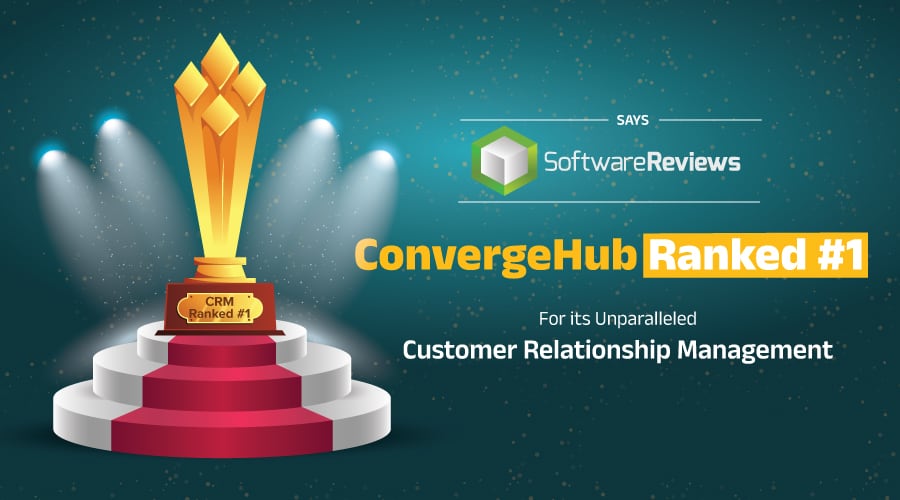
ConvergeHub Ranked #1 For its Unparalleled Customer Relationship Management, Says Software Reviews

Leading technology product review website Software Reviews has ranked ConvergeHub #1 for its unparalleled customer relationship management. Over the past couple of years enterprise-grade CRM product ConvergeHub with integrated sales enablement and marketing automation is the preferred choice of the CRM users across the USA.

Leading technology product review website Software Reviews has ranked ConvergeHub #1 for its unparalleled customer relationship management. Over the past couple of years enterprise-grade CRM product ConvergeHub with integrated sales enablement and marketing automation is the preferred choice of the CRM users across the USA. “This all-in-one CRM product” , according to the users “has taken communications and collaboration to the next level.”

“Customer Care Management is critical for business operations,” said Shampa Bagchi, the CEO of ConvergeHub. “We provide top-tier support to our customers to help them grow their businesses faster”, she added.

ConvergeHub offers a wide array of exciting features, including lead prioritization, pipeline management, and powerful segmentation and reporting tools. These tools help businesses and sales teams identify their most promising prospects, understand their leads’ unique needs, and improve their customer retention rates. The software also incorporates exceptional integration with telephony partner RingCentral which streamlines collaboration through phone call or text message.

The CEO has stated that they have created a cutting-edge CRM tool through innovative techniques and real-time analysis. It provides a fine blend of sales, marketing and support to help businesses achieve a synchronization across departments. She has also added that the brand will keep improving observability technologies for easy-to-use, automated monitoring and problem-solving solutions.

The Software Reviews report is based on the authentic voice of the business professionals who are the leading players in the midmarket premises. These rankings are done based on the user reviews. Potential CRM buyers can find these reviews and rank insightful while selecting CRM software because these speak of authenticity.

“Shampa Bagchi, the company’s CEO, has stated “Through consistent dedication and support, we have achieved the highest position in terms of Quality of Features, Ease of implementation and customization, as well as the highest Emotional Footprint among all other CRMs in mid-market category.” She continued to add, “We are privileged to get this award and promise to keep improving ConvergeHub so that it can help our customers scale up and grow their businesses.”

Here’s a glance of what makes ConvergeHub the #1 name in the Customer Relationship Management in CRM marketplace.

  • Robust Customer Support Module: ConvergeHub comes with a robust customer support module that enables users to get started without much difficulty. Organizations nowadays are embracing digital transformation to reach new heights. It not only helps them deal with increasing customer demands, but also facilitates cost optimization and plans for business growth.
  • User-friendly Implementation: To enable the ConvergeHub users to run the product on a daily basis, the brand has developed a strong customer support plan. Right from the implementation, be it an on-premise installation or on Cloud, ConvergeHub support team helps users to get started with the product. From building custom fields, capturing data to using them for business insights, the team helps users perform the job seamlessly.
  • Extremely streamlined process: With automated workflows and streamlined processes, a CRM product can help businesses save time and reduce manual efforts, leading to improved efficiency and productivity.
  • Better collaboration: A CRM product can centralize customer data, making it easier for teams across the organization to access and share information, collaborate on customer issues, and communicate more effectively.

“Their after sales support is superb”, says ConvergeHub users. Whether it is chat communication or telephonic support, ConvergeHub supports agents who take good care of understanding customer sentiment and are using appropriate language and brand voice, all while giving management visibility into 100% of customer messages. No doubt it helps improve customer satisfaction and lifetime value.”

“Our software offers a lot of value for a relatively low price, and we offer an excellent support service because we want our customers to succeed, quotes ConvergeHub CEO Shampa Bagchi.

For more information on how individuals, teams, and agencies can use ConvergeHub, visit https://www.convergehub.com.

About the Company

ConvergeHub has been in the scene since the past decade. Today, it’s a well-known name in the CRM marketplace with a strong customer base across the USA and Canada. ConvergeHub is a cloud-based CRM (customer relationship management) software that provides a complete suite of sales, marketing, and customer support tools to help businesses manage their customer relationships more efficiently.

Plagiarism Scan Report

Using BEANs to drive Innovation

Have you noticed that customers are getting angrier?

The world itself seems to have become more uncivil, and customers are much more dissatisfied.

That is actually putting it mildly. Customers are not just dissatisfied… they are plain angry.

In a recent study by Arizona State University W.P. Carey School of Business survey of customer rage found that last year 74% of customers said that they have experienced problems with a product or a service. And they are definitely not shy about expressing their rage.

What were their main frustrations?

In most studies the top frustration is not being able to talk to a person when they have a problem.

The second most common complaint is that they can’t find out how to contact the company.

Technically, these are not difficult problems to fix.

So, it’s easy to blame the organization.

Organizations just don’t care, right?

But there’s a flip side to the coin.

When it comes to serving customers, companies have to do a balancing act between quality of service and its cost.

Spending too much on customer service might lead to reduced profitability, especially if it doesn’t lead to the customer loyalty that the business is looking for.

On the other hand, spending too little on customer service leads to low customer satisfaction and the risk of losing them in the long run.

So how do companies resolve this dilemma between customer satisfaction and cost efficiency?

Let’s talk about it in my next post.

Meanwhile, if you would like to know more about how ConvergeHub can help you get closer to your customers without increasing the cost, talk to us.

Or, if you would like to check it out yourself, go ahead and create a free ConvergeHub account here.

What is a Business Lead and Why are They Important?

Leads are the nectar to any business. The potential leads in your sales funnel are most likely to convert and become top-performing revenue sources over the time. No doubt, lead management plays a key part in your business growth strategy and taking it to the next level. 

But, before you take it forward and delve deeper on this topic, let’s find out who your business leads are. What’s their role in your business and why are they relevant?

Basically business leads are the user groups who are interested to explore your products and services. But, what if they never become your customers? Yes, there are chances that your lead does not convert. After all, being interested does not mean that you will be always interested to make a purchase. 

So, ideally speaking when you get a lead or an interested user, it makes your first stage of the sales funnel successful. They are aware of your brand. But, keep in mind that all leads are not created equal; several things make some leads more valuable than others and the job of a marketer is only to push those leads so that they can convert.

Being interested means your first level of the sales funnel is successful

A lead is someone who has expressed interest in your business. This could be an individual, or it could be a group of people who have all expressed interest in the same thing. In the B2B SaaS space, when you are trying to get your target audience to get interested in product buying, maybe you did not find enough takers (and no one has responded). Interested users who have inquired about your product after you make a campaign are your leads and they have the potential to convert soon, though they have not made any purchase decision yet. 

Leads are also referred to as “prospects” or “potential customers.” They may not even know they are on your list until they have seen something about what type of services/products/etc., etc., something else related; so don’t assume anything about whether or not someone’s interested in working with you just because they said hello once at an event (or maybe even twice).

Business leads are a valuable resource for your business

Your business leads are a valuable resource for your company. They are an important part of your business and provide you with revenue, new customers, and even referrals, when nurtured over a period of time. 

Business lead generation is an important part of any B2B or B2C business. From generating leads to acquiring the qualified ones to managing them over a period of time- everything is a long drawn process walks an extra mile to align with your long-term business goals. This entire workflow forms an essential component to create more sales opportunities for your company. Read on to explore how to generate more business leads through diverse marketing strategies like blogging or social media marketing campaigns!

The primary job role of a sales rep is to convert leads

Lead generation and management is a skill that you should work on as a sales representative. When you work with a CRM software , it is easy to capture the leads that are coming your way. However, it’s important to develop an emotional connection with your leads when it comes to converting them. That builds your customers’ trust as well as the credibility of a company, which in the long run helps companies grow and make a strong foothold in the business

How Lead Management Works

Lead management is a business process that involves not just selling products but also converting those leads into customers by providing them with the right information and coming up with creative solutions to their problems or concerns. In other words, lead management means knowing how to deal with people at all stages of their purchase process—from initial contact through follow-up calls and emails after they’ve made their decision on who they’re going to buy from (or even why).

Lead management isn’t just about doing legwork; it includes everything from coming up with ideas for new products based on customer feedback during an interview session through developing relationships with vendors who sell similar products so that if there are any issues comes up during delivery time frame or within the due date.

Strategies to Get Business Leads

While the marketing department in every company is responsible for generating leads, the process involves several processes- lead magnet creation, content marketing, paid advertisements, and other content targeted for attracting leads. This is a comprehensive process- once done and it is sent to the sales team to take further action on it.

Here’s a quick look at the stages and strategies through which business leads emerge. 

Email Marketing

Email marketing is the top-notch lead nurturing channel for any business- be it in the B2B or B2C space. Creating the lead magnets is fine but unless you use this to build your email list or ideally to connect with people ( note: the interested group who has already crossed the awareness stage), it won’t bring results. When your marketing campaigns get you a business lead, it’s your turn to start with a conversation and need an easy way to continue the conversation. Remember, sending out email is not expensive but it can generate several dollars revenue.

Social media

For lead generation, social media platforms are no less than a gold mine. That’s why it is often the preferred choice of marketers when it comes to doing lead generation. From organic campaigns to paid advertising on various social media channels including instagram, a marketer can personalize the experience of the potential leads. In the process, you create an image of your brand. Popular social media channels like LinkedIn ads, Facebook ads and instagram ads are great for lead generation. 

Paid Ads

The efficiency of paid ads in generating leads is undeniable. According to a study, every company that uses Adwords generates 100% revenue on every dollar spent. No doubt, this is a great way to keep your sales funnel updated throughout. Marketers often set their own budget and keep a track of the converts in exchange for every penny you spend.

Content

Blogs, case studies, infographics, and webinars make an amazing lead content strategy. A highly effective content should be informative and educational enough to solve problems that the SMBs are most likely to solve.

Retargeting

Retargeting is one of the tried and tested lead generation campaigns. It is targeting those users who have earlier visited your website but did not make any purchase. You can keep them on your radar, nurture them through various modes , so that you stand a better chance to connect with them again and convert them.

Is the lead worth pursuing?

A lead is worth pursuing if it meets the following criteria:

  • You want to pursue the lead because of its potential fit with your business. If you’re selling a product or service, this will be obvious. For example, if a prospect has expressed interest in your product but isn’t ready or willing to make a purchase right now, then you might want to keep him as an active lead until he’s ready and willing to buy. Or perhaps they’ve expressed interest in purchasing multiple products from you—but not necessarily at once? In this case, it would make sense for them not only being considered as potential customers but also potential leads for future sales campaigns!
  • The prospect provides some value beyond simply wanting something from us (which might not always be true). This could mean providing feedback about something else related specifically back towards our company; such as giving feedback about another competitor’s pricing strategy so you can adjust yours accordingly.

Keep your eyes on the prize!

Lead generation is something that involves a lot of trial and error methods. You’re going to have opportunities that come up, but there are no guarantees that they will work out for you or even make sense in the long run. You have to be willing to take risks and put yourself out there because every time we do something new or different, it’s scary at first—and sometimes we need help getting over that fear of failure or rejection (or whatever negative feelings come up).

The Final Takeaway

When it comes to lead generation, a lot of things come into play. Since marketing does not follow any rule, it’s true that lead generation won’t follow any. In fact, the most experimental part of the marketing is lead generation. But, leads are a valuable resource for your business. You may not be able to convert them into customers right away, but if they are going to be useful to you they need to have their own buying process or at least some sort of plan in place on how they would like to buy from you (or what steps they will follow before making a purchase decision). To do this effectively, you simply need to know exactly how much time each lead takes up before even reaching out. 

What is Marketing? Definition and Guide

Businesses rely on sales and revenue. True. But, what works from behind to trigger sales and take it to the next level is Marketing. No wonder, businesses, both in the B2B and B2C space, focus so much on the Marketing Department. According to a recent BCG study, Marketing demands 70% of total focus, whether in terms of financial investment or heads. Because it’s the fundamental that creates the base of your business. 

The basics of marketing start with identifying customer needs. Because that’s what helps you craft your product and services. No matter what business you are in without knowing customer needs you will never be able to reach out to them. Whether you are a marketing guy or an owner yourself, being aware of the customer needs helps you build a trust connection between you two. This sense of trust is going to pay you in the long run, because your customer will remember you as a brand that resonates with their needs. 

Does the customer trust your product? Enter Marketing

Ever wondered why most of your customers talk about how you make them feel? They talk about the problems, they talk about customer service ( both excellent and poor), and sometimes how the brand has improved over time or been downgraded eventually. Precisely, everything boils down to how you make your customers feel. That’s what is marketing. It creates awareness, builds a brand experience, and lets your customers build a perception of your brand. Thus, marketing is a crucial segment in any business and makes sure that the customers are aware of your brand, stay engaged, and make a buying decision every time you launch something.

What’s a Marketing Plan

 A marketing plan is a small but crucial segment of a business plan that facilitates creating and maintaining demand, reputation, relevance, competition, etc. Marketing is pivotal both in B2B and B2C space and without an in-depth knowledge of this, it is a little too challenging to manage and run a profitable business in today’s world.

Marketing is a continuous effort to create, communicate, and deliver value to your audience. This includes the creation, distribution, and management of messages that reach consumers with those messages using various channels including advertising, public relations, sales promotion (push), direct mail and online communications (pull). Takeaway: Marketing is not just advertising – it’s also customer relationship management (CRM).

Marketing is about finding new customers, not just selling to existing ones

Marketing is all about understanding your customers and their needs so you can create value for them—and make more money in the process.

A well-strategized marketing plan aims at creating value for your audience. It’s not always easy, but it’s worth doing because:

  • You don’t need to sell as much if you have a large customer base that wants what you offer
  • You will have less competition from other brands trying to sell the same thing (or even something similar) as yours

Marketing moves the buyer into action – from awareness to understanding through to the purchase and use of a product or service. As already mentioned it’s about understanding their needs and wants, desires and dreams. It’s about what they fear or desire, what makes them happy or sad. From moving from awareness to understanding through to purchase and use of a product or service- the entire buying journey is impacted by various levels of marketing. A well-strategized marketing plan helps in making a strong impact of a product in the customer’s mind, who eventually makes a purchase decision. Precisely, marketing is a strategy to make a place in your customers’ hearts, so that they do not forget you once the purchase is done.

Marketing is much beyond advertising!

A well-defined marketing plan aims at nurturing your customer base without even expecting them to make a purchase. It comes with a long-term goal and makes sure that your brand creates a loyal customer base over time. It helps in crafting stronger brand advocacy which pays off eventually. 

What’s marketing automation and why it is relevant

Marketing automation is a powerful tool for improving your customer experience and generating leads. It helps marketers to create personalized and automated campaigns, run those, and get accurate reporting about the campaign performance in a superb short time. Simultaneously, it helps them improve the overall performance of your business and helps increase engagement with existing customers as well as attract new ones through targeted marketing campaigns.

CRM software with marketing automation features comes with an array of tools and functionalities. It aims at streamlining processes throughout the buying journey. You can automate the process of marketing, including the creation, distribution, and management of content.

Marketing automation helps optimize your time spent on marketing activities by automating repetitive tasks so you can focus on the things that matter most. These tools take care of things like scheduling emails or sending out social media updates based on historical performance data so they’re more accurate than ever before.

By automating repetitive tasks like email writing and campaign creation, your team members can dedicate more time to high-value activities such as developing new products/services and analyzing customer feedback data. This continuous improvement leads to better business outcomes over time. Additionally, automated workflows such as lead scoring algorithms provide companies with greater control over customer conversion after sign-up. This reduces the risk of trying new tactics and justifies investing in this technology now rather than later when costs may increase significantly.

The evolution of the marketing automation

Over time marketing automation has undergone several alterations, modifications ad more. This marketing automation, as of now, is one of the most crucial features of CRM Software that’s extremely powerful for improving your customer experience and generating leads. It’s basically a super effective technology that automates the marketing process, thus freeing up enough time to focus on key jobs, such as creating engaging content, sending out emails, setting up landing pages, and others which in the long run helps develop an impact of your brand on the people’s mind.

Marketing automation is nowadays being used widely by a lot of business owners or managers looking to do better with their marketing efforts. Since the objective of marketing is to deliver value to your audience, your aim should be to do it through various channels, including online and offline channels such as email marketing, social media posts and word-of-mouth recommendations, and more. With effective automation features, each of these things is automated and in line, where neither customers nor the marketer suffer from delayed conversations or so. 

 Marketing automation and B2B SaaS: How connected they are.

Marketing automation features aim at enhancing your customer experience and getting you a steady channel to get you leads. It allows you to automate marketing campaigns. This way, you can save a good deal of time in work and invest more time like creating great content or designing compelling landing pages. In recent times, , marketing automation has become a key part of B2B SaaS businesses because it helps companies grow their sales while reducing costs significantly.

Marketing automation is the use of technology to automate repetitive tasks in your marketing processes. It helps you to improve the efficiency and effectiveness of your marketing efforts by automating many tasks that are traditionally done manually, such as emailing or calling customers.

How Marketing automation impacts your ROI

The focus of marketing automation is to deliver a superb experience to your customers by automating key sales activities always on time. As a result, it increases customer lifetime value (CLV), which means it increases the probability for your customers to spend more time with your brand. The more time your customers spend with you, the more they drive your revenue growth. And, at the same time, you get enough time for cross-selling and upselling, thus bringing home more revenue at the end of the financial year. In addition, it also helps reduce churn rates so that new customers are more likely to stick around longer than they would have been before using CRM/marketing automation software.

Funnel Making & Making Customized Campaigns are Easier with Marketing Automation

The latest concept of sales and marketing campaign design is not unknown to you. Especially if you are a marketing guy, you already know how important is data for funnel marketing. In fact, a data-backed marketing funnel is more realistic and eventually drives more results that can be used to market your brand more effectively. But, creating funnels is not everything. With Marketing automation, things are triggered automatically, whenever someone purchases something or signs up for an email list. What’s more! With appropriately done marketing automation software you can create and send emails based on specific criteria such as time of day or location of the recipient. And that too with zero manual involvement on your part.

The Final Takeaway

The emergence of marketing automation is quite a game changer in B2B SaaS. It takes marketing to a new height by introducing automation in the process. As a result, marketers are now more open to creating better customer experiences which further impacts CLV and sales. Today, marketing automation is not just an illusion, but an excellent way to build your brand and generate more leads, which is essential in today’s competitive market.

How to manage syndicated merchant cash advance deals

Merchant cash advance (MCA) is a loan (which is specifically a cash amount) that allows you to borrow money from a bank or other lender. MCA is a widely accepted loan form in the US market for SMBs. The credit line available as Merchant cash advance are used for business expenses, especially when there is an urgent need for cash. Usually, the repayment happens from the  credit card sales. The most common use of MCA is to help businesses get through difficult periods but don’t have enough credit lines available with banks or other lenders. The biggest benefit of the cash advance is it requires zero collateral.

What is merchant cash advance (MCA)?

Merchant Cash Advance (MCA) is unlike the traditional loan process. This type of financing offers upfront cash and that too in exchange for their future sales. This type of financing are usually designed for the small businesses that cannot arrange for the collateral all of a sudden and at the same time comes with a difficulty obtaining traditional bank loans or lines of credit.

In an MCA agreement, the lender provides the business owner with a lump sum payment upfront, which is typically a percentage of the business’s projected future sales. In exchange, the business owner agrees to repay the advance, plus fees and interest, by allowing the lender to take a percentage of their daily credit card or debit card sales until the advance is fully paid off.

The MCA credit line is used for

  • Purchasing inventory
  • Paying  bills or taxes on time
  • Making payroll and salary processing of employees 

How to find a merchant cash advance syndication partner

Finding a partner that can help you manage your merchant cash advance deals will be key. When it comes to finding the right partner, there are several factors you should consider. First, look for a company with a good reputation and history of working with merchants. This is important because not only does this indicate how much experience they’ve had managing other companies’ cash flow needs, but it also shows that they know how to work with their clients in order to get them through any issues or problems that may arise during the process of taking out a loan from one lender versus another lender (or bank).

While looking for an organization, make sure to do market research. Choose only those companies where customers have happy experiences with them too! That means finding someone who has built up trust over time – which means making sure all parties involved feel comfortable enough around each other so as not to end up feeling like strangers when trying something new together like opening up new lines of communication between themselves and/or their respective partners at both ends.

What are the benefits of merchant cash advance syndication?

Merchant Cash Advance (MCA) syndication refers to the process of multiple investors pooling their money to fund a single MCA transaction. The benefits of MCA syndication for both investors and borrowers include:

  1. Uninhibited access to big funding value: MCA syndication allows borrowers to access larger amounts of funding than they would be able to obtain from a single lender.
  2. Risk diversification: Syndicating investors can spread their risk across multiple MCA deals, reducing their exposure to any single borrower.
  3. Superb liquidity features: MCA syndication facilitates increased  liquidity available for the stakeholders  as they can sell their portions of the investment in the secondary market if needed.
  4. Faster fund processing: MCA syndication gives you more cash amount that the traditional financing methods. As a result, borrowers can access the their much needed capital quicker than the  need to grow their business.
  5. Flexibility: MCA syndication offers borrowers flexibility in terms of repayment, as the repayment terms can be tailored to their specific needs and cash flow.
  6. Potential for higher returns: MCA syndication can offer investors higher returns than traditional fixed-income investments due to the higher interest rates charged on MCA deals.

But, inspite of having so many benefits, MCA syndication comes with several risks, such as default risk, concentration risk, and regulatory risk. Investors and borrowers should carefully consider the risks and benefits before participating in MCA syndication.

When is the best time to opt for MCA Syndication

  • When a business needs to access a large amount of funding quickly and does not have time to go through the lengthy process of traditional bank financing.
  • When a business has a short-term need for capital, such as to finance inventory, equipment purchases, or marketing campaigns, and expects to generate enough cash flow to repay the advance quickly.
  • When a business has a high volume of credit and debit card sales and can benefit from the flexibility of MCA repayment terms that are tied to daily sales.
  • When investors are looking for higher returns than traditional fixed-income investments, and are willing to take on higher risk.
  • When investors are looking for diversification of their portfolio and want to spread their risk across multiple MCA deals.
  • When investors have a high risk tolerance and they are pretty comfortable with the uncertainties and risks associated with merchant cash advance investments.

But, the advantage of MCA as a financing option is situation specific. There are situations where SMBs need cash yet not in a position to withstand the risk. Borrowers and investors should carefully evaluate the costs, risks, and benefits of MCA syndication and consider alternative financing options before making a decision.

Syndicating your MCA can help you get the financing you need at a time that’s best for you

The process of syndicating your merchant cash advance deal is simple, but it does require some work on your part. You’ll need to find a lender who is willing to partner with others and share their risk in order to provide financing directly to small businesses or entrepreneurs, who may not be able to otherwise access credit due to their particular business model or industry niche .

Once they’ve signed on as an investor, they’ll want some assurances that they’ll make money off this investment; so let them know how much money has already been generated by each borrower through its own sales channel(s) (such as Amazon). You should also provide them with proof-of-funds statements showing how much has been paid out since day one—this will reassure them that there isn’t any risk involved with partnering up with someone else!

The Final Takeaway

The secret of the MCA syndication success is to find and connect with the right partner at the financing at the right time. In fact, MCA deals are really great, but only when you are able to make the most of it. It’s important that you do your research and find an appropriate partner.

Is anyone listening?

Ever heard a company say that they don’t ‘put customers first’? Probably not 😊

Pretty much EVERY business says that they put their customers first.

And they probably mean it.

But do you know how many people believe it?

12%

According to a HubSpot survey, only 12% of people believe company messaging that says it puts “customer first”.

So, what’s going on here?

In an age when businesses pitch jargons such as “personalization”, “1:1 customer engagement”, “customer-centricity” to anyone willing to listen… why don’t most people believe them?

Because businesses will be able to deliver these things only if they truly listen to their customers.

Not through some half-baked survey asking the wrong questions.

Or a lame we-value-your-feedback form on the website.

For a business, listening is all about data.

Listening is the ability to capture and analyze all structured and unstructured data across all customer touchpoints.

Listening is also about training your customer-facing staff on empathy.

And taking action on what they hear.

By communicating better.

Giving out information that customers and prospects are really looking for.

Not always easy.

But without that we risk making assumptions about what our customers and prospects are looking for.

And that guessing game is dangerous for any business.

If you would like to know more about how ConvergeHub can help you communicate better with your prospects and customers, talk to us.

Or, if you would like to check it out yourself, go ahead and create a free ConvergeHub account here.

How to Start & Grow an MCA Business?

In the world of business, financial stability is the cornerstone of success—but when cash flow runs dry, it can bring operations to a grinding halt. For growing businesses and startups, Merchant Cash Advances (MCAs) emerge as a lifeline, offering fast and flexible funding to navigate tough times. Did you know that small businesses account for nearly 43% of all U.S. GDP, yet over 80% of loan applications from these businesses are often denied by traditional lenders? That’s where MCA businesses step in, empowering entrepreneurs to achieve their goals with timely financial solutions. If you’re considering starting an MCA business, this guide will give you a comprehensive understanding of the opportunities and challenges ahead.

A Brief Overview of Merchant Cash Advance

Merchant cash advance caters to short-term funding that is typically offered at high interest, often without the need for collaterals. It helps businesses with the much-needed financial support and receive repayments through their future sales.

The MCA industry is one of the most highly profitable businesses in today’s market status. But, a successful MCA business needs sound financial status and time.

Merchant cash advances have the advantage of a unique easy repayment. The lenders receive automatic payments based on the credit card sales of the borrower and this is continued until and unless the debt is totally repaid. For owners of cash advance businesses, it’s a streamlined setup that gives you more time to focus on branding and marketing.

If you are planning to help startups realize their dreams, it’s great to start off with an MCA firm

This step-by-step guide will show you exactly how to set up your own merchant cash advance firm, from looking into the industry to registering your business and considering the most useful digital tools and services.

Steps To Start Your Own Business

1.Select an industry where you want to work

Even if you have enough financial resources and you want to finance budding entrepreneurs, you cannot provide help to anyone and everyone who is coming your way. It’s always recommended to have your niche selected well in advance. That is a much-needed step when you are new to the business. It is essential to select your industry based on your knowledge and experience while starting an MCA business. To become successful in your niche industry, try gaining a deep understanding of it. Needless to say, the more your experiences are in your industry, the better will be the chances for your business to thrive.

It might sound overwhelming or confusing at the very first stage, but you can think about it in the following way. The following tips might come to your help.

• Look for an industry where there is demand for products or services but not enough supply—for example, if people want something like cell phones but don’t have enough money available right now because they are saving up for something else (like maybe buying houses). This happens all over America every day! So, when you find a business that sells cell phones, you can consider these for providing merchant cash advance, because it gives you better returns.


• Look at trends in consumer behavior—what people buy based on price/value ratio instead of brand name recognition alone; what they commonly purchase together, and more.

2. Be aware of the industry trends as well as the challenges

When you are starting as MCA business, you need to be aware of the industry trends as well as the challenges that you might face down the line. Here’s a look at the leading trends of this business.

• Many start-up businesses opt for alternative lending sources like MCA for fast cash. This lowers the waiting time which is substantially more in traditional funding approvals.
• Such loans come with high interest rates and also high profits.
• When businesses face a crisis, the demand for alternative lending also increases. For scenarios like the Covid-19 pandemic, when businesses were suffering from a money crunch, many startups opted for the MCA loans. That was the time when the interest rates for MCA loans experienced a sharp increase.

MCA funding also needs to deal with challenges which include the following

• The standard rate is 10%.
• Overpriced startup cost
• Some SMBs who have already received cash advances often move on to another credit provider before they have even completed the full repayment of the advance amount.

3. Decide on a business model that works for you, but be prepared to adjust it as needed to meet changing client needs and market conditions

As you are developing your business, you need to remember that flexibility is the key to success. Since the market itself is extremely volatile and the client demands can change every time, it affects your business. If you want to grow your MCA business, you also have to adapt as the market changes: for example, if there are fewer people using credit cards for small purchases, then this could mean that fewer merchants need services like yours in order to get paid by accepting them.

It’s also helpful if you have backup plans in place so that even if something unexpected happens with one client (or even several), another source of income is available—and this is especially true if they’re willing–to pay more than what they owe now!

4. Craft a strong business plan that spells out your goals and outlines a timetable for achieving them

Having a business model ready means you have the probability of reaching your goals faster, avoiding pitfalls, and staying on track with what matters most to you as an MCA entrepreneur.

A good business plan has two main components:

• Goals—What are the specific things you want to accomplish as an entrepreneur?
• Strategies—How will you do this? What resources do you have available to help achieve those goals? How long will it take before each step toward achieving those goals is complete? What kind of results should be expected at each stage along the way (e.g., revenue targets)?

5. Team up with the right people who can help you reach your goals faster

The key to success is having the right people by your side, who have industry experience. While this may sound obvious, most of the successful MCA firms that have earned reputations have a wide variety of employees working together as a team. This includes financial experts, lawyers, and accountants who can help keep your firm in compliance with rules governing merchant cash advance firms and their clients.

Follow these steps for quick success!

• Keep in mind always that you are answerable to the audience.
• Keep in touch with your audience with effective communication
• Promote your MCA business—and this way you will be able to make more money if you can make your audience excited about what you do as you are! After all, the more the people know, the more the chances of your business increase.
• It’s important that when speaking with yourself (or anyone else), promote the brand thoroughly and you are all set. After all, being surrounded by a team of people who are doing amazing things every day and making your business run should not be forgotten.

Investment for merchant cash advance business

Instead of investing in a new brand name and various other things, it’s a great idea to buy a franchise from an existing cash advance firm. Such franchise fees generally cost around $100,000 but could be as low as $25,000. As a franchisee, you’ll receive training and marketing materials and be well on your way.

To start your own merchant cash advance business, you’ll likely need initial funding of $200,000, if not more. Most of your startup funds must be ready for borrowing.

Define a Profit Margin
Do your competitor research before you set your profit margin. A great way to see this is to use your competitors’ prices as a starting point for yourself. Once your business starts running, you can slowly determine your markup and final price points. Remember, the prices you use at launch are subject to market changes.

Define Your Business Structure
Before you start your MCA business, you need to define the structure of your MCA business, because that will influence your taxes, business registration, personal liability, requirements, and more.

Here are the types of business structures:

• Sole Proprietorship – Typically, the most common business structure for SMBs is that there isn’t any legal distinction between the business organization and its owner. In this structure, all income is accounted to the owner. He is the only one who is chargeable for any debts, losses, or liabilities sustained by the business. Due to this the owner has to pay taxes based on business income via his individual tax returns.

• Limited Liability Company (LLC) – This is the combination of corporations with the characteristics of sole proprietorship. In this structure, the owners do not bear personal liability for the debts incurred by the business.

• C Corp – This is an independent legal entity and unlike a sole proprietorship, the debts do not account to the owners as personal liability. Instead, the source of profits for the owners is the shareholder dividends. In this form, both corporations and owners need to pay taxes often referred to by the term double taxation.

• S Corp – Though it is a tax classification and not just a business classification, these are more like LLCs in terms of their functions. S-Corp businesses offer pass-through taxation, which means that all profits and losses incurred by the business directly account to shareholders.

However, as an MCA startup, it is better to go forward with the LLC structure because it offers the tax advantage of a partnership along with simplified management than a corporation.

Invest in MCA Software on a priority basis
MCA Software helps make the process of alternative lending easy and effortless. It comes with the following features:

• Client Data Collection

• Automation

• Marketing

• Analytics

For an MCA startup, this CRM helps in managing and streamlining the key jobs. MCA CRM streamlines front-end operations and optimizes customer lifecycle management for enhanced client retention.

With an MCA CRM software, the lending process is accelerated. Since everything is happening in real-time with data available at every touch point, the minimal approval time is for the disbursement of the fund

The Final Takeaway
Starting off an MCA business can be lucrative for obvious reasons, but make sure you have a steady source of finances so that you can provide loans to the borrowers. You can also get government grants. Also, do not forget to apply for business insurance as that can be a huge advantage for your MCA company.